
Last updated on August 25th, 2026 at 02:19 pm
The powertrain control module in your 2002 Chrysler Town & Country manages fuel delivery, ignition timing, and transmission shifts for the 3.3L engine. Internal processor faults or memory errors can disrupt these functions, leading to drivability issues or a no-start condition.
When your 2002 Chrysler Town & Country develops a no-start, sudden stalling, or erratic shifting, the powertrain control module often becomes a suspect. This computer governs the 3.3L V6’s fuel, spark, and transmission logic, so a failure can mimic many other problems. Understanding what the module does, how it is serviced, and what the factory requires after replacement helps you avoid misdiagnosis and unnecessary expense. The following guide walks through the module’s role, typical failure signs, the relevant service bulletin, and the programming steps that get your minivan back on the road.
The powertrain control module in your 2002 Chrysler Town & Country acts as the central brain for the 3.3L V6, coordinating fuel injection, ignition timing, idle speed, and transmission shift points based on sensor inputs. It also monitors its own internal circuits and communication buses, setting codes when it detects a processor error or a loss of data integrity. Because the module handles both engine and transmission duties, a single fault can produce symptoms that appear unrelated, such as a misfire code accompanied by harsh shifts. When replacement becomes necessary, sourcing replacement engine computers for the Town & Country ensures the hardware matches the vehicle’s specific calibration. The module’s aluminum housing mounts in the engine compartment, where heat and vibration can eventually degrade solder joints or corrupt flash memory, making periodic inspection of connectors and grounds a worthwhile habit.
Engine computer (ECM/PCM)
OEM programmed replacements — plug & play, no dealer visit.
Find yours by year, make & model →
Free shipping · Lifetime warranty
The powertrain control module on the 2002 Chrysler Town & Country is located in the engine compartment, typically mounted near the firewall or fender well. Factory book time lists 0.5 hours for removal and installation of the PCM, and an additional 0.5 hours for the required relearn procedure. The same 0.5-hour R&R and 0.5-hour relearn times apply if the engine control module is serviced separately. No special torque values are published for the mounting hardware; standard practice is to snug the fasteners to prevent vibration damage while avoiding over-tightening the casting. Access generally requires removing a protective cover and disconnecting the multi-pin connectors, which should be inspected for corrosion or bent pins before the new module is installed.

Work with the ignition off, and treat the module as static-sensitive: avoid touching the connector pins at any point.
| Operation | Configuration | Book Time |
|---|---|---|
| Powertrain Control Module Relearn | All configurations | 0.5 hr |
| Powertrain Control Module R&R | All configurations | 0.5 hr |
| Engine Control Module Relearn | All configurations | 0.5 hr |
| Engine Control Module R&R | All configurations | 0.5 hr |
After a module is installed, the factory procedure requires a PCM initialization sequence to synchronize the new hardware with the vehicle’s VIN, immobilizer data, and learned adaptives. This process typically involves a scan tool connected to the data link connector and follows the steps outlined in the service bulletin. Skipping initialization can leave the vehicle with a no-start condition or incomplete transmission adaptation. Flagship One units arrive a VIN-programmed replacement unit so the initialization and relearn steps are already completed before the part reaches you. The technician still performs the brief relearn drive cycle to confirm proper operation, but the core programming work is done at the bench.
Common signs of a failing powertrain control module in the 2002 Chrysler Town & Country include a crank-no-start condition, intermittent stalling at idle or low speed, and erratic transmission behavior such as delayed engagement or harsh shifts. The check engine light may illuminate with codes that do not correspond to any sensor fault, and a scan tool may lose communication with the PCM entirely. Misfire codes that move between cylinders or persist after ignition components are replaced can also point to an internal driver failure. When the module’s self-diagnostic detects an internal memory fault P0601, it often indicates corrupted flash memory or a processor error that cannot be cleared. Voltage spikes from a weak battery or improper jump-starting can accelerate this type of failure.
The following module-internal trouble codes are documented for the 2002 Chrysler Town & Country. Each code points to a fault within the PCM itself rather than an external sensor or circuit, and they often require module replacement after wiring and power supply verification.
| Code | Meaning | Full Guide |
|---|---|---|
| P0600 | Module-internal fault | Full P0600 guide → |
| P0601 | Internal memory checksum error | Full P0601 guide → |
Chrysler issued service bulletin 08-030-06 Rev. A titled Powertrain Control Module Initialization. This bulletin provides the factory procedure for initializing a replacement PCM, including the required scan tool steps and the conditions under which the initialization must be performed. It applies to the 2002 Town & Country equipped with the 3.3L engine and covers both new and remanufactured modules. Following the bulletin ensures the module communicates properly with the body control module, the transmission controller, and the immobilizer system.
| Bulletin | Subject | What It Addresses |
|---|---|---|
| 08-030-06 Rev. A | 08-030-06 Rev. A Powertrain Control Module Initialization | — |
The factory service bulletin requires a PCM initialization using a scan tool. Flagship One units are pre-programmed to your VIN, so the initialization is already complete; a brief relearn drive cycle is all that remains.
Yes. The PCM controls both engine and transmission functions for the 3.3L V6. Internal driver failures or corrupted adaptives can produce harsh shifts, delayed engagement, or incorrect gear selection.
Factory book time lists 0.5 hours for removal and installation, plus 0.5 hours for the required relearn procedure, totaling approximately one hour of labor.
When the PCM in your 2002 Chrysler Town & Country fails, you can choose between a new dealer module, a remanufactured unit, or a pre-programmed replacement. A remanufactured module from a reputable supplier often costs less than a new one and carries a warranty, while a pre-programmed unit eliminates the separate programming appointment. Verify that any replacement includes the correct software calibration for your VIN and that the supplier stands behind the product with a solid return policy.
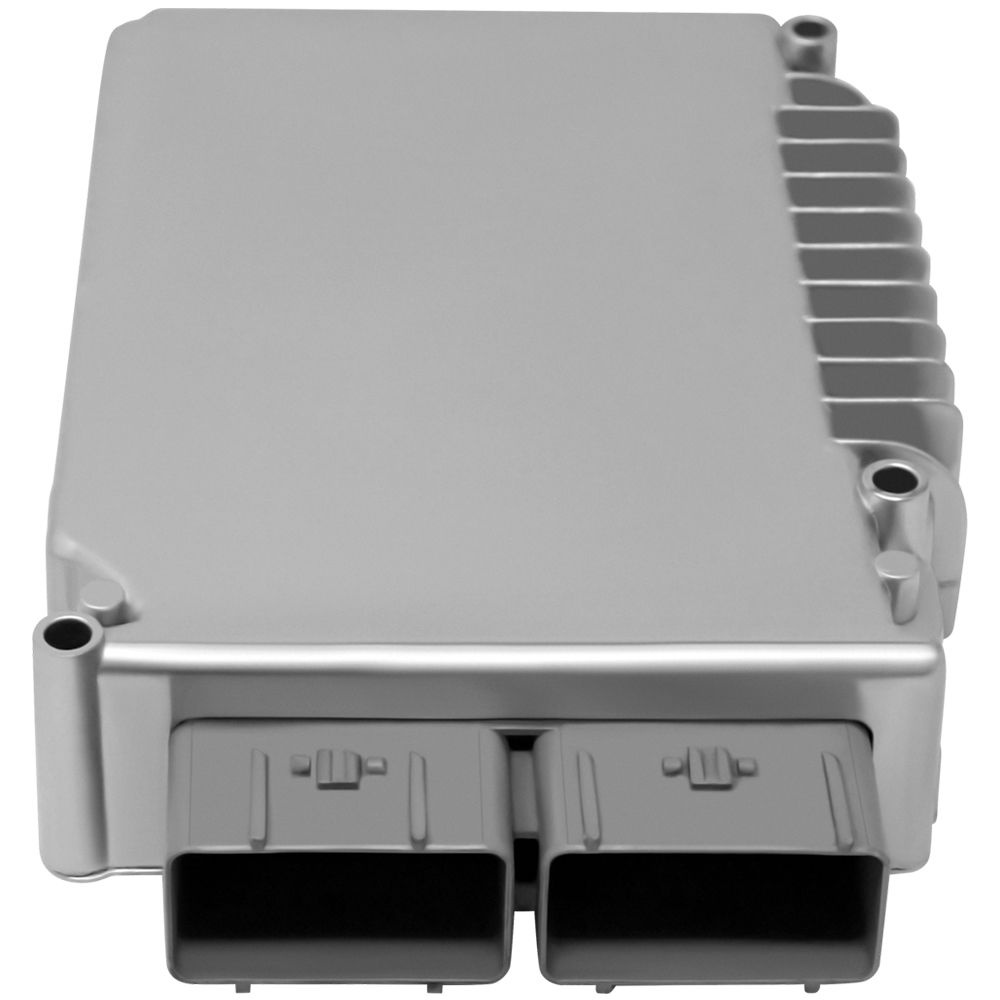
Flagship One stocks a refurbished, VIN-programmed PCM for the 2002 Chrysler Town & Country with a lifetime warranty, free shipping and no core charge. The full Chrysler Town & Country module lineup covers other engine configurations as well.
The powertrain control module is a critical component in your 2002 Chrysler Town & Country, and understanding its failure modes, service requirements, and programming needs helps you make an informed repair decision. Whether you tackle the job yourself or rely on a shop, starting with a proper diagnosis and using a correctly programmed module will save time and prevent repeat visits.