
Last updated on August 25th, 2026 at 01:41 pm
The engine control module in the 2018 Chevrolet Impala 3.6L is the primary computer that manages fuel delivery, ignition timing, and emissions. When it fails, the vehicle may experience a no-start condition, erratic engine behavior, or a complete loss of communication with diagnostic tools, often accompanied by internal memory fault codes.
When your 2018 Chevrolet Impala begins to exhibit hard starting, intermittent stalling, or a sudden no-start condition, the engine control module (ECM) is often the prime suspect. This computer is the brain of the 3.6L engine, orchestrating everything from fuel injection to ignition timing. A malfunctioning unit can leave you stranded or trigger a cascade of warning lights on the dashboard. Understanding how the ECM operates, what causes it to fail, and the correct way to replace it can save you hours of frustration and unnecessary expense. This guide walks you through the module’s role, the symptoms of failure, the labor involved in swapping it out, and the programming steps that a factory-fresh unit demands. You will also learn how a pre-programmed replacement can streamline the repair, getting your Impala back on the road without a trip to the dealership. By the end, you will have a clear picture of what to expect and how to make an informed decision about your repair options.
The engine control module in the 2018 Chevrolet Impala 3.6L is the central processor that governs nearly every aspect of engine performance. It receives data from sensors monitoring air intake, coolant temperature, crankshaft position, and throttle input, then uses that information to calculate the precise amount of fuel to inject and the optimal moment to fire each spark plug. The module also manages variable valve timing, the electronic throttle body, and the evaporative emissions system, constantly adjusting parameters to balance power, fuel economy, and tailpipe emissions. When the ECM begins to fail, these calculations become unreliable. You may notice a rough idle, hesitation under acceleration, or a sudden loss of power. In severe cases, the module can lose its ability to communicate with the vehicle’s other computers, leading to a no-start situation. Internal memory corruption, voltage spikes, or heat-related damage are common culprits. Because the ECM is so deeply integrated into the Impala’s operation, a faulty unit often triggers multiple diagnostic trouble codes, many of which point directly to internal module integrity. For owners facing these issues, sourcing reliable replacement engine computers for the Impala becomes a priority, as a properly functioning module is essential for restoring the vehicle’s drivability and passing emissions tests.
2018 Chevrolet Impala 3.6L
OEM programmed ECM for your 2018 Chevrolet Impala 3.6L — plug & play, no dealer visit.
Free shipping · Lifetime warranty
The ECM on the 2018 Chevrolet Impala is located in the engine compartment, typically mounted near the air cleaner assembly or on the driver’s side inner fender. Accessing the module requires opening the hood and removing any covers or brackets that may obstruct it. The factory labor guide allows 0.8 hours for powertrain control module removal and replacement, which includes disconnecting the electrical harnesses and unbolting the unit from its mounting bracket. An additional 0.5 hours is allotted for the PCM relearn procedure, which involves using a scan tool to sync the new module with the vehicle’s security system and other onboard controllers. If only an ECM reset is needed, the book time is 0.3 hours. A critical safety step during any service is to always turn the ignition off before connecting or disconnecting the ECM connectors; failing to do so can cause a voltage spike that damages the module or other sensitive electronics. No special tools are required for the physical swap beyond basic hand tools, but the factory relearn demands a professional-grade scan tool.
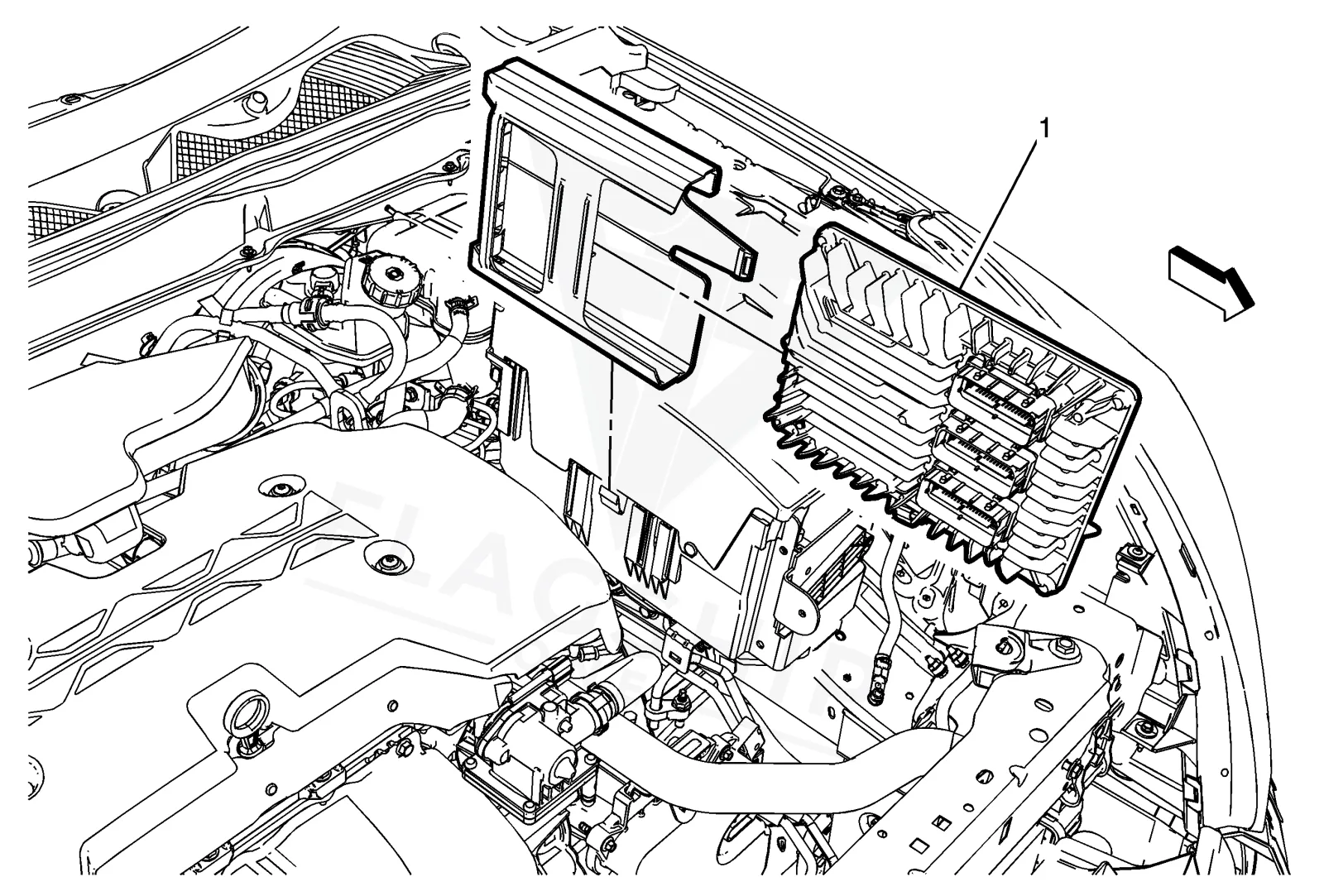
Work with the ignition off, and treat the module as static-sensitive: avoid touching the connector pins at any point.
| Operation | Configuration | Book Time |
|---|---|---|
| Powertrain Control Module R&R | All configurations | 0.8 hr |
| Powertrain Control Module Relearn | All configurations | 0.5 hr |
| Engine Control Module R&R | All configurations | 0.8 hr |
| Engine Control Module Relearn | All configurations | 0.5 hr |
| Engine Control Module Reset | All configurations | 0.3 hr |
After installing a new engine control module, the factory procedure requires a reprogramming sequence using the EL-49642 SPS programming support tool. This process loads the latest calibration files and adapts the module to the vehicle’s specific hardware configuration. Additionally, the technician may be prompted to input the engine identification number during the programming session, as noted in service bulletin PIP5597. The procedure can be time-consuming and requires a stable battery voltage supply to prevent interruption. However, when you order a VIN-programmed replacement ECM, all of these steps are completed before the part arrives. The module is flashed with the correct software and matched to your Impala’s VIN and immobilizer data, so it is ready to start the engine as soon as it is installed. This eliminates the need for a dealership visit or specialized programming tools, reducing the overall repair time to the physical swap itself.
A failing ECM in the 2018 Chevrolet Impala often produces symptoms that can be mistaken for other issues. The engine may crank but refuse to start, or it may start and then immediately stall. Intermittent stalling while driving, particularly at low speeds or when coming to a stop, is another common complaint. You might experience a noticeable loss of power, rough idling, or surging that makes the vehicle difficult to drive smoothly. The transmission may shift erratically or get stuck in a single gear because the ECM cannot properly communicate with the transmission control module. On the diagnostic side, a scan tool may fail to establish communication with the module entirely, or it may reveal a series of internal fault codes. One frequently encountered code is internal control module memory checksum error, which indicates a fundamental problem with the module’s processor or memory. Other related codes include P0602, P0603, P0604, P0606, P062B, P062F, and P0630, all of which point to internal ECM malfunctions rather than external sensor or circuit faults. When multiple codes from this list appear together, the likelihood of an internal module failure is high, and replacement becomes the most reliable solution.
The 2018 Chevrolet Impala 3.6L ECM can log several diagnostic trouble codes that specifically indicate an internal control module fault. These codes are distinct from sensor or circuit-related codes and often mean the module itself has suffered a hardware or software failure. The following codes have been documented for this vehicle:
Service bulletin PIP5373B, released in June 2018, addresses a programming error where technicians encounter code E4491 or E4423 when attempting to flash the ECM. This error can interrupt the programming process and may require multiple attempts or a specific software version to resolve. Another bulletin, PIP5597 from October 2018, notes that during ECM programming, the system may request the engine identification number. Technicians should have this number available to complete the procedure without delays. Both bulletins highlight the complexity of dealer-level programming and the potential for setbacks that can extend service time.
| Bulletin | Subject | What It Addresses |
|---|---|---|
| — | Program ECM Error E4491/E4423 – (Jun 11, 2018) | — |
| — | Engine identification Number Requested When Programming ECM – (Oct 8, 2018) | During the programming of some ECM’s, the technician may be prompted to input the engine identification |
A professional diagnosis is essential, but common indicators include a no-start condition with good battery and starter, multiple internal module fault codes like P0601 or P0606, and a scan tool that cannot communicate with the ECM. If other modules on the network respond but the ECM does not, the module is likely at fault.
A brand-new, blank ECM must be programmed with the vehicle’s VIN, immobilizer data, and latest calibration using a factory scan tool. However, a pre-programmed unit arrives ready to install, with all software already loaded and matched to your specific vehicle.
The factory book time for ECM removal and replacement is 0.8 hours. An additional 0.5 hours is listed for the PCM relearn procedure if the module is not pre-programmed. A simple ECM reset is billed at 0.3 hours.
It is not recommended. A P0601 code indicates an internal memory error, and the module may fail completely at any time, leaving you stranded. The vehicle may also enter a reduced-power mode or exhibit dangerous stalling.
A used ECM from another vehicle will not function correctly because it is locked to the original vehicle’s VIN and security system. It would still require a full reprogramming and immobilizer relearn to work in your Impala.
When faced with a faulty ECM, you have two paths: source a blank module and arrange for dealer-level programming, or choose a pre-programmed unit that arrives ready to install. The latter approach eliminates the need for specialized tools and the risk of programming errors, getting your Impala back in service with minimal downtime. For a 2018 Chevrolet Impala 3.6L, a VIN-matched replacement module offers a straightforward, plug-and-play solution that you or your mechanic can handle in under an hour.
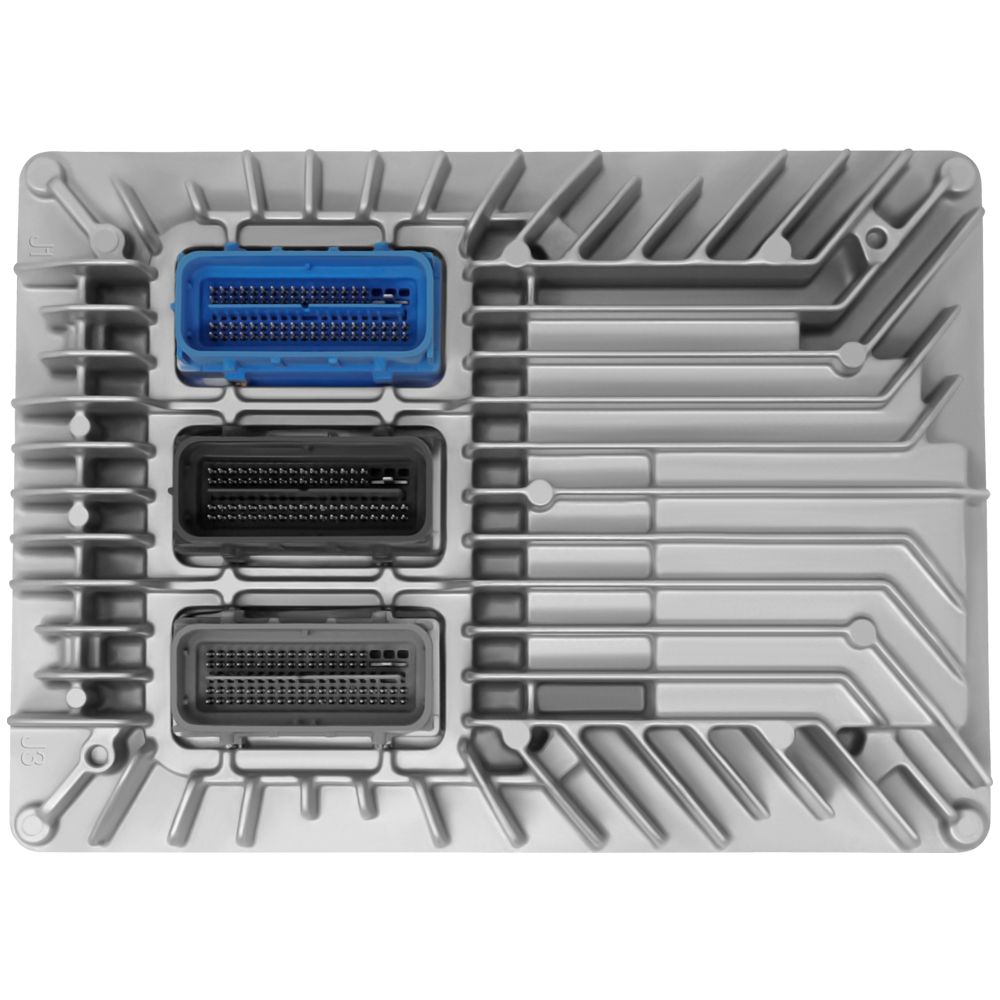
Flagship One stocks a refurbished, VIN-programmed PCM for the 2018 Chevrolet Impala with a lifetime warranty, free shipping and no core charge. The full Chevrolet Impala module lineup covers other engine configurations as well.
The engine control module is a critical component in the 2018 Chevrolet Impala, and when it fails, a prompt and correct replacement is key to restoring reliability. By understanding the symptoms, the labor involved, and the programming requirements, you can avoid common pitfalls. A pre-programmed ECM simplifies the job and gets you back on the road quickly, without the extra steps and potential complications of a dealership flash.