
Last updated on August 25th, 2026 at 02:21 pm
The Engine Control Module (ECM) in your 2016 Chevrolet Corvette manages fuel delivery, ignition timing, and emissions systems. Failure may cause drivability issues, warning lights, or prevent the engine from starting.
If your 2016 Chevrolet Corvette hesitates to start, stalls unexpectedly, or triggers a check engine light, the Engine Control Module (ECM) may be the cause. This small but critical computer oversees fuel injection, ignition timing, and emissions systems. When it fails, symptoms can range from poor performance to a complete no-start condition. Understanding the role of the ECM, where it’s located, and what replacement involves helps you make informed decisions. This guide covers labor times, programming requirements, and common failure signs specific to your Corvette, so you can address issues efficiently without unnecessary steps.
The Engine Control Module in your 2016 Chevrolet Corvette acts as the brain of the engine, continuously adjusting fuel mixture and spark timing for optimal performance. It also monitors emissions systems and communicates with other vehicle computers to ensure smooth operation. When the ECM malfunctions, you may notice poor throttle response, reduced power, or even a failure to start. Replacing it requires careful handling, as the module is sensitive to voltage spikes and improper installation. For this vehicle, replacement engine computers for the Corvette are designed to match the original specifications, ensuring compatibility with the 6.2L engine and transmission systems.
In the 2016 Chevrolet Corvette, the ECM is mounted in the engine bay, typically secured near the firewall or intake manifold. Replacing it involves disconnecting the battery to prevent electrical damage, then removing the module’s electrical connectors and mounting bolts. The factory labor time for ECM removal and reinstallation is 1.4 hours. After installation, the ignition must remain off while reconnecting the ECM to avoid damaging internal components. No special tools are required, but following the correct sequence prevents connector or module damage during service.
Work with the ignition off, and treat the module as static-sensitive: avoid touching the connector pins at any point.
| Operation | Configuration | Book Time |
|---|---|---|
| Powertrain Control Module R&R | All configurations | 1.4 hr |
| Powertrain Control Module Relearn | All configurations | 0.5 hr |
| Engine Control Module R&R | All configurations | 1.4 hr |
| Engine Control Module Relearn | All configurations | 0.5 hr |
| Engine Control Module Reset | All configurations | 0.3 hr |
2016 Chevrolet Corvette
OEM programmed ECM for your 2016 Chevrolet Corvette — plug & play, no dealer visit.
Free shipping · Lifetime warranty
After installing a new ECM in your 2016 Corvette, the factory procedure requires a relearn process to synchronize the module with the vehicle’s systems. This typically takes 0.5 hours and ensures proper communication with the transmission, body control module, and other electronics. However, a VIN-programmed replacement unit from Flagship One arrives ready to install, eliminating the need for additional programming. This saves time and reduces the risk of errors during the setup process, allowing your Corvette to return to normal operation more quickly.
A failing ECM in your 2016 Chevrolet Corvette may cause a variety of symptoms. You might experience intermittent stalling, rough idling, or a no-start condition. The check engine light may illuminate, often accompanied by codes related to internal module failures. For example, an internal control module memory check sum error suggests the ECM is unable to verify its own programming, leading to unreliable engine performance. Other signs include poor throttle response, misfires, or transmission shifting issues, particularly if the ECM cannot communicate with the transmission control module.
The 2016 Chevrolet Corvette’s ECM may store specific trouble codes when internal faults occur. These codes help diagnose issues like memory corruption, communication failures, or sensor synchronization problems. Reviewing them can pinpoint whether the ECM itself is the root cause of drivability issues.
| Code | Meaning | Full Guide |
|---|---|---|
| P0601 | Internal memory checksum error | Full P0601 guide → |
| P0602 | Control module programming error | Full P0602 guide → |
| P0603 | Keep-alive memory (KAM) error | Full P0603 guide → |
| P0604 | Internal RAM error | Full P0604 guide → |
| P0605 | Internal ROM error | Full P0605 guide → |
| P0606 | Module processor failure | Full P0606 guide → |
| P060A | Module-internal fault | — |
| P0611 | Module-internal fault | Full P0611 guide → |
| P062B | Module-internal fault | — |
| P062F | Internal EEPROM error | Full P062F guide → |
| P0630 | Module-internal fault | Full P0630 guide → |
| P162C | Module-internal fault | — |
Factory service bulletin #15-NA-007 addresses complaints of firm garage shifts, start-up clunks, or an illuminated check engine light with code P16F3 in the 2016 Corvette. These symptoms often appear after the vehicle sits for several hours with the engine off. The bulletin recommends reprogramming the Transmission Control Module (TCM) to resolve the issue. Additionally, bulletin #PIP5373B covers ECM programming errors E4491 and E4423, which may require software updates or module replacement to restore proper function.
| Bulletin | Subject | What It Addresses |
|---|---|---|
| — | Firm Garage Shifts, Start Up Clunk, DTC P16F3 (Reprogram TCM) – (Jan 29, 2016) | Some customers may comment on any of the following conditions: Firm garage shifts, Park to Drive or Park to Reverse after the vehicle has be sitting for… |
| — | Program ECM Error E4491/E4423 – (Jun 11, 2018) | — |
Stalling after prolonged inactivity may indicate an ECM issue, particularly if accompanied by a start-up clunk or firm shifts. The factory service bulletin #15-NA-007 addresses this with a TCM reprogramming procedure. If the ECM itself is faulty, it may fail to maintain proper fuel or ignition settings during initial startup.
While the vehicle may still run, a P0601 code suggests the ECM cannot verify its internal memory, which may lead to unpredictable performance. Driving with this code active risks further drivability issues or a no-start condition. It’s best to diagnose and address the problem promptly.
An ECM reset, which takes 0.3 hours, clears temporary data like fuel trims or learned values. A relearn, taking 0.5 hours, reestablishes communication between the ECM and other vehicle systems, such as the transmission or body control module. Both may be required after module replacement or battery disconnect.
If your 2016 Chevrolet Corvette exhibits ECM-related symptoms, you have options for repair or replacement. A dealership may recommend a new module with factory programming, while aftermarket suppliers like Flagship One offer pre-programmed units designed for your vehicle. Given the labor involved, choosing a ready-to-install unit can reduce downtime and simplify the process.
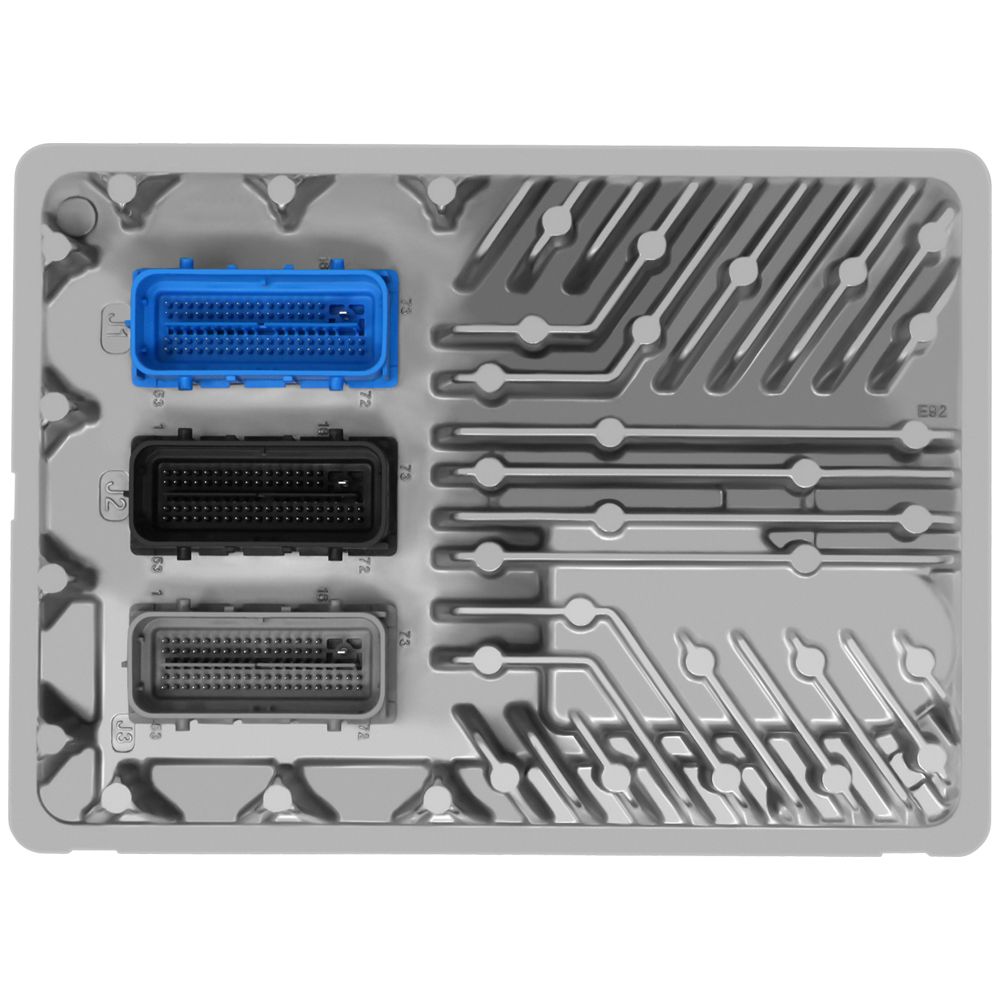
Flagship One stocks a refurbished, VIN-programmed PCM for the 2016 Chevrolet Corvette with a lifetime warranty, free shipping and no core charge. The full Chevrolet Corvette module lineup covers other engine configurations as well.
The ECM in your 2016 Chevrolet Corvette plays a vital role in engine performance and drivability. Recognizing failure symptoms early and understanding the replacement process helps you address issues efficiently. Whether you opt for a dealership solution or a pre-programmed replacement, ensuring proper installation and programming keeps your Corvette running smoothly.