
Last updated on August 25th, 2026 at 02:23 pm
In the 2013 Chevrolet Impala, the powertrain control module and engine control module manage engine timing, fuel delivery, and transmission shifting. Failure of either unit may trigger a range of diagnostic codes and result in reduced power, rough idle, or loss of driveability.
When a 2013 Chevrolet Impala shows hesitation or loss of power, the control modules are often the culprits. Understanding how the powertrain control module (PCM) and engine control module (ECM) function, where they sit, and what the factory expects after a swap can help you decide between a repair or a refurbished replacement. This guide outlines the location, labor expectations, programming requirements, common symptoms, and practical steps to keep your Impala running reliably.
The PCM in the 2013 Chevrolet Impala coordinates engine output with transmission actions, ensuring smooth shifts and optimal fuel use. The ECM focuses on engine parameters such as ignition timing and emissions control. Together they form the vehicle’s electronic brain, and any disruption can affect drivability. Proper operation is essential for performance and emissions compliance, and replacement powertrain control modules for the Impala are designed to meet the same specifications.
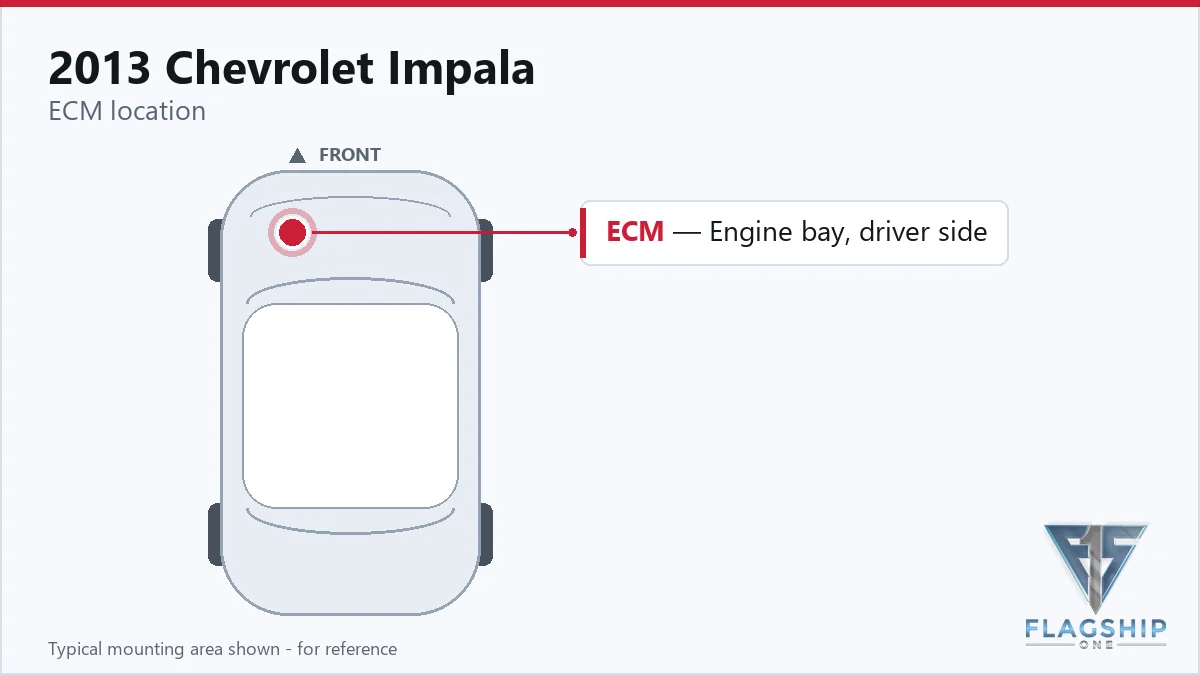
The factory procedure accesses the control module that sits next to the air cleaner assembly. Removing the PCM or ECM involves disconnecting the electrical harness, extracting the unit, and reinstalling with the specified labor times: 1.1 hours for each removal, 0.5 hours for each relearn, and an additional 0.3 hours for an ECM reset. Follow the prescribed steps to avoid damage to surrounding components.
Work with the ignition off, and treat the module as static-sensitive: avoid touching the connector pins at any point.
| Operation | Configuration | Book Time |
|---|---|---|
| Powertrain Control Module R&R | All configurations | 1.1 hr |
| Powertrain Control Module Relearn | All configurations | 0.5 hr |
| Engine Control Module R&R | All configurations | 1.1 hr |
| Engine Control Module Relearn | All configurations | 0.5 hr |
| Engine Control Module Reset | All configurations | 0.3 hr |
2013 Chevrolet Impala
OEM programmed ECM for your 2013 Chevrolet Impala — plug & play, no dealer visit.
Free shipping · Lifetime warranty
After installing a new module, the factory process calls for a scan‑tool capture of the original data, followed by a calibrated reprogramming using the EL‑49642 SPS support tool. A Flagship One unit arrives as a VIN-programmed replacement unit, so those steps are already completed, eliminating the need for on‑site programming.
Typical signs of a failing PCM or ECM in a 2013 Chevrolet Impala include delayed acceleration, rough idle, stalling, and transmission shift irregularities. You may also see diagnostic trouble codes such as processor fault appear during a scan, indicating internal processor issues.
The following internal diagnostic codes have been documented for the 2013 Chevrolet Impala and may appear when the control modules malfunction:
Service bulletin #PI0837, dated October 17, 2012, addresses hesitation or sag on acceleration after coasting and recommends reprogramming both the TCM and ECM to resolve the condition.
| Bulletin | Subject | What It Addresses |
|---|---|---|
| — | Hesitation or Sag on Acceleration after Coast (Reprogram TCM and ECM) – (Oct 17, 2012) | — |
The removal is straightforward, but the module must be reprogrammed with calibrated software. Without the proper tools, a professional service is recommended.
Codes such as P0601, P0602, P0603, P0604, P0606, P060A, P062F, and P1621 are associated with ECM internal failures and should be investigated.
A refurbished unit that is VIN‑programmed to factory specifications should perform equivalently to a new module when installed correctly.
When the PCM or ECM fails in a 2013 Chevrolet Impala, you can choose a repair or install a refurbished, VIN‑programmed replacement. Both options aim to restore proper engine and transmission coordination, but a pre‑programmed unit can reduce shop time and eliminate the need for on‑site reprogramming.
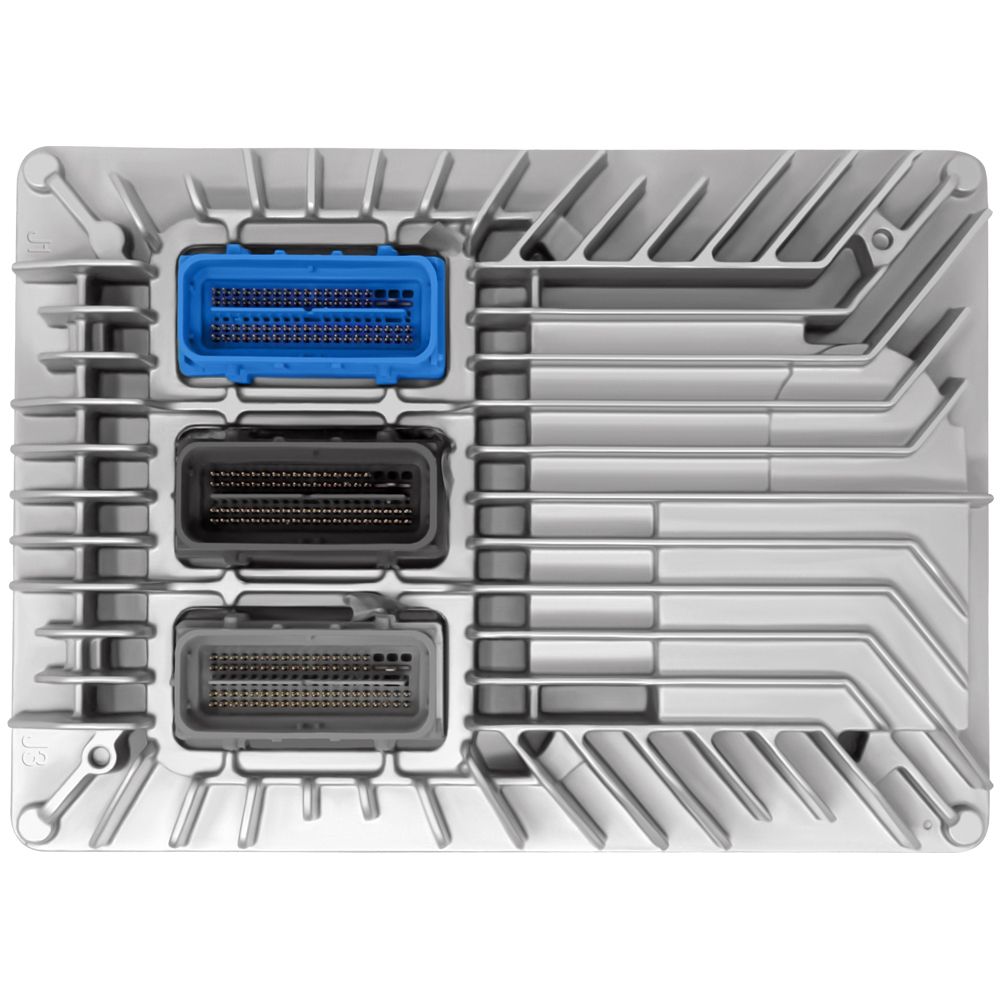
Flagship One stocks a refurbished, VIN-programmed PCM for the 2013 Chevrolet Impala with a lifetime warranty, free shipping and no core charge. The full Chevrolet Impala module lineup covers other engine configurations as well.
For owners of a 2013 Chevrolet Impala, addressing PCM or ECM issues promptly can preserve performance and fuel efficiency. Consider a VIN‑programmed replacement to simplify the repair process and get back on the road with confidence.