
Last updated on August 25th, 2026 at 02:24 pm
The Engine Control Module (ECM) in your 2011 Chevrolet Corvette is the primary computer managing the 6.2L V8’s fuel injection, ignition timing, emissions controls, and powertrain communication. When internal memory integrity faults occur, the module may default to limp-home mode or fail to start the engine.
If your 2011 Chevrolet Corvette with the 6.2L engine won’t start or runs poorly after storing internal fault codes, the Engine Control Module may be the culprit. These modules can fail silently, storing memory integrity codes that disable normal engine operation. This guide explains what the ECM does in your Corvette, where it’s located, the replacement procedure, and why proper programming matters. You’ll learn the factory-recommended steps, what a professional technician will encounter, and how choosing a pre-programmed replacement can streamline your repair.
The Engine Control Module serves as the central nervous system for your 2011 Corvette’s 6.2L LS3 engine. It processes input from dozens of sensors—mass airflow, crankshaft position, camshaft position, throttle position, oxygen sensors, and others—to calculate optimal fuel delivery and ignition timing in real time. The ECM also manages the transmission control module, fuel pump operation, emission control devices, and diagnostic monitoring. replacement engine computers for the Corvette executes these calculations hundreds of times per second, using internal non-volatile memory to store adaptive fuel tables and fault code history. When this internal memory fails, the module may store codes like P0601 and lose the ability to control the engine properly, resulting in a no-start condition or severely degraded performance.
The ECM on your 2011 Chevrolet Corvette is located in the passenger side of the engine compartment, mounted to the front of the bulkhead panel above the fuse block. Access requires removing the passenger side engine cover and possibly the air intake duct. The module connects to the vehicle harness through a multi-pin connector secured with bolts. Book time for ECM removal and replacement is 1.4 hours, followed by a 0.5-hour relearn procedure using a scan tool. The technician will disconnect the 12-volt battery, capture existing ECM data with a scan tool as the factory recommends, remove the mounting bolts, disconnect the harness, install the new unit, reconnect the harness, and secure the mounting hardware. After reinstallation, the scan tool must perform a relearn to allow the new module to adapt to your vehicle’s specific sensors and actuators.
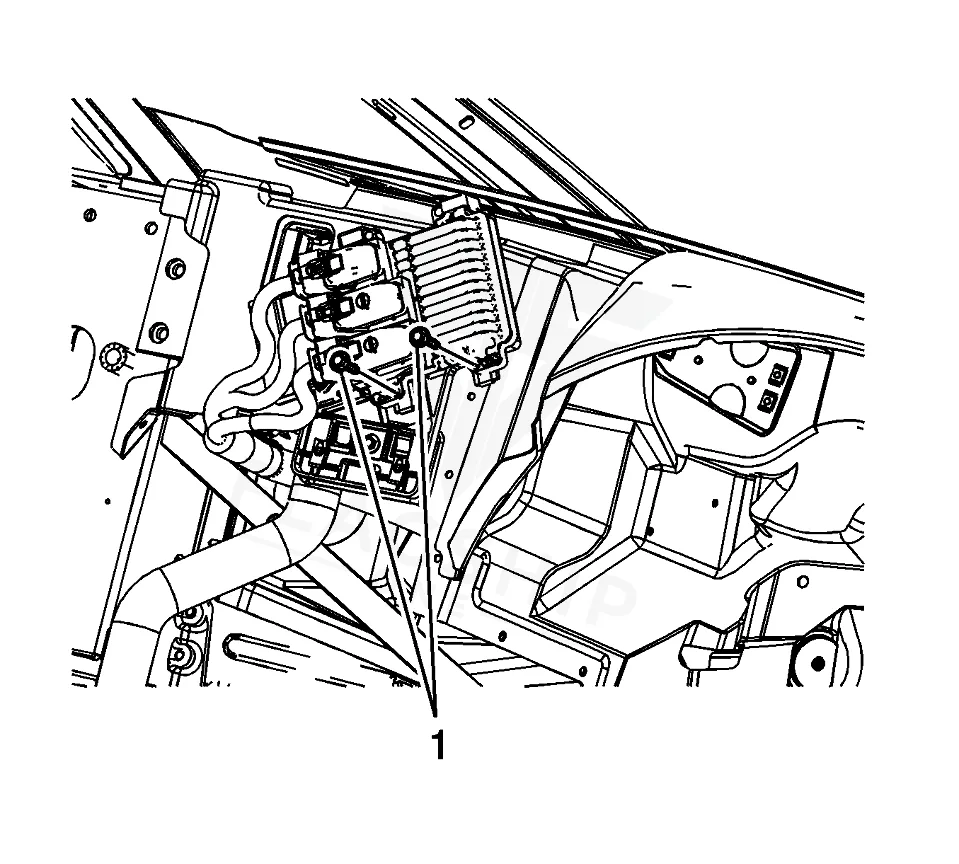
Work with the ignition off, and treat the module as static-sensitive: avoid touching the connector pins at any point.
| Operation | Configuration | Book Time |
|---|---|---|
| Powertrain Control Module R&R | All configurations | 1.4 hr |
| Engine Control Module R&R | All configurations | 1.4 hr |
| Engine Control Module Relearn | All configurations | 0.5 hr |
2011 Chevrolet Corvette
OEM programmed ECM for your 2011 Chevrolet Corvette — plug & play, no dealer visit.
Free shipping · Lifetime warranty
After replacing the ECM, the factory procedure requires a relearn procedure using a GM-approved scan tool to calibrate the new module to your vehicle’s specific hardware. The scan tool guides the technician through steps to establish communication, program the VIN, and allow the ECM to learn idle air control and fuel trims. Special equipment and the correct GM calibration file are required for this step. Flagship One sends a VIN-programmed replacement unit that arrives ready to install, eliminating the need for you to source calibration software or schedule dealer programming—the unit already contains your vehicle’s specific VIN and latest available calibration.
When the ECM fails or develops internal memory faults, common symptoms include a no-crank or no-start condition, engine stalling immediately after starting, rough idle, hesitation under acceleration, and illuminated check engine light. The vehicle may enter limp-home mode, allowing operation only at reduced power. Diagnostic scan tools often cannot communicate with the ECM or return generic error messages. Stored trouble codes typically include internal module codes such as P0601, indicating internal memory read/write failure. internal memory integrity failure often appears alongside P0603, P0604, P062F, or P1621, all pointing to EEPROM problems within the control unit rather than external sensor or wiring faults.
Your 2011 Chevrolet Corvette may store several module-internal diagnostic trouble codes indicating EEPROM (Electrically Erasable Programmable Read-Only Memory) failure within the ECM or TCM. These codes indicate the module’s internal non-volatile memory has corrupted and can no longer reliably store calibration data, adaptive factors, or fault history. The codes are P0601, P0602, P0603, P0604, P062F, and P1621. When these appear without external wiring faults, module replacement is typically required.
Factory Service Bulletin #PIP4653D, issued June 20, 2012, addresses diagnostic trouble codes P0601, P0603, P0604, P062F, or P1621 stored in the Transmission Control Module. The bulletin notes these codes may appear due to internal module faults and provides diagnostic guidance. Technicians are directed to verify power and ground integrity, check for after-market electrical additions that could cause voltage spikes, and ensure proper programming procedures are followed when replacing the module. The TSB emphasizes connecting any add-on electrical equipment to the vehicle’s 12-volt battery to prevent damage.
| Bulletin | Subject | What It Addresses |
|---|---|---|
| — | DTC’s P0601 P0603 P0604 P062F Or P1621 (Stored in the TCM) – (Jun 20, 2012) | — |
A used ECM requires GM programming software and the correct calibration file for your specific vehicle. Most salvage yards cannot program modules, and dealer programming adds significant cost. A VIN-programmed replacement unit arrives ready to install.
Operating the vehicle with an ECM storing internal memory codes is not recommended. The module may fail completely, leaving you stranded. Performance is unpredictable, and the vehicle may enter limp-home mode or refuse to start.
The ECM controls engine functions while the PCM (Powertrain Control Module) traditionally integrated engine and transmission control. On your Corvette, these functions may reside in a single unit or separate modules depending on the exact configuration.
When your 2011 Chevrolet Corvette requires ECM replacement, you have two primary paths: a new or refurbished unit from a specialty supplier like Flagship One, or a used unit from a salvage yard. Specialty units arrive VIN-programmed with your vehicle’s specific calibration, eliminating dealer programming delays and fees. Used units from salvage yards typically require programming and may have unknown service history. Consider your budget, timeline, and warranty needs when choosing.
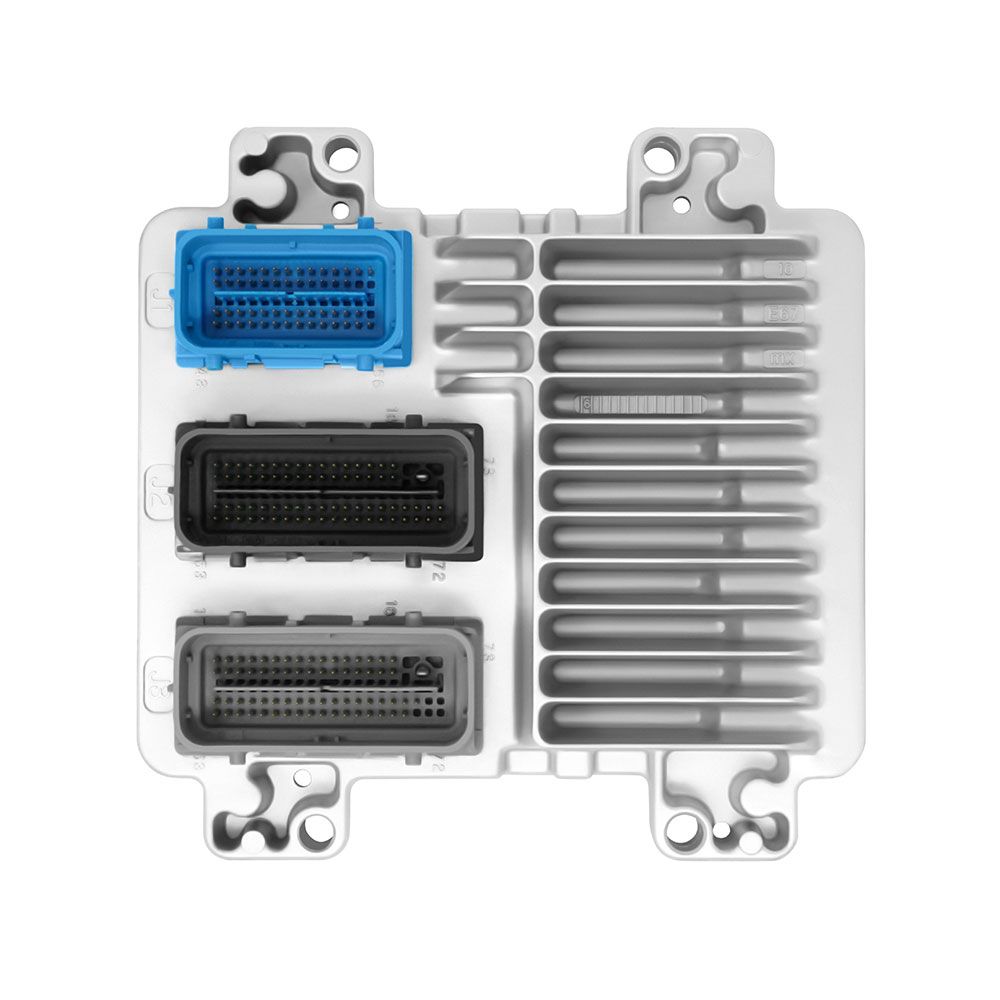
Flagship One stocks a refurbished, VIN-programmed PCM for the 2011 Chevrolet Corvette with a lifetime warranty, free shipping and no core charge. The full Chevrolet Corvette module lineup covers other engine configurations as well.
Your 2011 Chevrolet Corvette relies on a properly functioning ECM to control the 6.2L engine’s complex operation. Internal trouble codes like P0601 indicate module failure requiring replacement. Whether you service your Corvette yourself or hire a professional, understanding the location, programming requirements, and factory precautions helps ensure a correct repair. A pre-programmed replacement unit from a specialist can save significant time compared to sourcing an unprogrammed module and arranging dealer calibration.