
Last updated on August 25th, 2026 at 02:28 pm
In the 2002 Chevrolet Avalanche the Powertrain Control Module (PCM) and Engine Control Module (ECM) serve as the vehicle’s central computers, interpreting sensor data to manage fuel, spark, and transmission. A failure typically results from internal EEPROM corruption, which may trigger a range of diagnostic trouble codes and loss of engine‑oil‑life memory.
When a 2002 Chevrolet Avalanche begins to exhibit no‑start conditions, erratic idle, or persistent diagnostic trouble codes, the vehicle’s central computers are often the source. Understanding how the Powertrain Control Module and Engine Control Module function, what the factory cautions entail, and the steps required for a proper swap can save you time and prevent further damage. This guide walks you through the definition of these modules, their location, the labor involved, post‑install procedures, common symptoms, and practical ways to keep them healthy. By the end, you’ll know what to expect from a replacement and how Flagship One’s VIN‑programmed units simplify the process.
The Powertrain Control Module and Engine Control Module in a 2002 Chevrolet Avalanche act as the brain for powertrain and engine management, processing inputs from dozens of sensors to control fuel injection, ignition timing, and transmission shift points. They store critical calibration data, including remaining oil life, and communicate with the vehicle’s diagnostic system. A malfunction can arise from internal EEPROM failure, leading to loss of memory and a cascade of error codes. Because these computers coordinate multiple subsystems, any error can affect drivability, emissions, and even safety. Proper handling is essential, and the vehicle relies on these modules to maintain optimal performance and compliance. 2002 Chevrolet Avalanche replacement modules ensure that the vehicle continues to run within factory specifications.
Both the PCM and ECM are mounted in the engine compartment, accessible from the top of the valve cover area. Removal involves disconnecting the battery, then unplugging the power and signal connectors while the ignition is off, as required by the factory caution. Each module swap typically takes 1.4 hours according to the labor guide, reflecting the time needed to unbolt, remove, and reinstall the unit. After the physical replacement, a relearn procedure of 0.5 hours is required for each module to reestablish sensor baselines and calibrate the system to the vehicle’s current conditions.
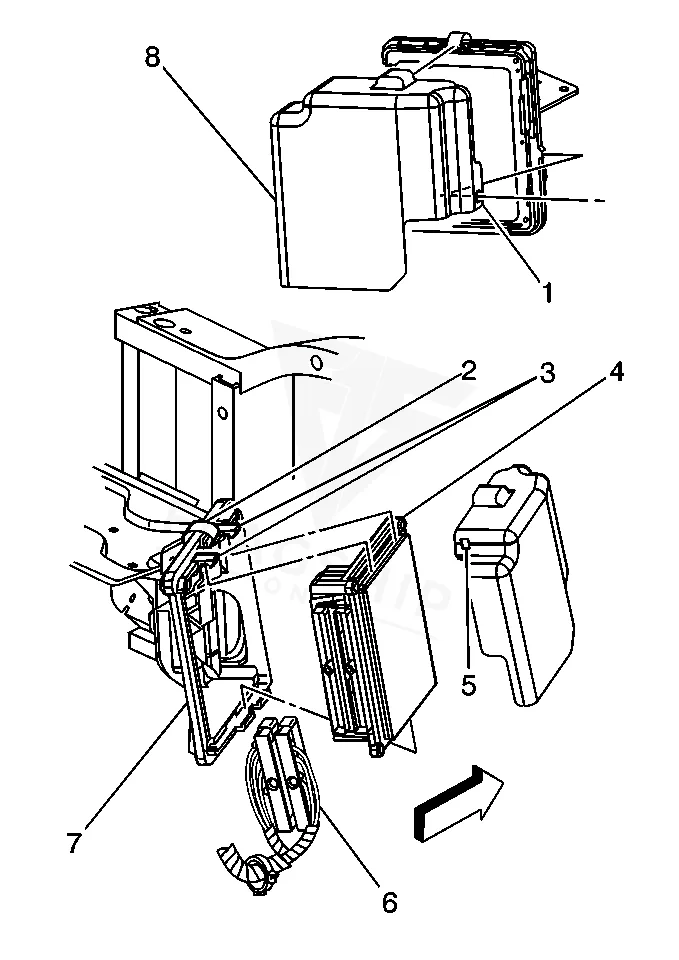
Work with the ignition off, and treat the module as static-sensitive: avoid touching the connector pins at any point.
| Operation | Configuration | Book Time |
|---|---|---|
| Powertrain Control Module R&R | Avalanche 1500 | 1.4 hr |
| Powertrain Control Module R&R | Avalanche 2500 | 1.4 hr |
| Powertrain Control Module Relearn | Avalanche 1500 | 0.5 hr |
| Powertrain Control Module Relearn | Avalanche 2500 | 0.5 hr |
| Engine Control Module R&R | Avalanche 1500 | 1.4 hr |
| Engine Control Module R&R | Avalanche 2500 | 1.4 hr |
| Engine Control Module Relearn | Avalanche 1500 | 0.5 hr |
| Engine Control Module Relearn | Avalanche 2500 | 0.5 hr |
2002 Chevrolet Avalanche
OEM programmed ECM for your 2002 Chevrolet Avalanche — plug & play, no dealer visit.
Free shipping · Lifetime warranty
Once the PCM or ECM is installed, the factory service manual calls for a specific relearn sequence to restore sensor references and program the remaining oil‑life value. The procedure includes powering the vehicle, cycling the ignition, and using a scan tool to initiate the relearn. Flagship One units arrive already calibrated to the vehicle’s VIN, so those steps are effectively completed before installation. a VIN-programmed replacement unit eliminates the need for on‑site programming, allowing you to focus on the mechanical swap and the short relearn interval.
Typical signs of a failed PCM or ECM in a 2002 Chevrolet Avalanche include a complete no‑start condition, rough idle, intermittent stalling, and loss of transmission shift quality. Scan tools often report communication failures, and the instrument cluster may display warning lights. One of the most common diagnostic entries is code P0601 fault, which indicates an internal memory error. Additional codes such as P0602 through P1683 may appear, reflecting broader EEPROM or communication issues. Drivers may also notice that the oil‑life monitor resets to 100 % after a replacement, which can be a clue that the module was not pre‑programmed.
The following list enumerates the diagnostic trouble codes that the PCM and ECM can generate for the 2002 Chevrolet Avalanche.
The factory labor guide lists 1.4 hours for the removal and installation of the PCM, plus an additional 0.5 hours for the required relearn procedure.
No. If the replacement module is not pre‑programmed with the remaining oil life, the system defaults to 100 % after installation.
The ignition must be turned off before any power connections are removed or reconnected to prevent internal damage to the PCM.
A scan tool that supports the manufacturer’s relearn sequence can initiate the procedure, but the unit must still be calibrated for the vehicle’s VIN.
Codes P0601 through P0607, as well as P062F, P1600, P1621, P1627, and the P1680‑P1683 series, are frequently logged when the PCM or ECM experiences internal faults.
When the PCM or ECM in your 2002 Chevrolet Avalanche needs attention, you can choose a brand‑new factory‑programmed unit or a refurbished replacement that meets the same specifications. Both options require the same removal steps, but a VIN‑programmed part from Flagship One removes the need for on‑site programming, letting you complete the job more efficiently.
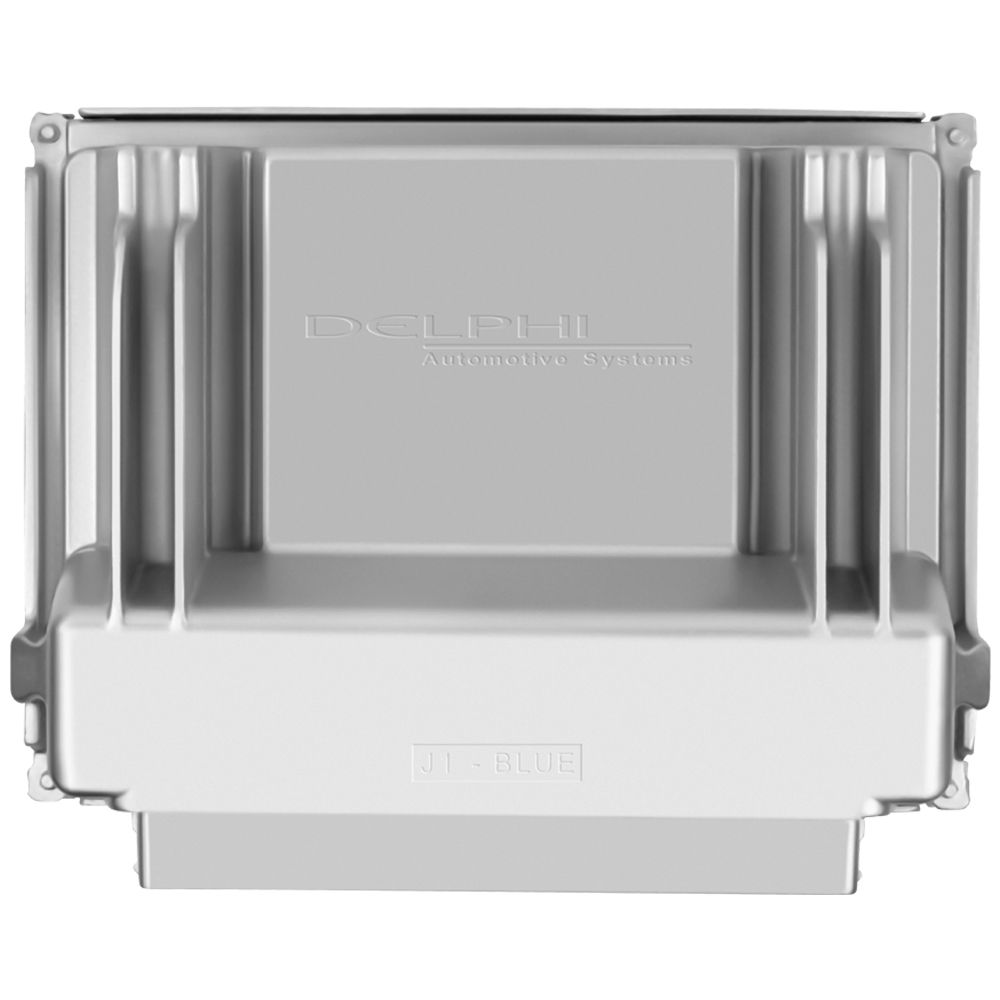
Flagship One stocks a refurbished, VIN-programmed PCM for the 2002 Chevrolet Avalanche with a lifetime warranty, free shipping and no core charge. The full Chevrolet Avalanche module lineup covers other engine configurations as well.
Replacing the PCM or ECM in a 2002 Chevrolet Avalanche involves careful handling, adherence to factory cautions, and a short relearn cycle. Whether you opt for a new or refurbished unit, following the outlined steps helps restore reliable performance and keeps your vehicle’s systems communicating correctly.