
Last updated on August 25th, 2026 at 02:45 pm
The Engine Control Module (DME) in your 1994 BMW 8 Series manages fuel injection, ignition timing, and emission controls for the 4.0L V8 engine. When this processor fails, the engine may not run properly or the Check Engine Light will illuminate with stored faults.
If your 1994 BMW 8 Series is displaying a Check Engine Light or experiencing drivability problems such as hard starting, stalling, or poor acceleration, the DME (Digital Motor Electronics) engine control module may be the culprit. This guide explains what the control module does, where it is located, the factory-recommended replacement procedure, and what symptoms indicate failure. Whether you are diagnosing a no-start condition or planning a repair, understanding the role of this central computer will help you make informed decisions about repair versus replacement options. The 1994 BMW 8 Series uses the Motronic engine management system, which was standard before OBD-II standardization.
The DME (Digital Motor Electronics) control module serves as the brain of your 1994 BMW 8 Series 4.0L engine. This computer precisely controls fuel delivery through the injectors, manages ignition timing, monitors oxygen sensor data for fuel mixture adjustments, and coordinates idle speed and emissions systems. Without a functioning DME, the engine cannot operate efficiently or meet emission standards. When this module fails, you may experience no-start conditions, intermittent stalling, rough idle, or triggering of the Check Engine Light. In the 1994 BMW 8 Series, this processor is a non-volatile system that stores calibration data permanently. If you need BMW 8 Series replacement computers, the module is located in the vehicle’s engine compartment and requires specific handling procedures to avoid static damage.
1994 BMW 8 Series
OEM programmed ECM for your 1994 BMW 8 Series — plug & play, no dealer visit.
Free shipping · Lifetime warranty
The Engine Control Module on your 1994 BMW 8 Series is located in the engine compartment, typically mounted in a protected housing near the firewall or bulkhead. Accessing the DME requires careful removal of surrounding components to reach the unit. The factory labor time for ECM R&R is 0.5 hours, while the Powertrain Control Module R&R requires an additional 0.5 hours. During replacement, the technician must lay the control module on a static discharge mat to prevent electrostatic damage to sensitive circuits. The factory caution states that all 6 retaining tabs must be carefully bent up during removal. It is critical that the ignition switch is in the OFF position before disconnecting any electrical connections to the module. After the new module is installed and secured, the relearn procedure must be performed, which carries a separate 0.5 hour labor allowance.
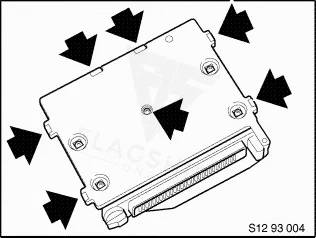
Work with the ignition off, and treat the module as static-sensitive: avoid touching the connector pins at any point.
| Operation | Configuration | Book Time |
|---|---|---|
| Engine Control Module R&R | All configurations | 0.5 hr |
| Powertrain Control Module R&R | All configurations | 0.5 hr |
| Powertrain Control Module Relearn | All configurations | 0.5 hr |
After installing a replacement DME module in your 1994 BMW 8 Series, the factory procedure requires a powertrain control module relearn process to be performed using BMW diagnostic equipment. This procedure synchronizes the new module with vehicle-specific sensors and establishes proper communication protocols. During this time, the technician will verify that all actuators respond correctly and that fault codes have cleared. Flagship One units arrive pre-programmed with your vehicle’s specific VIN, meaning the essential calibration data is already loaded at the factory. When you install a VIN-programmed replacement unit, the technician may still need to perform the verification procedure to confirm all systems communicate properly, but the time-consuming VIN programming step is already completed.
Common failure symptoms of the DME control module in this pre-OBD-II vehicle include a no-start condition where the engine cranks but will not fire, intermittent stalling especially at idle, and hard starting when the engine is warm. You may also notice a illuminated Check Engine Light with fault codes stored in the DME memory. In some cases, the scan tool may not communicate with the module at all, indicating an internal electronics failure. Faults such as memory fault may appear, suggesting the module’s internal memory has become corrupted. Other symptoms include erratic throttle response, poor fuel economy, and failure of the vehicle to pass emission tests due to improper fuel delivery or ignition timing.
Factory service information for the 1994 BMW 8 Series addresses Check Engine Light illumination with fault codes stored in the DME ECM. Technicians are directed to diagnose the specific fault and determine whether the control module requires replacement. A critical note applies to DME units bearing the identification number 1 744 606 — these modules have a non-replaceable EPROM, meaning the calibration chip cannot be swapped. In such cases, complete module replacement is the only option. Always verify the part number before attempting any repair procedures.
| Bulletin | Subject | What It Addresses |
|---|---|---|
| — | Check Engine Light Illuminated, Faults Stored in DME/ECM | — |
No, the DME must be matched to your specific vehicle. Each module contains calibration data specific to the VIN and engine combination. A mismatched unit may cause drivability issues or prevent the engine from running at all.
While the mechanical removal is straightforward, proper diagnosis is essential to confirm the module is the cause. Additionally, the relearn procedure requires BMW-specific diagnostic equipment. If you have access to a scan tool and are comfortable with electronics, the R&R portion is possible, but verification is recommended.
The engine may run poorly or not at all. The new module needs to learn sensor characteristics and idle air control settings specific to your vehicle. Without this procedure, you may experience persistent codes, rough idle, or stalling.
When your 1994 BMW 8 Series DME fails, you have two primary repair paths: professional repair of the existing module or replacement with a refurbished unit. Repair is typically faster but may have limited longevity depending on the damage. A replacement unit comes with the proper VIN programming already completed, saving labor time during installation. Consider your budget, timeline, and warranty preferences when choosing between these options.
Flagship One stocks a refurbished, VIN-programmed PCM for the 1994 BMW 8 Series with a lifetime warranty, free shipping and no core charge. The full BMW 8 Series module lineup covers other engine configurations as well.
The DME control module is the central computer governing your 1994 BMW 8 Series engine performance. When it fails, symptoms range from Check Engine Light illumination to complete no-start conditions. Understanding the factory service procedure — including the ignition-off requirement, static mat handling, and relearn process — helps ensure a proper repair. Whether you choose repair or replacement, addressing DME failure promptly will restore your vehicle’s drivability and reliability.