
Last updated on August 25th, 2026 at 02:45 pm
The engine control module (ECM) in your 2013 BMW X6 manages fuel delivery, ignition timing, and emissions systems. Failures may trigger warning lights, poor performance, or no-start conditions due to corrupted data or internal faults.
If your 2013 BMW X6 is running poorly or refusing to start, the engine control module (ECM) may be at fault. This critical component oversees fuel injection, ignition timing, and emissions controls, ensuring smooth operation. When it fails, symptoms can range from a check engine light to complete engine shutdown. Replacing the ECM involves accessing a tight space near the windshield, following precise steps to avoid damage, and completing a relearn procedure. Understanding these details helps you anticipate labor time and avoid common pitfalls during the repair process.
2013 BMW X6
OEM programmed ECM for your 2013 BMW X6 — plug & play, no dealer visit.
Free shipping · Lifetime warranty
In your 2013 BMW X6, the engine control module (ECM) acts as the brain of the powertrain, interpreting sensor data to optimize performance and efficiency. It adjusts fuel mixture, spark timing, and idle speed in real time, directly impacting drivability. A failing ECM may cause erratic behavior, such as stalling or misfires, and can leave you stranded if left unaddressed. When replacement becomes necessary, opting for replacement engine computers for the X6 ensures compatibility and restores reliable operation without guesswork.
The ECM in your 2013 BMW X6 sits in the plenum chamber at the base of the windshield, requiring careful access. The factory procedure involves removing the plenum cover and disconnecting electrical connectors before extracting the module. Reinstallation follows the reverse steps, with labor typically estimated at 0.8 hours for removal and replacement. Always switch off the ignition before handling the module to prevent electrostatic damage, and follow torque specifications if provided to secure connections properly.
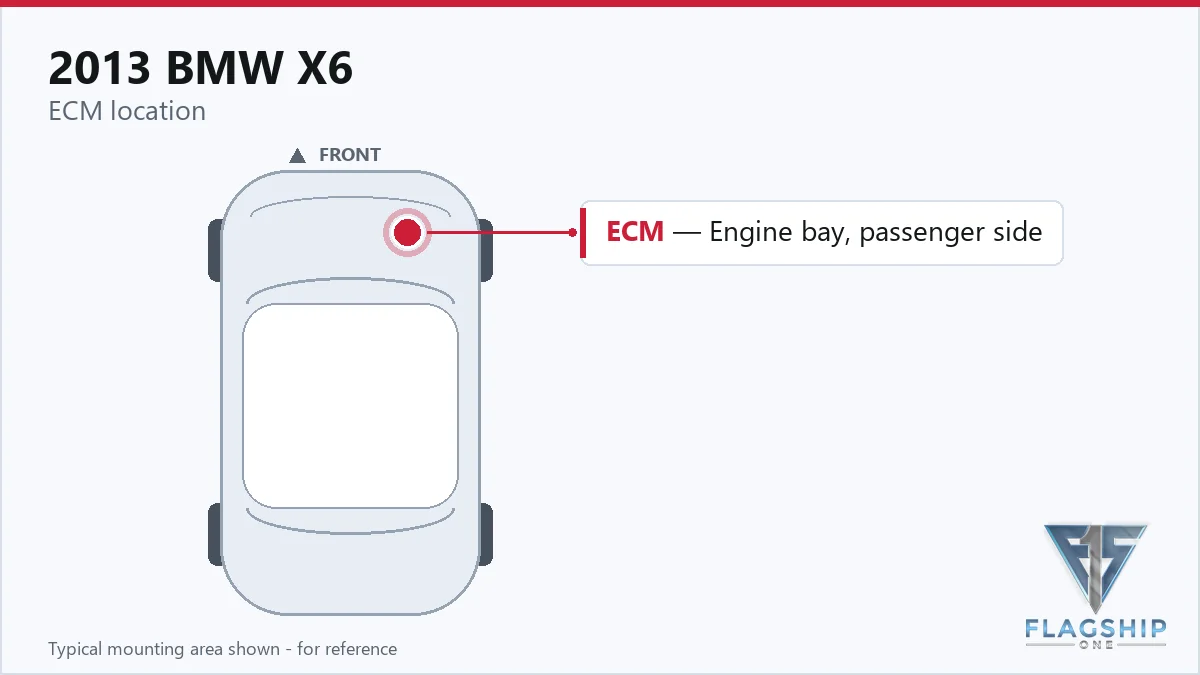
Work with the ignition off, and treat the module as static-sensitive: avoid touching the connector pins at any point.
| Operation | Configuration | Book Time |
|---|---|---|
| Engine Control Module R&R | All configurations | 0.8 hr |
| Engine Control Module Relearn | All configurations | 0.5 hr |
| Powertrain Control Module R&R | All configurations | 0.8 hr |
| Powertrain Control Module Relearn | All configurations | 0.5 hr |
After replacing the ECM in your 2013 BMW X6, the factory requires a 0.5-hour relearn procedure to synchronize the module with the vehicle’s systems. This step ensures proper communication with sensors and other control units. However, a VIN-programmed replacement unit arrives pre-configured to your vehicle’s specifications, eliminating the need for post-install programming. This saves time and reduces the risk of incomplete initialization, allowing you to focus on verifying the repair’s success.
A failing ECM in your 2013 BMW X6 may cause a range of issues, from a no-start condition to intermittent stalling or poor acceleration. Common symptoms include a check engine light, rough idle, or transmission shifting problems, as the module’s data influences multiple systems. Scan tools may reveal communication errors or internal faults, such as A2CB:an internal control module fault. If the ECM loses power or corrupts its memory, the vehicle may enter a limp mode to prevent further damage, signaling the need for prompt diagnosis.
Factory service bulletins for the 2013 BMW X6 address issues like an illuminated check engine light with faults stored in the ECM. One bulletin highlights the A2CB code, which points to an internal control module fault. These bulletins outline diagnostic steps to confirm the failure and recommend replacement if necessary, ensuring repairs align with manufacturer guidelines.
| Bulletin | Subject | What It Addresses |
|---|---|---|
| — | Check Engine Light Illuminated, Faults Stored in DME/ECM | — |
| — | Controller Fault Code A2CB Internal Control Module Fault | — |
Common signs include a check engine light, no-start conditions, or erratic engine behavior. A scan tool may reveal internal fault codes like A2CB, indicating the module needs replacement. If the vehicle stalls or misfires without explanation, the ECM is a likely culprit.
While technically possible, the ECM is located in a tight space under the plenum chamber, requiring careful handling to avoid damage. ESD protection and proper connector procedures are critical. If you lack experience, professional installation is recommended to ensure a successful repair.
The relearn procedure synchronizes the new ECM with the vehicle’s sensors and systems, ensuring proper communication. Without it, the module may not function correctly, leading to performance issues. A VIN-programmed unit skips this step, as it arrives pre-configured for your vehicle.
If your 2013 BMW X6 requires an ECM replacement, you have options. A new or refurbished unit can restore functionality, but labor and programming add complexity. A VIN-programmed replacement simplifies the process, eliminating the need for post-install procedures and reducing downtime. Consider your budget and time constraints when choosing the best solution for your repair.
Flagship One stocks a refurbished, VIN-programmed PCM for the 2013 BMW X6 with a lifetime warranty, free shipping and no core charge. The full BMW X6 module lineup covers other engine configurations as well.
A failing ECM in your 2013 BMW X6 can disrupt daily driving, but replacement is straightforward with the right approach. Whether you opt for a new or refurbished unit, understanding the location, labor, and programming requirements helps you make an informed decision. Addressing the issue promptly ensures your X6 remains reliable on the road.