
Last updated on August 25th, 2026 at 02:46 pm
In this 2007 Toyota Camry with the 2.4L 2AZ-FE engine, the engine control module (ECM) or powertrain control module (PCM) serves as the central processor for engine and transmission functions. Internal faults like memory corruption or circuit damage may trigger codes such as P0606 or P0607, leading to degraded operation or communication loss with diagnostic tools.
If your 2007 Toyota Camry equipped with the 2.4L 2AZ-FE engine is exhibiting driveability issues—like intermittent stalling, harsh or delayed shifting, or a persistent check engine light—the root may lie in the central control unit managing engine and transmission functions. That unit, commonly referred to as the engine control module (ECM) or powertrain control module (PCM), is a critical component of your vehicle’s electronic architecture. Replacing it isn’t as simple as swapping hardware; calibration, relearning, and proper installation steps are essential to ensure seamless operation. Understanding the facts, labor requirements, and factory guidance helps you make informed decisions—whether you’re diagnosing, planning a repair, or selecting a replacement unit. This article walks through exactly what the module does, how it’s accessed, what trouble codes signal internal failure, and how post-replacement steps can be streamlined when using a properly programmed unit.
The 2007 Toyota Camry’s 2.4L engine relies on a single control unit—often labeled ECM or PCM interchangeably by technicians—to coordinate fuel injection, ignition timing, throttle response, and transmission shift strategy. This module interprets sensor inputs from the mass air flow sensor, oxygen sensors, crankshaft and camshaft position sensors, and others, then actuates components like injectors, ignition coils, and the transmission solenoid pack. A failure in internal circuitry, memory corruption, or voltage spikes can impair these functions, leading to degraded performance or complete loss of communication with scan tools. replacement engine computers for this platform must match factory calibration parameters, especially those related to shifting logic and idle strategy, to avoid mismatches that trigger reoccurring codes or drivability concerns. On this platform, the PCM and ECM are not separate units; the same housing and connectors serve both naming conventions used in service documentation. Replacement units must support all original communication protocols, including J1850 and CAN bus signaling, and integrate with the immobilizer and instrument cluster to prevent anti-theft lockouts. Because this vehicle’s powertrain control strategy is tightly integrated with the automatic transmission control module (TCM), even minor calibration errors can produce symptoms mistaken for transmission issues when the root cause is in the main control unit.
2007 Toyota Camry 2.4L
OEM programmed replacements — plug & play, no dealer visit.
Find yours by year, make & model →
Free shipping · Lifetime warranty
H2 — Module Location and Installation Process
The engine control module sits on the driver’s side of the engine bay, mounted near the firewall behind the air cleaner housing. Access requires removing the negative battery cable first, followed by the no. 1 engine cover sub-assembly, air cleaner inlet assembly, air cleaner cap sub-assembly, air cleaner case sub-assembly, and air cleaner bracket. Once exposed, the module is secured with seven fasteners: four requiring 3.0 N·m and three requiring 8.0 N·m. The labor guide lists 0.7 hours for removal and replacement, reflecting the physical access effort, not just the module swap itself. A 0.5-hour relearn procedure follows installation to reset adaptation values and allow the system to recalibrate to current sensor inputs. A simpler 0.3-hour reset may suffice in cases where only a software refresh is needed, but a full relearn is recommended after any hardware change to ensure driveability parameters reset properly. All steps align with factory service manual procedures, and torque values must be respected to avoid stripping threads or damaging the mounting points on the housing.
Work with the ignition off, and treat the module as static-sensitive: avoid touching the connector pins at any point.
| Operation | Configuration | Book Time |
|---|---|---|
| Engine Control Module Relearn | All configurations | 0.5 hr |
| Engine Control Module R&R | All configurations | 0.7 hr |
| Engine Control Module Reset | All configurations | 0.3 hr |
| Powertrain Control Module R&R | All configurations | 0.7 hr |
| Powertrain Control Module Relearn | All configurations | 0.5 hr |
Factory procedure for this vehicle requires a relearn or reset after installing a new engine control unit, depending on whether the module was fully reprogrammed or just reset in place. This step recalibrates fuel trims, idle speed, and transmission shift points using live sensor data. Flagship One units arrive pre-configured with a VIN-specific calibration, meaning the module is already loaded with the correct software version, immobilizer codes, and transmission strategy for your exact configuration. a VIN-programmed replacement unit removes the need for dealer-level reprogramming tools and cuts post-install labor significantly—though a technician may still recommend a relearn to ensure smooth adaptation under real-world driving conditions. This is especially relevant for older vehicles where memory integrity is suspect and adaptation values may not initialize correctly without proper initialization. The relearn process itself typically requires a vehicle drive cycle with specific speed and load conditions to allow the ECM to store new learned values, though basic reset functions can be initiated using a Techstream or equivalent scan tool. For customers performing DIY replacement, a full relearn is still advised even if the unit is pre-programmed, to minimize early drivability inconsistencies.
H2 — Common Failure Symptoms and Diagnostic Clues
A failing engine control module on the 2007 Camry 2.4L often presents with symptoms that mimic sensor or mechanical faults but lack a clear root cause when those components are replaced. Typical signs include intermittent no-start conditions—especially after the vehicle has warmed up—sudden stalling at idle or low speed, harsh or delayed upshifts and downshifts, and erratic tachometer behavior. The check engine light may illuminate with codes related to misfire, lean or rich fuel trim, or communication faults. In severe cases, the vehicle may enter a limp mode with reduced power or fail to start altogether. internal engine control module failure is one documented internal fault code, indicating a processor or memory error within the unit itself rather than an external sensor issue. Another code, P0607, points to control module memory corruption or a checksum error, often appearing after voltage spikes or improper jump-start procedures. Because the ECM is involved in both engine and transmission control, transmission-related complaints—such as harsh 1–2 shifts or failure to engage overdrive—can also stem from this unit. Diagnosing internal module failure requires ruling out power and ground issues, inspecting connector pins for corrosion or backing out, and confirming consistent communication with a scan tool under load. If all external causes are eliminated and the codes persist, the module itself is likely the source of trouble.
H2 — Engine Control Module Trouble Codes for This Vehicle
The 2007 Toyota Camry 2.4L may generate internal trouble codes when the engine control module or powertrain control module suffers from internal faults. These codes are not caused by sensor failures or wiring issues, but by the module’s inability to process data correctly or maintain proper memory integrity. The documented codes include P0606 and P0607, both indicating internal control unit problems requiring module-level attention.
| Code | Meaning | Full Guide |
|---|---|---|
| P0606 | Module processor failure | Full P0606 guide → |
| P0607 | Module performance fault | Full P0607 guide → |
Factory service bulletins issued for this model year and engine combination include EG056-06, which addresses ECM calibration enhancements to improve shifting performance and smoothness on 2007 Camry models with the 2AZ-FE engine and 5-speed automatic transmission—though this bulletin is now obsolete. A separate bulletin, T-TCI-3151, targets Canadian-market 2007 Camrys and focuses on TCM calibration updates for similar improvements. Another applicable bulletin, T-TCI-2758, outlines the Techstream ECU reprogramming procedure for all 2001 through 2008 Toyota vehicles sold in Canada, including this Camry configuration.
| Bulletin | Subject | What It Addresses |
|---|---|---|
| EG056-06 | 07 Camry (2AZ-FE, 5-Speed A/T): ECM Calibration: Enhancement to Shifting Performance & Smoothne | — |
| T-TCI-3151 | ’07 Camry: TCM Calibration: Enhancement To Shifting Performance & Smoothness (Canada) | — |
| T-TCI-2758 | ’01-’08 All Applicable Toyota Models: Techstream ECU Flash Reprogramming Procedure (Canada) | — |
Yes—many DIYers complete the physical swap after following the access steps and torque specs. However, a proper relearn or reset is required afterward, and the vehicle must be driven under varied conditions to allow full adaptation.
If you use a standard off-the-shelf replacement unit, yes—a Techstream or equivalent scan tool is needed for VIN-specific calibration and relearn. But Flagship One units ship already programmed, removing that step for most users.
P0606 indicates internal failure within the control unit itself. If the new unit generates this code immediately, it may be defective, improperly seated, or exposed to voltage issues during installation—check grounds and battery connections before assuming the module is faulty.
Not necessarily—shifting issues can stem from transmission fluid condition, solenoid faults, or TCM calibration. However, if internal codes like P0606 or P0607 are present alongside shifting problems, a module replacement may be warranted after ruling out fluid and pressure concerns.
Yes—Toyota uses a single housing that handles both engine and transmission control functions, though the terms ECM and PCM appear interchangeably in service literature depending on the model year and region.
If your 2007 Camry shows signs of engine control module failure—no-start, shifting faults, or internal trouble codes like P0606—you have two main replacement paths: a new OEM unit with long lead times, or a professionally rebuilt unit that matches factory specifications. Flagship One offers a third option: a brand-new, pre-programmed unit tailored to your VIN, eliminating dealer programming hassles and reducing downtime. Each unit includes updated calibrations referenced in the relevant service bulletins and ships ready for installation with minimal post-fit steps.
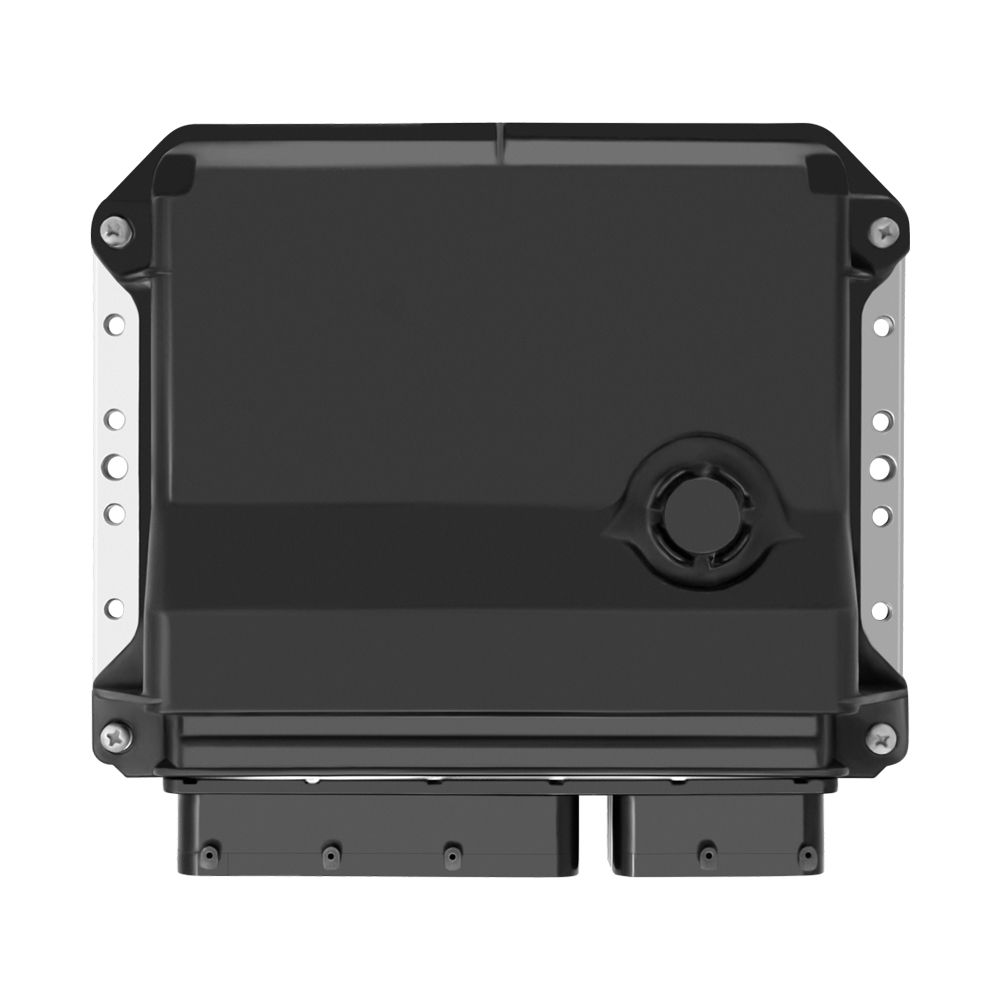
Flagship One stocks a refurbished, VIN-programmed PCM for the 2007 Toyota Camry with a lifetime warranty, free shipping and no core charge. The full Toyota Camry module lineup covers other engine configurations as well.
The 2007 Toyota Camry with the 2.4L engine relies heavily on a single control unit—the ECM or PCM—to manage both engine and transmission functions. When internal faults occur, symptoms can be broad and misleading, but proper diagnosis and replacement— paired with correct calibration—restore reliable operation. If you’re considering a replacement, ensure it’s matched to your vehicle and programmed appropriately to avoid repeat issues.