
Last updated on August 25th, 2026 at 12:41 pm
The Powertrain Control Module serves as the central computer for your 2019 Lincoln Continental’s 3.7L engine, managing fuel delivery, ignition timing, and transmission shifting. Internal processor failures in this module typically stem from voltage spikes, heat damage, or moisture intrusion and may trigger multiple fault codes.
Modern vehicles like your 2019 Lincoln Continental depend on sophisticated electronic control modules to manage increasingly complex powertrain operations. The Powertrain Control Module represents the nerve center of your vehicle’s engine management system, processing input from numerous sensors and commanding actuators to maintain optimal operation. When this module experiences internal failures, symptoms can range from subtle drivability concerns to complete no-start conditions. Understanding what the PCM does, recognizing failure symptoms, and knowing what replacement involves helps you make informed decisions when your Continental develops module-related problems. This guide covers module function in your specific vehicle, documented failure patterns, factory service procedures, and practical considerations for replacement versus repair options. Whether you are experiencing current issues or preparing for potential future repairs, the information below provides the technical foundation you need.
The Powertrain Control Module in your 2019 Lincoln Continental with the 3.7L V6 engine functions as the primary computer responsible for coordinating all engine and transmission operations. This single module integrates what earlier vehicles handled through separate computers, combining engine control functions with transmission control within one housing. The module receives data from oxygen sensors, mass airflow sensors, crankshaft position sensors, and dozens of other inputs to calculate precise fuel injector pulse widths, spark advance angles, and transmission shift schedules in real time. For your Continental’s 3.7L engine, the PCM manages the variable valve timing system, active fuel cylinder deactivation on applicable models, and electronic throttle control functionality. The module also serves as the communication hub for your vehicle’s controller area network, translating data between the engine management system, anti-lock brakes, stability control, and body control functions. When the internal processor or memory systems within the module fail, communication errors and default-mode operations result. Replacement engine computers for the 2019 Lincoln Continental must be programmed with vehicle-specific calibration data to resume normal operation. Your Continental’s PCM also handles emissions-related functions, meaning module failures may trigger illuminated malfunction indicator lights and failed emissions tests. The module’s location typically allows for reasonable service access, though electrical connector integrity and ground connection quality significantly affect long-term reliability of any replacement unit.
Flagship One keeps Lincoln Continental replacement engine computers in stock for exactly this failure pattern.
2019 Lincoln Continental
OEM programmed ECM for your 2019 Lincoln Continental — plug & play, no dealer visit.
Free shipping · Lifetime warranty
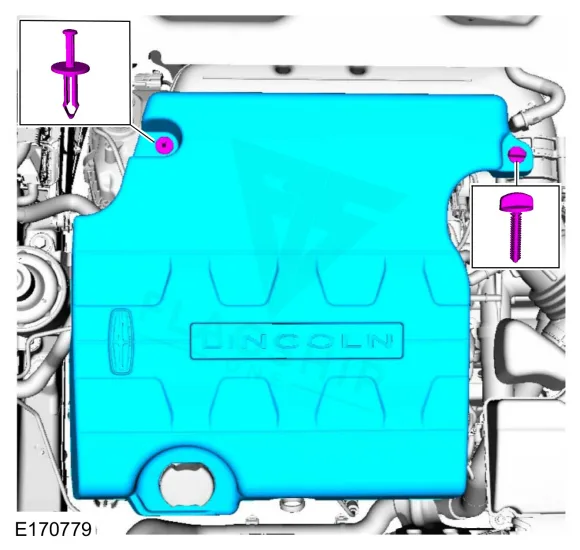
Work with the ignition off, and treat the module as static-sensitive: avoid touching the connector pins at any point.
| Operation | Configuration | Book Time |
|---|---|---|
| Engine Control Module Reset | All configurations | 0.3 hr |
| Engine Control Module R&R | All configurations | 0.7 hr |
| Engine Control Module Relearn | All configurations | 0.5 hr |
| Powertrain Control Module Relearn | All configurations | 0.5 hr |
| Powertrain Control Module R&R | All configurations | 0.7 hr |
After installing a replacement Powertrain Control Module in your 2019 Lincoln Continental, the factory service procedure requires reprogramming the Passive Anti-Theft System to restore proper vehicle security function. This PATS reprogramming step is mandatory for the vehicle to start and run normally following module replacement. The immobilizer system built into your Continental must recognize the new module as an authorized controller before the engine will engage the starter and fuel injectors. Without completing this security relearn procedure, even a mechanically perfect replacement module will leave your vehicle unable to start. Flagship One addresses this requirement by shipping replacement modules already configured with your specific vehicle’s VIN and calibration data, meaning the post-install programming steps that would otherwise be required at a dealership have already been completed. This pre-programming allows the replacement module to communicate immediately with your Continental’s PATS system and other modules on the vehicle network. However, technicians should still verify successful communication and clear any stored trouble codes before considering the repair complete.
Every VIN-programmed replacement unit from Flagship One arrives with these steps already completed.
When the Powertrain Control Module in your 2019 Lincoln Continental begins to fail, symptoms often develop progressively before reaching complete module failure. Early warning signs may include intermittent check engine lights, slight hesitation during acceleration, or occasional stalling that resolves after engine restart. As internal processor issues worsen, symptoms typically escalate to persistent no-start conditions where the engine cranks normally but receives no fuel injector or ignition commands. Communication failures may prevent scan tools from establishing data link connections, making diagnosis challenging. Transmission shifting problems often accompany PCM failures, as the module coordinates shift firmness and timing based on throttle position and vehicle speed inputs. Multiple unrelated trouble codes appearing simultaneously across different vehicle systems frequently indicate module-internal processing failures rather than individual sensor problems. Common codes associated with module failures include loss-of-communication codes for various control modules and internal processor fault codes. An active P0605 fault indicating internal memory read/write failures in your 2019 Lincoln Continental often points toward module replacement as the proper repair. Customers experiencing random resets, default limp-home mode operation, or warning messages for systems like adaptive cruise control and pre-collision warning should have their Continental’s module integrity evaluated by qualified diagnostic equipment.
The 2019 Lincoln Continental with 3.7L engine may store multiple trouble codes when experiencing Powertrain Control Module internal failures. These codes span several categories including internal module faults, communication losses with other vehicle modules, and sensor circuit voltage irregularities. The codes documented for this vehicle include processor-related faults and multiple controller area network communication failures indicating the PCM cannot maintain proper dialogue with other vehicle systems.
| Code | Meaning | Full Guide |
|---|---|---|
| P0605 | Internal ROM error | Full P0605 guide → |
| P0606 | Module processor failure | Full P0606 guide → |
| P0607 | Module performance fault | Full P0607 guide → |
| P164E | Module-internal fault | — |
| P166B | Module-internal fault | — |
| P2533 | Module-internal fault | Full P2533 guide → |
| P2534 | Module-internal fault | Full P2534 guide → |
| P2535 | Module-internal fault | Full P2535 guide → |
| U0100 | Module-internal fault | Full U0100 guide → |
| U0103 | Module-internal fault | Full U0103 guide → |
| U0121 | Module-internal fault | Full U0121 guide → |
| U0140 | Module-internal fault | Full U0140 guide → |
Module-internal codes like P0605, P0606, or P0607 typically indicate internal processor or memory failures within the PCM itself rather than external sensor issues. When multiple unrelated codes appear simultaneously and communication with the module becomes inconsistent or impossible, the module is the most likely culprit. A qualified technician with factory-grade diagnostic software can perform additional tests to confirm module failure.
The physical removal and installation can be performed by competent do-it-yourself mechanics with proper tools and documentation. However, the PATS security reprogramming requires dealer-level equipment or equivalent professional-grade scan tools to complete the process. Purchasing a pre-programmed replacement unit from Flagship One eliminates the need for this reprogramming step at a dealership, allowing you to complete the installation independently.
Used modules must be reflashed with your specific vehicle’s VIN, calibration data, and security information to function properly. This process requires the appropriate programming equipment and access to Ford or Lincoln service tools. Pre-programmed replacement modules arrive ready to install, avoiding the uncertainty and additional cost associated with sourcing and reprogramming used units.
Module failures in vehicles without accident history or electrical damage often result from heat cycling over time, as repeated heating and cooling stresses solder connections and electronic components. Moisture intrusion through failed seals, corroded connectors, or damaged wiring insulation can also lead to gradual degradation. Voltage spikes from charging system problems may accelerate component aging within the module.
A compromised module may enter fail-safe or limp-home mode, severely limiting engine power and causing harsh transmission shifting. In worst cases, the vehicle may stall unexpectedly or fail to start at all, potentially leaving you stranded. Continued driving with a malfunctioning module can also cause damage to other vehicle systems that depend on proper communication and coordination from the PCM.
When your 2019 Lincoln Continental requires Powertrain Control Module service, you face a choice between repair attempts on the original unit or replacement with a refurbished module. Original equipment repair often provides only temporary solutions for internal electronic failures. Replacement with a properly programmed module restores full functionality and reliability. Flagship One provides VIN-programmed replacement modules specifically configured for your Continental, eliminating the post-installation programming steps that would otherwise require dealer involvement. This approach reduces repair time and ensures your vehicle leaves the shop ready for normal operation.
Flagship One stocks a refurbished, VIN-programmed PCM for the 2019 Lincoln Continental with a lifetime warranty, free shipping and no core charge. The full Lincoln Continental module lineup covers other engine configurations as well.
The Powertrain Control Module represents a critical component in your 2019 Lincoln Continental’s overall operation, managing engine performance, transmission shifting, and communication across multiple vehicle systems. Recognizing failure symptoms early and understanding the replacement process helps you make informed decisions when your Continental requires service. Whether you are currently experiencing PCM-related issues or simply preparing for future possibilities, purchasing from a supplier offering vehicle-specific programming ensures your replacement module arrives ready for installation. Proper diagnosis, quality replacement parts, and attention to electrical system health will keep your Lincoln performing reliably for years to come.