
Last updated on August 25th, 2026 at 11:56 am
The Engine Control Module (ECM) in the 2017 Toyota Prius c manages fuel injection, ignition timing, and emissions systems. Failures may cause stalling, poor performance, or internal processor faults, often requiring replacement and reprogramming.
If your 2017 Toyota Prius c is stalling, failing to start, or showing internal processor codes, the Engine Control Module (ECM) may be failing. This small computer manages everything from fuel delivery to emissions controls, and when it malfunctions, your vehicle’s drivability suffers. Replacing it isn’t just about swapping a part—it requires careful access, proper handling, and a factory-mandated relearn procedure to restore normal operation. Understanding these steps helps you avoid unnecessary delays and ensures your Prius c runs as intended after the repair.
The ECM in your 2017 Toyota Prius c acts as the brain of the engine, continuously adjusting fuel injection, ignition timing, and idle speed based on sensor inputs. It also monitors emissions systems and communicates with other modules to optimize performance. When it fails, you may notice rough idling, reduced power, or even a complete no-start condition. Replacement isn’t just about installing a new unit—it requires precise calibration to match your vehicle’s specifications. For this model, replacement engine computers for the Prius c are designed to integrate seamlessly, but proper installation and programming are critical to avoid recurring issues.
2017 Toyota Prius c
OEM programmed ECM for your 2017 Toyota Prius c — plug & play, no dealer visit.
Free shipping · Lifetime warranty
The ECM in the 2017 Toyota Prius c is located behind the dashboard, requiring removal of several components for access. Technicians must first disconnect the negative auxiliary battery terminal, then remove the right-side front floor cover, windshield wiper motor and link assembly, and inner cowl top brace. Additional seals, including the front air shutter and ventilator seals, must also be taken out to reach the module. The book time for replacement is 1.3 hours, which includes these disassembly steps. After installation, reassembly follows the reverse order, ensuring all seals and fasteners are properly secured to prevent water intrusion or electrical issues.
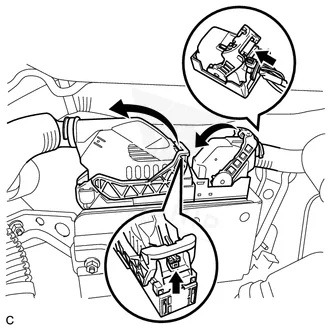
Work with the ignition off, and treat the module as static-sensitive: avoid touching the connector pins at any point.
| Operation | Configuration | Book Time |
|---|---|---|
| Engine Control Module Relearn | All configurations | 0.5 hr |
| Engine Control Module R&R | All configurations | 1.3 hr |
| Powertrain Control Module R&R | All configurations | 1.3 hr |
| Powertrain Control Module Relearn | All configurations | 0.5 hr |
After replacing the ECM in your 2017 Toyota Prius c, Toyota’s factory procedure requires a 0.5-hour relearn process to synchronize the new module with the vehicle’s systems. This step ensures proper communication with sensors and other control modules. However, a VIN-programmed replacement unit from Flagship One arrives pre-configured to your vehicle’s specifications, eliminating the need for this initial setup. While some post-installation checks may still be necessary, the pre-programming reduces downtime and helps avoid potential calibration errors during the repair.
A failing ECM in the 2017 Toyota Prius c may cause a range of symptoms, including intermittent stalling, rough idling, or a no-start condition. You might also notice poor throttle response, reduced fuel efficiency, or warning lights on the dashboard. In some cases, the vehicle may enter a limp-home mode to protect the engine. Internal processor faults, such as control module performance issues, are common indicators of ECM failure. If your scan tool shows communication errors or multiple unrelated codes, the ECM itself may be the root cause rather than individual sensors or components.
The 2017 Toyota Prius c’s ECM may log specific internal trouble codes when it malfunctions. These codes help diagnose whether the module itself is failing or if other systems are affected. The documented code for this vehicle is listed below.
| Code | Meaning | Full Guide |
|---|---|---|
| P0606 | Module processor failure | Full P0606 guide → |
Toyota has issued service bulletins regarding ECM handling and battery disconnect procedures for the 2017 Prius c. Before performing any work, technicians must follow the factory caution to wait after turning the ignition off before disconnecting the negative auxiliary battery terminal. This precaution helps prevent voltage spikes that could damage the new module or other electronic components. Always refer to the latest service information to ensure compliance with these requirements.
Common signs include stalling, no-start conditions, or internal processor codes like P0606. If your scan tool shows communication errors or multiple unrelated codes, the ECM may be failing. A professional diagnosis can confirm whether replacement is necessary.
While technically possible, ECM replacement requires removing several interior and cowl components, as well as proper handling of electrical connections. The factory also mandates a relearn procedure, which may require specialized tools. Most owners prefer professional installation to avoid complications.
Yes, Toyota’s procedure requires a 0.5-hour relearn process after installation. However, a VIN-programmed replacement unit from Flagship One arrives pre-configured, eliminating this step and reducing the risk of calibration errors.
If your 2017 Toyota Prius c is experiencing ECM-related issues, you have two main options: repair the existing unit or replace it with a refurbished module. Given the complexity of access and the need for precise programming, many owners opt for a replacement unit to minimize downtime. A VIN-programmed ECM ensures compatibility and reduces the risk of post-installation issues, making it a practical choice for restoring your vehicle’s performance.
Flagship One stocks a refurbished, VIN-programmed PCM for the 2017 Toyota Prius c with a lifetime warranty, free shipping and no core charge. The full Toyota Prius c module lineup covers other engine configurations as well.
The 2017 Toyota Prius c relies on its ECM to manage critical engine functions, and when it fails, prompt replacement is often the best solution. By understanding the access steps, labor requirements, and programming needs, you can make an informed decision about repairs. Whether you choose a new or refurbished unit, proper installation and calibration are key to getting your Prius c back on the road reliably.