
Last updated on August 25th, 2026 at 01:06 pm
In the 2017 Mazda CX-5, the powertrain control module (PCM) and engine control module (ECM) act as the vehicle’s electronic brain, managing fuel delivery, ignition timing, and transmission shift strategy. A failure typically interrupts communication with sensors, triggers diagnostic trouble codes, and can prevent the engine from starting or shifting correctly.
When a 2017 Mazda CX-5 begins to display a check‑engine light or an automatic‑transmission warning, the underlying cause is frequently traced to the powertrain control module or the engine control module. Both modules store the software that tells the engine how much fuel to inject, when to fire each cylinder, and how the transmission should shift. Understanding what these computers do, how they are accessed, and what steps are required after replacement helps you avoid unnecessary downtime. This guide walks you through the function of each module, the typical labor involved, the factory‑required programming, common symptoms, and practical ways to keep the electronics healthy.
The PCM in the 2017 Mazda CX-5 monitors inputs from the throttle position sensor, crankshaft speed, and transmission range to calculate fuel and spark events. It also controls the transmission solenoids to achieve smooth gear changes. The ECM performs a similar role for the engine, handling idle speed, emissions controls, and fault detection. Together they ensure the powertrain runs within design parameters, and any deviation can trigger diagnostic codes or limp‑mode operation. Because the PCM and ECM share the same physical housing, a single replacement often addresses both sets of functions. The vehicle relies on accurate data from these modules to meet performance and emissions standards, making them critical to overall drivability. For owners seeking a direct swap, replacement PCM for 2017 CX-5 provides a clear reference point for the correct part.
2017 Mazda CX-5 Powertrain and
OEM programmed replacements — plug & play, no dealer visit.
Find yours by year, make & model →
Free shipping · Lifetime warranty
Both the PCM and ECM are mounted in the engine compartment, typically secured to the firewall near the battery. Removal involves disconnecting the negative battery terminal, then unplugging the module connectors and unbolting the housing. The book time for removing and reinstalling the powertrain control module is 0.9 hours, while the engine control module follows the same 0.9‑hour schedule. After the unit is seated, a reset of the engine control module takes an additional 0.3 hours, and a relearn procedure for each module requires 0.5 hours. The factory caution advises turning the ignition off after clearing any diagnostic trouble codes, and if the engine starts unintentionally, the negative battery terminal should be disconnected and reconnected to reset the system safely.
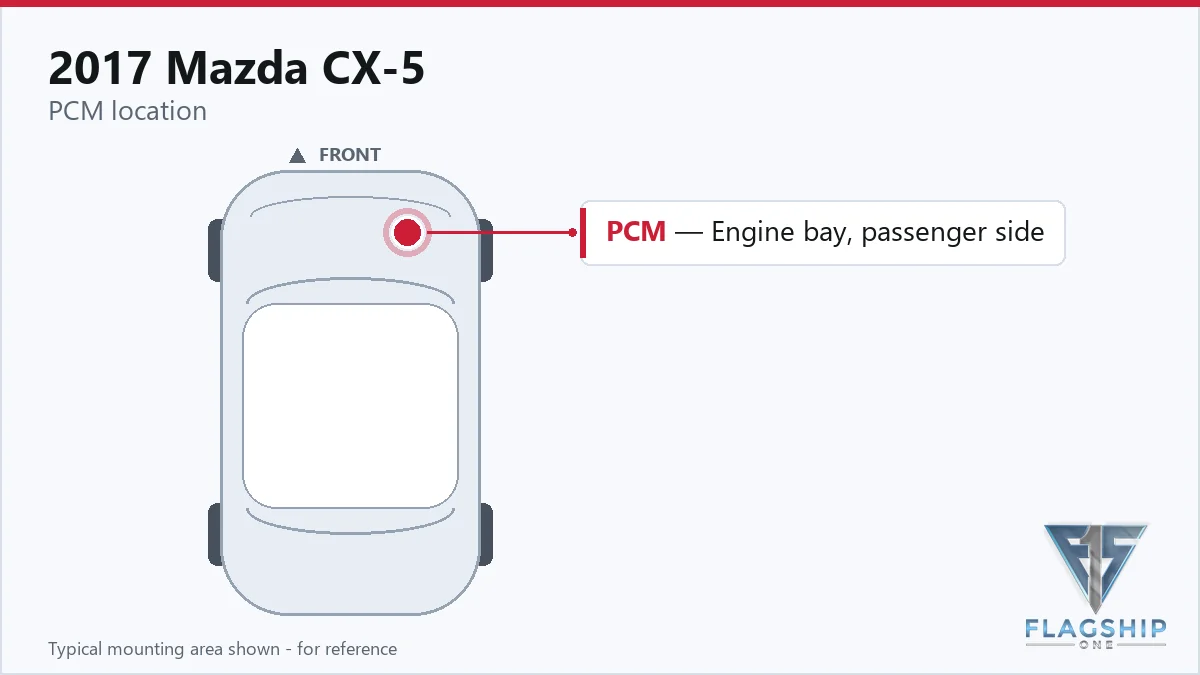
Work with the ignition off, and treat the module as static-sensitive: avoid touching the connector pins at any point.
| Operation | Configuration | Book Time |
|---|---|---|
| Powertrain Control Module R&R | All configurations | 0.9 hr |
| Powertrain Control Module Relearn | All configurations | 0.5 hr |
| Engine Control Module Reset | All configurations | 0.3 hr |
| Engine Control Module R&R | All configurations | 0.9 hr |
| Engine Control Module Relearn | All configurations | 0.5 hr |
Once the replacement PCM/ECM is installed, the factory service manual calls for a powertrain control module relearn that lasts about 0.5 hours and an engine control module reset of roughly 0.3 hours. Those steps calibrate sensor baselines and verify communication with the vehicle’s networks. Flagship One units arrive pre‑programmed for the specific VIN, so the required relearn and reset are already completed, eliminating the need for additional dealer‑only coding. In practice, you still follow the ignition‑off and battery‑disconnect caution to ensure the vehicle starts cleanly after the swap. This approach reduces shop time and minimizes the chance of post‑install errors.
Every VIN-programmed replacement unit from Flagship One arrives with these steps already completed.
A failing PCM or ECM in the 2017 CX‑5 often shows up as a persistent check‑engine light, erratic transmission shifting, or a sudden loss of power. Drivers may notice the engine stalling at idle, rough acceleration, or an inability to start the vehicle altogether. Diagnostic scans frequently reveal internal fault codes such as processor fault, indicating a problem within the module’s microcontroller. In addition, the vehicle may record transmission‑related codes like P0842 or P0877, which point to shift‑solenoid issues that originate from the PCM’s control logic. Prompt attention to these symptoms can prevent further damage to the powertrain and keep the vehicle compliant with emissions regulations.
The following internal trouble codes have been documented for the 2017 Mazda CX-5 and relate directly to the powertrain and engine control modules:
| Code | Meaning | Full Guide |
|---|---|---|
| P0601 | Internal memory checksum error | Full P0601 guide → |
| P0606 | Module processor failure | Full P0606 guide → |
Technical Service Bulletin 05-004/19 addresses a scenario where the check‑engine light and automatic‑transmission warning illuminate together, citing stored codes P0842:00, P0847:00, P0872:00, P0877:00, P0780:00, and P1738:00 in the transmission control module memory. The bulletin outlines diagnostic steps and recommended repairs to resolve the overlapping warnings.
| Bulletin | Subject | What It Addresses |
|---|---|---|
| — | Technical Service Bulletin > Transmission/Transaxle > On-Board Diagnostics > 05-004/19 – Check | — |
The replacement involves disconnecting the battery, removing connectors, and unbolting the unit. While the labor times are modest, the procedure requires careful handling of the vehicle’s electrical system and adherence to the factory caution steps.
Flagship One provides VIN‑programmed units, which means the necessary software is already matched to your vehicle. The post‑install relearn steps are still recommended to verify proper operation.
P0601 signals a processor fault inside the control module, often caused by corrupted memory or a failing internal component. Replacement of the module is typically required if the code persists after a reset.
When the powertrain or engine control module fails, you can either have the original equipment part installed or choose a refurbished Flagship One replacement. Both options restore the vehicle’s electronic management, but the Flagship One unit arrives pre‑programmed, reducing shop time and eliminating the need for dealer‑only coding. Evaluate your budget, warranty preferences, and desired turnaround when deciding which path fits your repair plan.
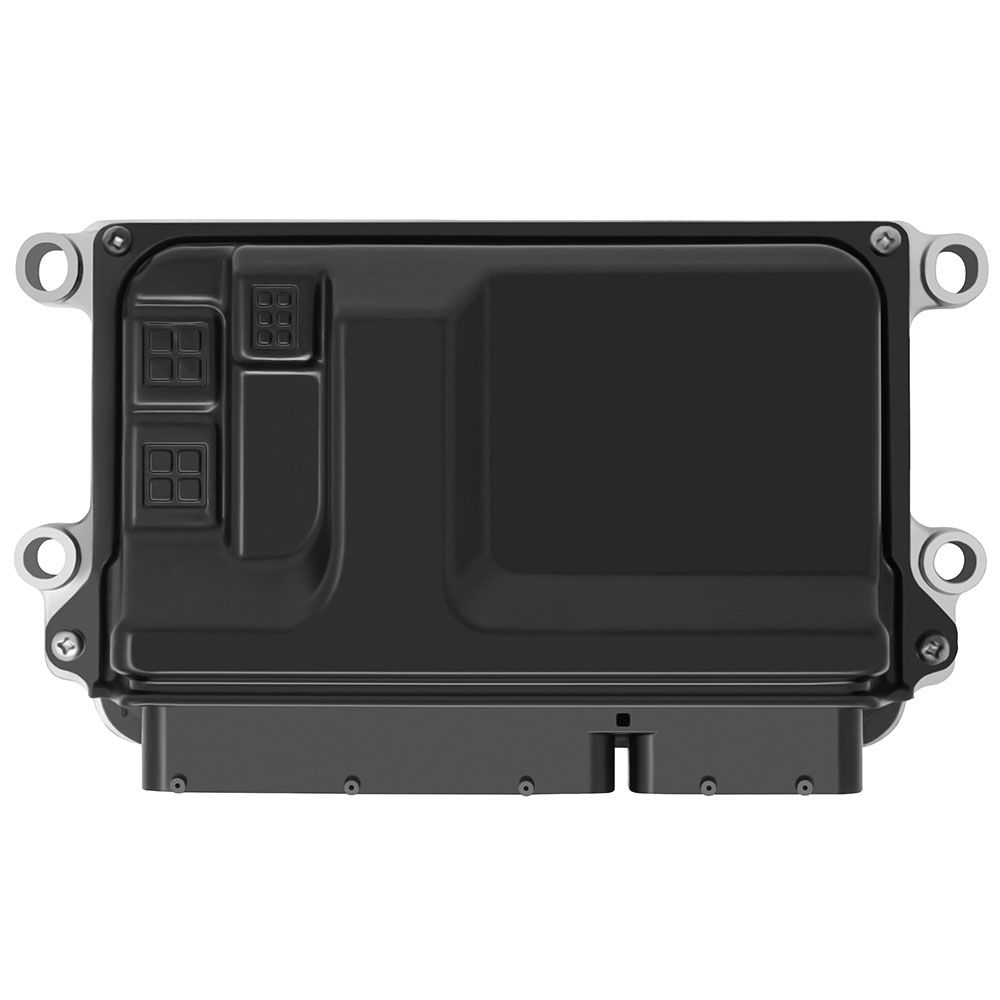
Flagship One stocks a refurbished, VIN-programmed PCM for the 2017 Mazda CX-5 with a lifetime warranty, free shipping and no core charge. The full Mazda CX-5 module lineup covers other engine configurations as well.
For owners of a 2017 Mazda CX-5, addressing PCM or ECM issues promptly restores reliable performance and keeps emissions compliance intact. Whether you opt for a new OEM part or a Flagship One refurbished unit, the right replacement combined with proper post‑install steps will get you back on the road with confidence.