
Last updated on August 25th, 2026 at 12:57 pm
The engine control module (ECM) in your 2014 Audi SQ5 manages fuel delivery, ignition timing, and emissions systems. Failures may cause erratic engine behavior, reduced performance, or complete no-start conditions.
If your 2014 Audi SQ5 is experiencing unexplained stalling, rough idling, or trouble codes related to engine performance, the engine control module (ECM) may be the culprit. This critical component acts as the brain of your vehicle’s powertrain, regulating fuel injection, ignition timing, and emissions systems. When it fails, symptoms can range from subtle performance issues to a complete no-start condition. Understanding the role of the ECM, its location, and the steps involved in replacement can help you make informed decisions about repairs. With the right approach, you can restore your SQ5’s reliability without unnecessary delays.
The engine control module in your 2014 Audi SQ5 is responsible for optimizing engine performance by continuously adjusting fuel delivery, ignition timing, and other critical parameters. It ensures smooth operation, fuel efficiency, and compliance with emissions standards. A malfunctioning ECM may disrupt these functions, leading to poor drivability or even preventing the engine from starting. When replacement becomes necessary, you’ll need replacement engine computers for the SQ5 that are compatible with your vehicle’s specifications. The module’s precise control over engine functions makes it essential for maintaining the performance and reliability you expect from your Audi.
2014 Audi SQ5
OEM programmed ECM for your 2014 Audi SQ5 — plug & play, no dealer visit.
Free shipping · Lifetime warranty
In your 2014 Audi SQ5, the engine control module is typically mounted near the engine bay, secured with shear bolts. These bolts are designed to break under excessive torque, ensuring a tight seal. The threads of the unused shear bolts are coated with a locking compound to prevent loosening. Replacing the module involves removing the old unit, which may require 1.4 hours of labor, depending on accessibility. Once the new module is installed, a relearn procedure of 0.5 hours is often necessary to synchronize it with the vehicle’s systems. Proper torque and alignment are critical to avoid damaging the new module or its connectors.
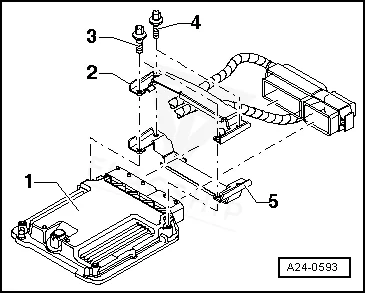
Work with the ignition off, and treat the module as static-sensitive: avoid touching the connector pins at any point.
| Operation | Configuration | Book Time |
|---|---|---|
| Powertrain Control Module R&R | SQ5 | 1.4 hr |
| Powertrain Control Module R&R | Q5 | 1.4 hr |
| Engine Control Module Relearn | SQ5 | 0.5 hr |
| Engine Control Module Relearn | Q5 | 0.5 hr |
| Engine Control Module R&R | SQ5 | 1.4 hr |
| Engine Control Module R&R | Q5 | 1.4 hr |
After installing a new engine control module in your 2014 Audi SQ5, the factory procedure requires a relearn process to ensure the module communicates correctly with the vehicle’s systems. This typically involves a 0.5-hour procedure to synchronize the module with the engine and transmission. However, if you opt for a VIN-programmed replacement unit, these steps are already completed, saving you time and reducing the risk of programming errors. This pre-programming ensures the module is ready to function as soon as it’s installed, minimizing downtime and potential complications during the repair process.
A failing engine control module in your 2014 Audi SQ5 may cause a variety of symptoms, including intermittent stalling, rough idling, or difficulty starting the engine. You might also notice reduced fuel efficiency or warning lights on the dashboard. In some cases, the vehicle may enter a limp-home mode, limiting performance to protect the engine. Trouble codes like internal control module monitoring fault often appear during diagnostic scans, indicating a potential issue with the module’s internal processing. If you experience these symptoms, it’s important to address them promptly to avoid further drivability issues or potential damage to other components.
When diagnosing a potential engine control module issue in your 2014 Audi SQ5, certain trouble codes may appear. These codes are specific to the module’s internal functions and can help pinpoint the source of the problem. Reviewing these codes with a scan tool can provide clarity on whether the ECM is the likely cause of your vehicle’s symptoms.
| Code | Meaning | Full Guide |
|---|---|---|
| P0603 | Keep-alive memory (KAM) error | Full P0603 guide → |
| P0605 | Internal ROM error | Full P0605 guide → |
| P060A | Module-internal fault | — |
| P060B | Module-internal fault | — |
| P0613 | Module-internal fault | Full P0613 guide → |
| P0667 | Module-internal fault | Full P0667 guide → |
Common signs include stalling, rough idling, or a no-start condition. Trouble codes like P0603 or P060A may also appear during diagnostics. If these symptoms persist, the ECM may need replacement.
While it’s possible, the process requires precise torque settings and a relearn procedure. If you’re not experienced with automotive electronics, professional installation is recommended to avoid complications.
A new ECM is manufactured to original specifications, while a refurbished unit is restored to like-new condition. Both should function reliably, but a pre-programmed unit saves time during installation.
If your 2014 Audi SQ5 is showing signs of ECM failure, you have options for replacement. A new or refurbished module can restore your vehicle’s performance, but choosing a pre-programmed unit eliminates the need for on-site VIN programming. This streamlines the repair process, allowing you to get back on the road faster with minimal hassle.
Flagship One stocks a refurbished, VIN-programmed PCM for the 2014 Audi SQ5 with a lifetime warranty, free shipping and no core charge. The full Audi SQ5 module lineup covers other engine configurations as well.
The engine control module in your 2014 Audi SQ5 plays a vital role in maintaining smooth and reliable performance. If you’re experiencing symptoms like stalling or trouble codes, addressing the issue promptly can prevent further complications. Whether you opt for a new or refurbished replacement, ensuring it’s compatible with your vehicle is key to a successful repair.