
Last updated on August 25th, 2026 at 11:58 am
The engine control module in your 2013 Toyota Corolla manages critical fuel and ignition timing. When this hardware fails, the vehicle typically experiences erratic idling or a complete failure to start, as the computer cannot properly coordinate the engine’s mechanical operations.
Dealing with an unresponsive engine can be frustrating for any driver. In the 2013 Toyota Corolla, the engine and powertrain control modules act as the central nervous system for the vehicle’s propulsion. These computers process data from various sensors to optimize performance and emissions. If the internal circuitry degrades, you might notice a sudden loss of power or an inability to start the car. Understanding how these modules function and the process for replacing them allows you to approach the repair with confidence. By focusing on the correct installation and programming steps, you can restore the factory-standard operation of your vehicle. This guide provides the technical details necessary to identify a failing unit and understand the labor involved in swapping the hardware for a functional replacement.
The engine control module in your 2013 Toyota Corolla is responsible for regulating the air-fuel mixture and spark timing. It monitors inputs from the crankshaft and camshaft sensors to ensure the 1.8L engine runs efficiently. Because it controls the fuel injectors and ignition coils, any internal failure often leads to severe drivability issues. Finding reliable replacement engine computers for the 2013 Toyota Corolla ensures that the vehicle maintains its fuel economy and emissions standards. Without a functioning module, the engine cannot communicate with the transmission or the instrument cluster. This component is vital because it prevents engine damage by monitoring knock sensors and temperature levels in real time. When the hardware fails, the vehicle typically enters a limp mode or refuses to ignite, making a precise replacement necessary for a safe and drivable car.
2013 Toyota Corolla
OEM programmed ECM for your 2013 Toyota Corolla — plug & play, no dealer visit.
Free shipping · Lifetime warranty
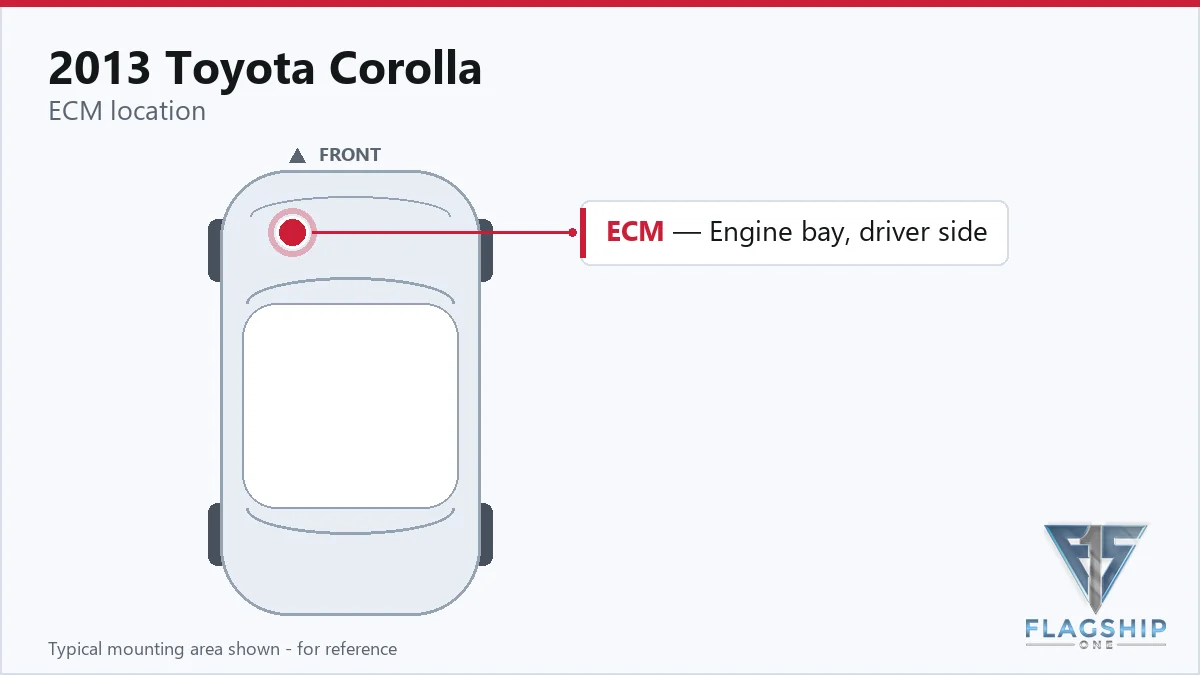
The control module for your 2013 Toyota Corolla is located adjacent to the air cleaner assembly. To access the unit, you must first remove the cable from the negative battery terminal. The physical removal and replacement of the engine control module is listed at 0.7 hours. Similarly, the powertrain control module R&R is also quoted at 0.7 hours. Because the module is positioned near the intake system, it is generally accessible once the battery connection is severed. It is important to handle the electrical connectors with care to avoid bending pins during the installation process. Following the factory sequence ensures that the new hardware is seated correctly and that all wiring harnesses are secure before you reconnect the power source.
Work with the ignition off, and treat the module as static-sensitive: avoid touching the connector pins at any point.
| Operation | Configuration | Book Time |
|---|---|---|
| Engine Control Module Relearn | All configurations | 0.6 hr |
| Engine Control Module R&R | All configurations | 0.7 hr |
| Powertrain Control Module R&R | All configurations | 0.7 hr |
| Powertrain Control Module Relearn | All configurations | 0.5 hr |
After installing a new module, the factory procedure typically requires a relearn process. For the 2013 Toyota Corolla, the engine control module relearn takes 0.6 hours, while the powertrain control module relearn is 0.5 hours. These steps are necessary to sync the hardware with the vehicle’s specific configuration. However, choosing a VIN-programmed replacement unit eliminates the need for these dealership-level calibration steps. Since the programming is completed before shipping, the module is ready to operate immediately upon installation. This reduces the total time the vehicle spends in the shop and removes the risk of software incompatibility.
A failing control module in your 2013 Toyota Corolla often manifests as a total no-start condition or sudden stalling while idling. You may experience erratic engine behavior, such as random misfires or a loss of communication with your scan tool. In some cases, the vehicle may exhibit shifting irregularities if the powertrain side of the computer is compromised. These issues are often accompanied by specific internal faults, such as when the computer triggers an internal processor fault P0601, indicating a failure within the module’s own circuitry. Other symptoms include a malfunctioning tachometer or a failure of the fuel pump to prime. Because the computer manages so many critical functions, these symptoms can sometimes mimic sensor failures, but a persistent internal code usually points directly to the module itself.
Your 2013 Toyota Corolla may store specific diagnostic trouble codes when the internal circuitry of the control module fails. These codes are distinct from sensor faults and indicate a hardware problem within the computer.
| Code | Meaning | Full Guide |
|---|---|---|
| P0601 | Internal memory checksum error | Full P0601 guide → |
| P0606 | Module processor failure | Full P0606 guide → |
The module is positioned next to the air cleaner assembly. You will need to disconnect the negative battery cable to access it.
The removal and replacement for the powertrain control module is listed as 0.7 hours.
Factory replacements require a relearn process taking 0.5 to 0.6 hours. Units from Flagship One come pre-programmed to the VIN.
When deciding how to address a failed module in your 2013 Toyota Corolla, you have options between expensive new units or high-quality refurbished replacements. Each approach has different implications for your budget and vehicle downtime. Evaluating the specific needs of your engine’s management system helps in choosing a solution that restores reliability without unnecessary cost.
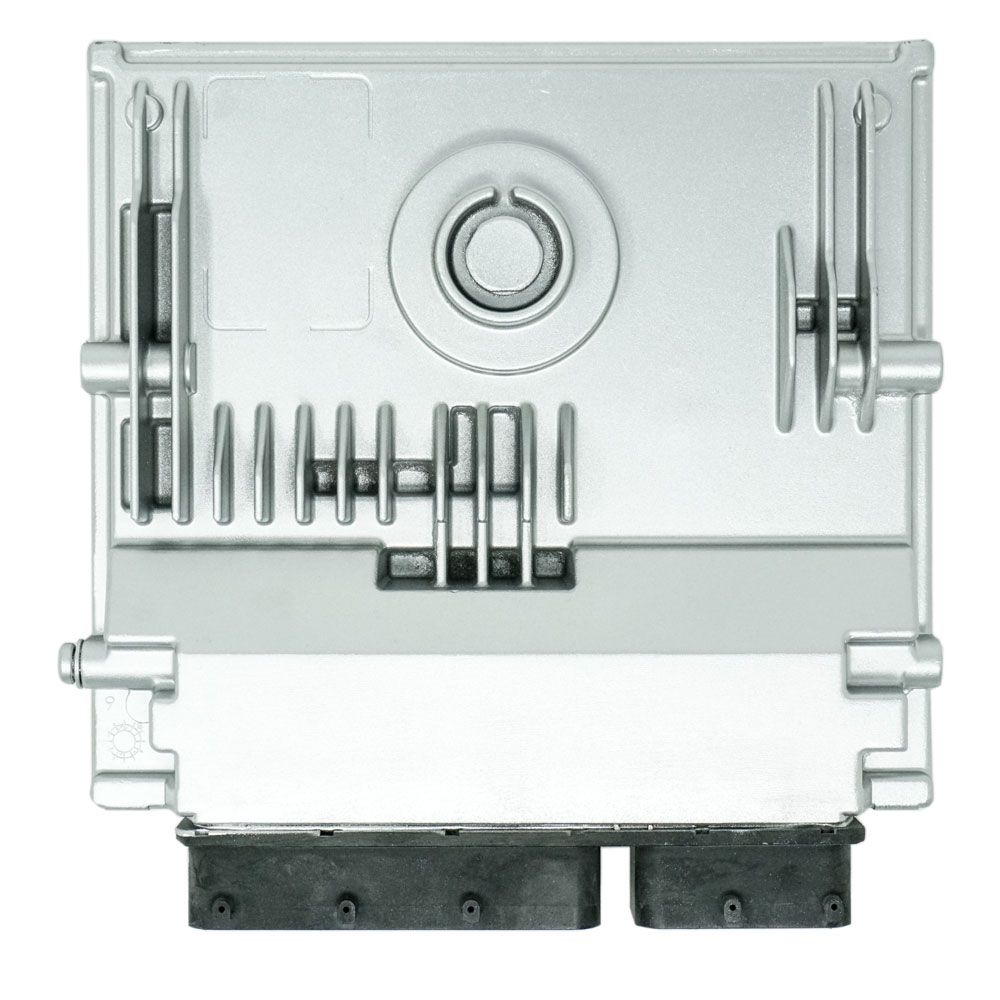
Flagship One stocks a refurbished, VIN-programmed PCM for the 2013 Toyota Corolla with a lifetime warranty, free shipping and no core charge. The full Toyota Corolla module lineup covers other engine configurations as well.
Restoring the electronic heart of your 2013 Toyota Corolla requires precision and the right hardware. By understanding the symptoms and the installation process, you can effectively resolve powertrain issues. If you need a reliable replacement, explore the programmed options available to get your vehicle back on the road quickly.