
Last updated on August 25th, 2026 at 01:09 pm
The powertrain control module on the 2013 Jeep Compass is the central computer managing engine timing, fuel delivery, and emissions controls. When internal diagnostics detect memory faults, the PCM may trigger P0601 or P0606, leading to drivability complaints or failure to communicate with a scan tool.
When a 2013 Jeep Compass sets trouble codes P0601 or P0606, the vehicle’s owner faces a decision about the powertrain control module. These codes indicate that the module has detected an internal fault rather than a problem with external sensors. This article explains how the module functions, where it is located on this specific vehicle, what the replacement procedure entails according to factory information, and what steps must be taken after installation to restore proper operation. Understanding these details helps you evaluate repair options and communicate effectively with a service provider.
The powertrain control module on the 2013 Jeep Compass serves as the primary computer responsible for regulating engine operation. It processes input from numerous sensors to control fuel injection, ignition timing, variable valve timing, and the automatic transmission’s shift schedule on equipped models. The module also manages emissions-related functions, including the Evaporative system and upstream oxygen sensor feedback loops. Because this computer interfaces with virtually every major system under the hood, a failure can produce wide-ranging symptoms from poor idle quality to a complete no-start condition. replacement engine computers for the Jeep Compass often become necessary when the internal processor or memory sectors develop faults that resist software-level repair.
2013 Jeep Compass
OEM programmed ECM for your 2013 Jeep Compass — plug & play, no dealer visit.
Free shipping · Lifetime warranty
According to the factory removal procedure, the control module on the 2013 Jeep Compass is positioned next to the air cleaner assembly. This placement determines the access path for replacement. The book time for removing and reinstalling the module on this vehicle is 0.5 hours. After the hardware is installed, an additional 0.5 hours is allocated for the relearn procedure to allow the new module to calibrate to the specific vehicle. The actual shop time may vary depending on connector condition and whether any mounting hardware has seized. Technicians typically disconnect the battery before beginning work to eliminate the risk of short circuits at the module harness.
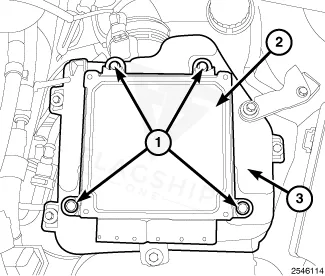
Work with the ignition off, and treat the module as static-sensitive: avoid touching the connector pins at any point.
| Operation | Configuration | Book Time |
|---|---|---|
| Powertrain Control Module R&R | Compass | 0.5 hr |
| Powertrain Control Module R&R | Patriot | 0.5 hr |
| Engine Control Module Relearn | Compass | 0.5 hr |
| Engine Control Module Relearn | Patriot | 0.5 hr |
| Engine Control Module R&R | Compass | 0.5 hr |
| Engine Control Module R&R | Patriot | 0.5 hr |
The factory installation procedure for the 2013 Jeep Compass requires using a scan tool to reprogram the replacement module with the vehicle’s original identification number and the original recorded mileage. This step is mandatory before the module will communicate properly with the rest of the vehicle’s network. An additional relearn procedure follows reprogramming to allow adaptive values to reset. a VIN-programmed replacement unit arrives with the vehicle’s identification number already flashed in, which means the critical reprogramming step is completed at the supplier level before the part ships, reducing post-installation labor for the technician.
When the powertrain control module fails internally on the 2013 Jeep Compass, drivers commonly report a no-start condition or an engine that cranks but does not fire. Misfire codes such as P0300 through P0304 may appear across multiple cylinders because the module can no longer properly control spark or fuel delivery. Some vehicles experience stalling, hesitation under load, or a sudden shift into limp mode with limited gears available. A dead scan-tool communication link with the module is another common indicator. Internal memory checksum failure specifically points to corrupted data storage within the module, while P0606 typically reflects processor self-test faults that often accompany complete module shutdown.
The 2013 Jeep Compass in this case has documented module-internal trouble codes that point directly to the powertrain control module as the source of concern rather than external sensor or wiring faults.
| Code | Meaning | Full Guide |
|---|---|---|
| P0601 | Internal memory checksum error | Full P0601 guide → |
| P0606 | Module processor failure | Full P0606 guide → |
Factory service bulletins related to powertrain control module procedures for this model would be found under labor operation category 8e, which covers electronic control modules. The bulletins address both removal and installation steps and cross-reference a standard procedure for powertrain control module programming. No separate technical service bulletin numbers specific to P0601 or P0606 on this vehicle were provided in the available documentation, so no additional bulletin citations can be made here.
These codes often indicate internal module faults that may produce intermittent symptoms or a no-start condition. Driving the vehicle with an unstable powertrain control module risks stalling in traffic or becoming stranded, so the fault should be diagnosed and addressed promptly.
Yes. The factory procedure requires reprogramming the replacement module with the vehicle’s original identification number and recorded mileage before it will function in the vehicle. Some suppliers ship units with this data already programmed, which simplifies the post-installation process.
On this vehicle, the powertrain control module and engine control module are the same physical unit. The PCM handles both engine management and transmission control functions, making it the central computer for drivetrain operation.
When a 2013 Jeep Compass requires a replacement powertrain control module, you generally choose between a new unit from the dealer, a remanufactured module, or a refurbished replacement sourced from an aftermarket supplier. Each option carries different costs, warranty coverage, and programming requirements. A rebuilt module from a specialty supplier may arrive with the vehicle identification number already flashed in, reducing shop time. Evaluate the module’s condition history and confirm that programming support is available before purchasing to avoid additional delays during installation.
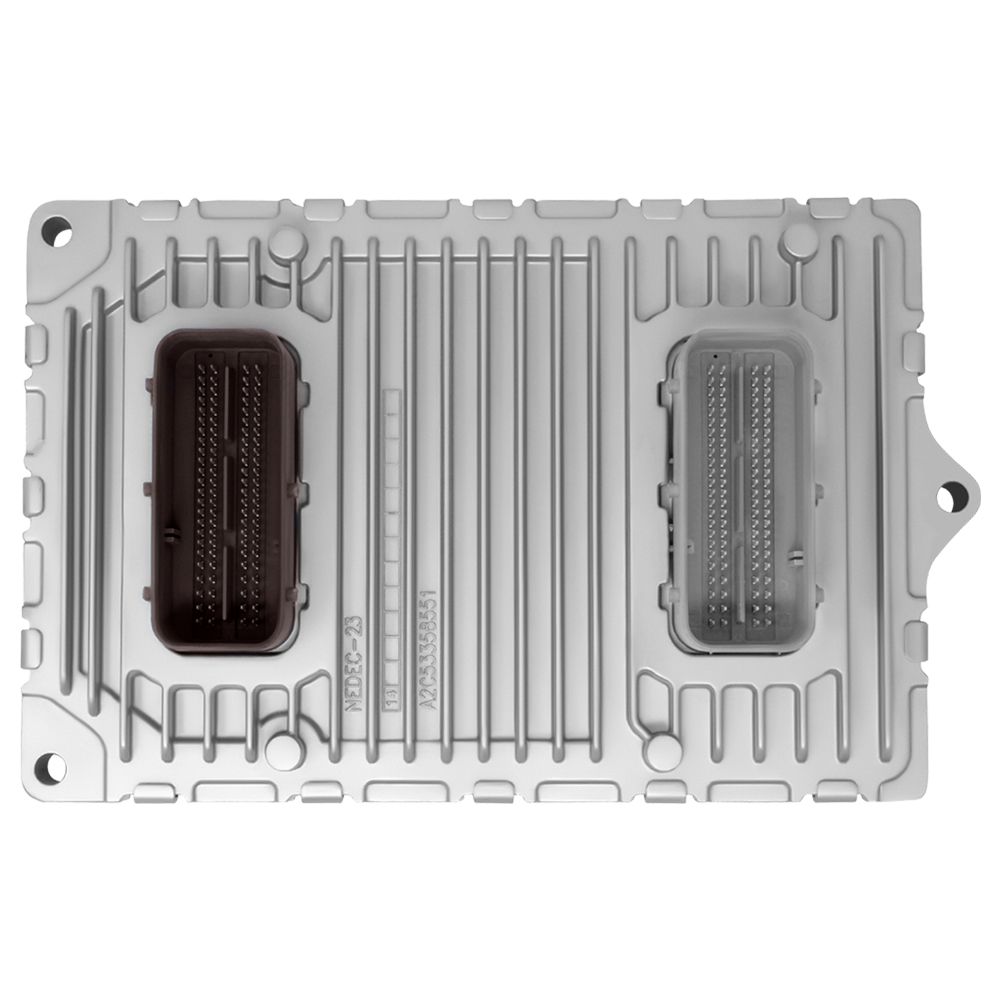
Flagship One stocks a refurbished, VIN-programmed PCM for the 2013 Jeep Compass with a lifetime warranty, free shipping and no core charge. The full Jeep Compass module lineup covers other engine configurations as well.
The 2013 Jeep Compass relies on its powertrain control module as the brain of the engine and transmission system. Codes P0601 and P0606 point to internal faults that typically require module replacement rather than simple sensor repair. Understanding the module’s location, the required post-installation programming, and the relearn procedure helps you make an informed decision when evaluating repair options for this vehicle.