
Last updated on August 25th, 2026 at 12:22 pm
The Powertrain Control Module (PCM) in your 2012 Ford Escape 3.0L acts as the engine and transmission’s central computer. When it fails, you may experience no-start conditions, erratic shifting, or stored trouble codes related to internal processor faults.
If your 2012 Ford Escape 3.0L has begun stalling unexpectedly, refusing to start, or logging cryptic engine codes, the Powertrain Control Module (PCM) may be the culprit. This compact computer manages everything from fuel delivery to transmission shifts, and when it fails, your vehicle’s performance suffers. Replacing the PCM isn’t just about swapping a part—it involves precise installation, programming, and relearn procedures to ensure your Escape runs reliably again. Understanding these steps helps you avoid unnecessary dealer visits and ensures a smooth repair. Whether you’re diagnosing a no-start condition or addressing persistent trouble codes, knowing how the PCM functions and what replacement entails can save you time and frustration. This guide covers the essentials: where the module is located, what symptoms signal failure, and why choosing the right replacement matters for your 2012 Ford Escape 3.0L.
The Powertrain Control Module (PCM) in your 2012 Ford Escape 3.0L serves as the brain of the engine and transmission systems. It continuously monitors sensors for data like air intake, throttle position, and engine temperature, then adjusts fuel injection, ignition timing, and shift points in real time. Without a functioning PCM, your Escape may struggle to start, run roughly, or even enter a fail-safe mode that limits performance. This module also integrates with the vehicle’s anti-theft system, requiring precise calibration to prevent security-related no-start issues. When the PCM fails, it often triggers internal fault codes, such as P0606, indicating a processor error. Replacing it isn’t just about plugging in a new unit—it involves ensuring compatibility with your vehicle’s specific configuration. For the 2012 Ford Escape, replacement engine control modules must match the original’s programming to avoid additional reprogramming steps. A properly functioning PCM ensures smooth operation, optimal fuel efficiency, and reliable starting, making it one of the most critical components under the hood.
2012 Ford Escape 3.0L
OEM programmed ECM for your 2012 Ford Escape 3.0L — plug & play, no dealer visit.
Free shipping · Lifetime warranty
The Powertrain Control Module (PCM) in the 2012 Ford Escape 3.0L is located in the engine compartment, typically mounted near the firewall or on the passenger-side fender well. Accessing it requires removing a protective cover or air intake components, though the exact steps may vary slightly depending on your vehicle’s configuration. Replacement involves disconnecting the battery, unplugging the wiring harness, and removing the mounting bolts to free the module. Labor time for removal and reinstallation is typically 0.5 hours, according to factory service manuals. Once the new unit is installed, the wiring harness is reconnected, and the battery is restored. While the physical swap is straightforward, the real work begins with the relearn procedures, which are necessary to synchronize the PCM with your Escape’s engine and transmission systems.
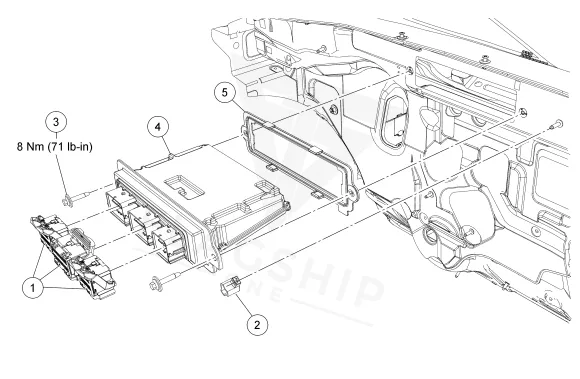
Work with the ignition off, and treat the module as static-sensitive: avoid touching the connector pins at any point.
| Operation | Configuration | Book Time |
|---|---|---|
| Powertrain Control Module R&R | All configurations | 0.5 hr |
| Powertrain Control Module Relearn | All configurations | 0.5 hr |
| Engine Control Module Relearn | All configurations | 0.5 hr |
| Engine Control Module R&R | All configurations | 0.5 hr |
After replacing the Powertrain Control Module (PCM) in your 2012 Ford Escape 3.0L, the factory procedure requires reprogramming the Passive Anti-Theft System (PATS) to ensure the vehicle starts and runs correctly. This step typically involves using a dealer-level scan tool to sync the new module with the vehicle’s security system, a process that can add 0.5 hours of labor. However, if you install a VIN-programmed replacement unit, this step is already completed, saving you time and potential frustration. The pre-programmed module arrives ready to communicate with your Escape’s engine and transmission systems, eliminating the need for additional dealer visits or specialized equipment. This not only simplifies the installation but also reduces the risk of security-related no-start issues, ensuring your vehicle is back on the road faster.
When the Powertrain Control Module (PCM) in your 2012 Ford Escape 3.0L begins to fail, you may notice a range of symptoms that can disrupt your driving experience. One of the most common signs is a no-start condition, where the engine cranks but refuses to fire, often due to the PCM failing to send the correct signals to the fuel injectors or ignition system. Stalling at idle or during acceleration is another frequent issue, as the module struggles to maintain consistent engine operation. You might also experience erratic shifting, where the transmission hesitates or jerks between gears, indicating the PCM’s inability to properly control transmission functions. Onboard diagnostics may log trouble codes, such as an internal processor fault, which directly points to the PCM as the source of the problem. Other symptoms include poor fuel economy, rough idling, or even the check engine light illuminating without an obvious cause. In some cases, the vehicle may enter a fail-safe mode, limiting performance to prevent further damage. If your Escape exhibits any of these issues, it’s worth investigating the PCM as a potential culprit, especially if the symptoms persist after addressing other common causes like spark plugs or fuel filters.
The codes below point to the PCM itself rather than to a sensor or circuit it monitors. Each one links through to its full diagnostic guide.
| Code | Meaning | Full Guide |
|---|---|---|
| P0606 | Module processor failure | Full P0606 guide → |
If your Escape cranks but doesn’t start after a PCM replacement, the most likely cause is an incomplete relearn procedure. The Passive Anti-Theft System (PATS) must be reprogrammed to recognize the new module, or the vehicle will not start. A pre-programmed replacement unit eliminates this step, ensuring immediate compatibility.
While your Escape may still run with a P0606 code, it’s not advisable to drive it for long. This code indicates an internal PCM fault, which can lead to stalling, poor performance, or even a no-start condition. Addressing it promptly prevents further damage or unexpected breakdowns.
Diagnosing a failing PCM involves checking for symptoms like stalling, no-start conditions, or erratic shifting, along with scanning for module-internal codes like P0606. If these symptoms persist after ruling out other common issues (e.g., fuel pump, ignition system), the PCM is likely the culprit.
Without reprogramming the PATS, your Escape’s security system won’t recognize the new PCM, resulting in a no-start condition. The vehicle may crank but fail to fire, as the anti-theft system prevents fuel delivery until the module is properly synced.
Replacing the PCM is a straightforward process involving basic tools, but it requires careful handling of electrical connections. If you’re comfortable disconnecting the battery and working with wiring harnesses, it’s doable. However, the relearn procedures may require a dealer or professional with the right equipment.
If your 2012 Ford Escape 3.0L is experiencing PCM-related issues, you have two main options: repair or replace. While repairs may seem cost-effective, they often provide only temporary relief, especially if the module has internal faults. A replacement unit, particularly one that’s pre-programmed to your vehicle’s VIN, ensures a seamless installation and eliminates the need for dealer reprogramming. This approach not only saves time but also reduces the risk of recurring issues, getting your Escape back on the road reliably.
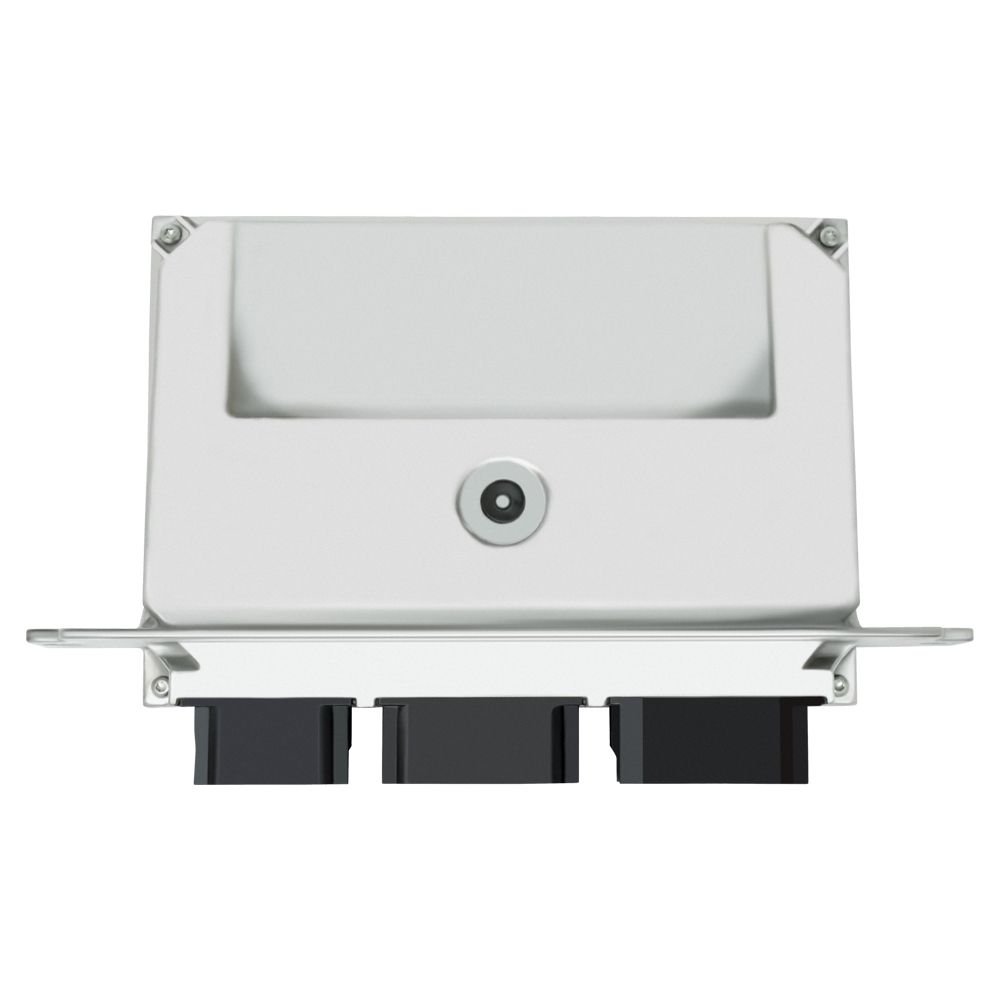
Flagship One stocks a refurbished, VIN-programmed PCM for the 2012 Ford Escape with a lifetime warranty, free shipping and no core charge. The full Ford Escape module lineup covers other engine configurations as well.
The Powertrain Control Module is a critical component in your 2012 Ford Escape 3.0L, managing everything from fuel delivery to transmission shifts. When it fails, symptoms like stalling, no-start conditions, or trouble codes such as P0606 can disrupt your daily driving. Replacing the PCM involves more than just swapping a part—it requires proper installation and programming to ensure your vehicle runs smoothly. By understanding the process and opting for a pre-programmed replacement, you can avoid unnecessary hassles and keep your Escape running reliably for years to come.