
Last updated on August 25th, 2026 at 02:36 pm
The engine control module (ECM) in your 2011 Buick Lucerne manages fuel delivery, ignition timing, and emissions systems for the 3.9L V6. Failures may cause erratic engine behavior, stored trouble codes, or complete no-start conditions.
If your 2011 Buick Lucerne has been stalling unexpectedly, refusing to start, or displaying warning lights, the engine control module (ECM) may be the culprit. This small but critical computer manages everything from fuel injection to ignition timing, ensuring smooth operation of the 3.9L V6 engine. When it fails, symptoms can range from subtle performance issues to complete engine shutdown. Replacing the ECM isn’t just about swapping a part—it involves careful handling, proper installation, and often, a factory-mandated relearn procedure. Understanding the process helps you make informed decisions, whether you’re diagnosing the issue or preparing for a repair. This guide covers what the ECM does, where it’s located, how replacement works, and what to expect during and after the job.
The engine control module in your 2011 Buick Lucerne serves as the brain of the 3.9L V6 engine, continuously monitoring sensors and adjusting fuel, air, and spark to maintain optimal performance. It ensures the engine runs efficiently, meets emissions standards, and delivers the power you expect. Without a functioning ECM, the engine may run poorly or not at all. This module also communicates with other vehicle systems, such as the transmission and emissions controls, to coordinate smooth operation. When it fails, you might notice symptoms like rough idling, poor acceleration, or even a complete no-start condition. Replacing it requires precision, as the module must be correctly matched to your vehicle. For the 2011 Lucerne, replacement engine computers for the Lucerne are designed to integrate seamlessly with the 3.9L engine, but proper installation and programming are critical to restoring full functionality.
In the 2011 Buick Lucerne, the engine control module is positioned next to the air cleaner assembly, making it relatively accessible compared to some vehicles. However, reaching it still requires careful removal of surrounding components to avoid damage. The factory procedure specifies that the module is removed by disconnecting the electrical connector and unbolting it from its mount. Labor time for replacement is typically 1.4 hours, according to book estimates. After installation, the module must be securely fastened, and all connectors should be inspected for corrosion or damage. While the location isn’t overly complex, proper handling is essential to avoid introducing new issues during the swap.
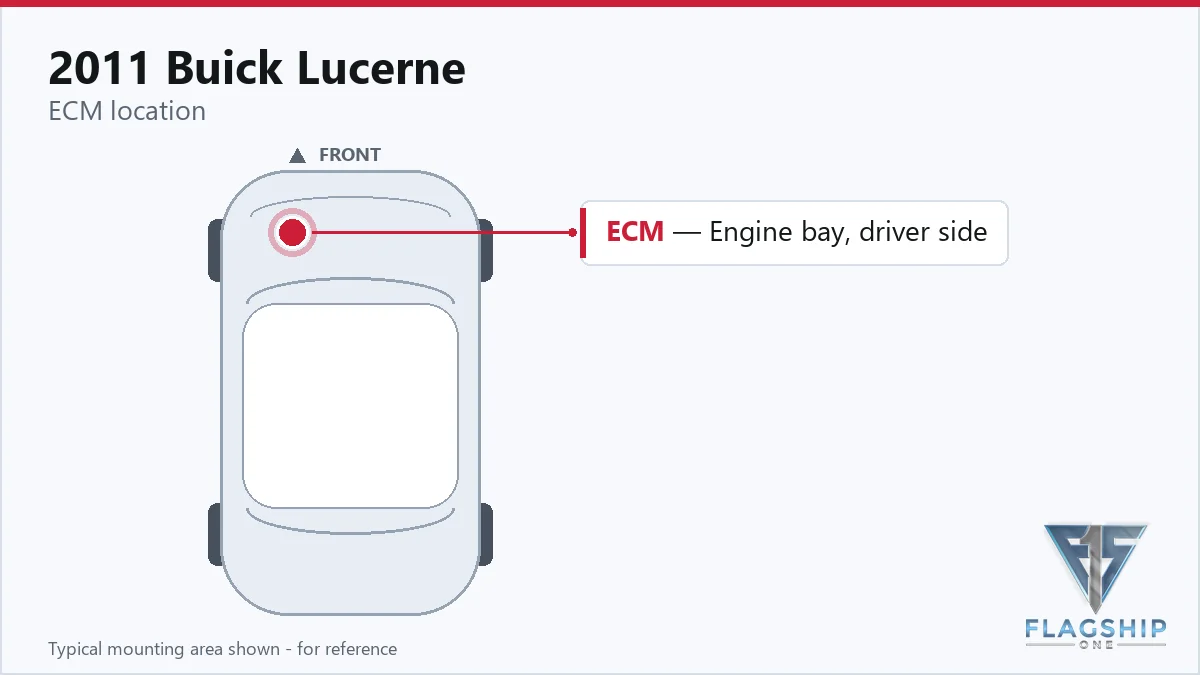
Work with the ignition off, and treat the module as static-sensitive: avoid touching the connector pins at any point.
| Operation | Configuration | Book Time |
|---|---|---|
| Powertrain Control Module Relearn | All configurations | 0.5 hr |
| Powertrain Control Module R&R | All configurations | 1.4 hr |
| Engine Control Module Relearn | All configurations | 0.5 hr |
| Engine Control Module R&R | All configurations | 1.4 hr |
2011 Buick Lucerne 3.9L: When the
OEM programmed replacements — plug & play, no dealer visit.
Find yours by year, make & model →
Free shipping · Lifetime warranty
After replacing the engine control module in your 2011 Buick Lucerne, the factory requires a relearn procedure to synchronize the new unit with the vehicle’s systems. This process, which takes about 0.5 hours, ensures the ECM recognizes the engine’s sensors and operates correctly. Additionally, the factory specifies capturing ECM data with a scan tool before removal to preserve critical vehicle information. Specialized equipment and the correct software calibration are necessary for reprogramming, which can be a hurdle if you’re not equipped for it. However, opting for a VIN-programmed replacement unit from Flagship One eliminates these steps, as the module arrives ready to install and drive. This saves time and reduces the risk of programming errors during the repair.
When the engine control module in your 2011 Buick Lucerne begins to fail, symptoms can vary but often include noticeable drivability issues. You might experience intermittent stalling, especially at idle or during acceleration, or the engine may refuse to start altogether. Warning lights, such as the check engine or service engine soon light, may illuminate on the dashboard, often accompanied by stored trouble codes. One common code associated with ECM failure in this vehicle is an internal control module memory checksum error, which indicates the module’s memory has been corrupted. Other symptoms may include rough idling, poor fuel economy, or even transmission shifting problems, as the ECM communicates with the transmission control module. In some cases, the vehicle may enter a fail-safe mode, limiting engine power to prevent damage. If you notice these issues, it’s worth having the ECM inspected, as ignoring them could lead to more severe problems down the road.
The 2011 Buick Lucerne’s engine control module may generate specific trouble codes when it malfunctions. These codes help pinpoint the issue and guide repairs. Below are the documented module-internal trouble codes for this vehicle.
General Motors issued service bulletin #09-06-03-004 (later updated to #09-06-03-004E) to address intermittent no-crank or no-start conditions, warning lights, and communication issues in various control modules, including the ECM. The bulletin notes that customers may report symptoms like intermittent malfunction indicator lamp illumination, service messages, or stored diagnostic trouble codes. Technicians are advised to diagnose fretting corrosion in affected connectors, which can disrupt electrical signals. The recommended repair involves disconnecting the connector, applying dielectric lubricant, and reassembling it. This issue may be difficult to duplicate during diagnosis, so following the bulletin’s steps is crucial for resolving intermittent problems.
| Bulletin | Subject | What It Addresses |
|---|---|---|
| 09-06-03-004 | Intermittent No Crank/No Start, No Module Communication, MIL, Warning Lights, Vehicle Messages | Some customers may comment on any of the following conditions: An intermittent no crank/no start Intermittent malfunction indicator lamp (MIL) illumination… |
Common signs include intermittent stalling, no-start conditions, warning lights on the dashboard, and stored trouble codes like P0601 or P0603. If the vehicle runs poorly or enters fail-safe mode, the ECM may be the issue.
While the ECM is accessible near the air cleaner, replacement requires careful handling and a factory-mandated relearn procedure. If you’re not familiar with automotive electronics, it’s best to have a professional perform the job.
The ECM must be synchronized with your vehicle’s specific sensors and systems to function correctly. Factory procedures require capturing data before removal and performing a relearn after installation to ensure proper operation.
Ignoring codes like P0601 or P0606 may lead to worsening drivability issues, such as stalling or no-start conditions. Over time, unresolved ECM problems can cause damage to other components, like the transmission or emissions systems.
Yes, using a VIN-programmed ECM ensures the module is calibrated for your specific vehicle, eliminating the need for post-install programming. This saves time and reduces the risk of compatibility issues during the repair.
If your 2011 Buick Lucerne is experiencing ECM-related issues, you have options for repair. A refurbished or new replacement module can restore functionality, but it’s important to choose one that’s VIN-programmed to avoid additional programming steps. Given the labor time and potential for complications, selecting a unit that’s ready to install can simplify the process and get your vehicle back on the road faster.
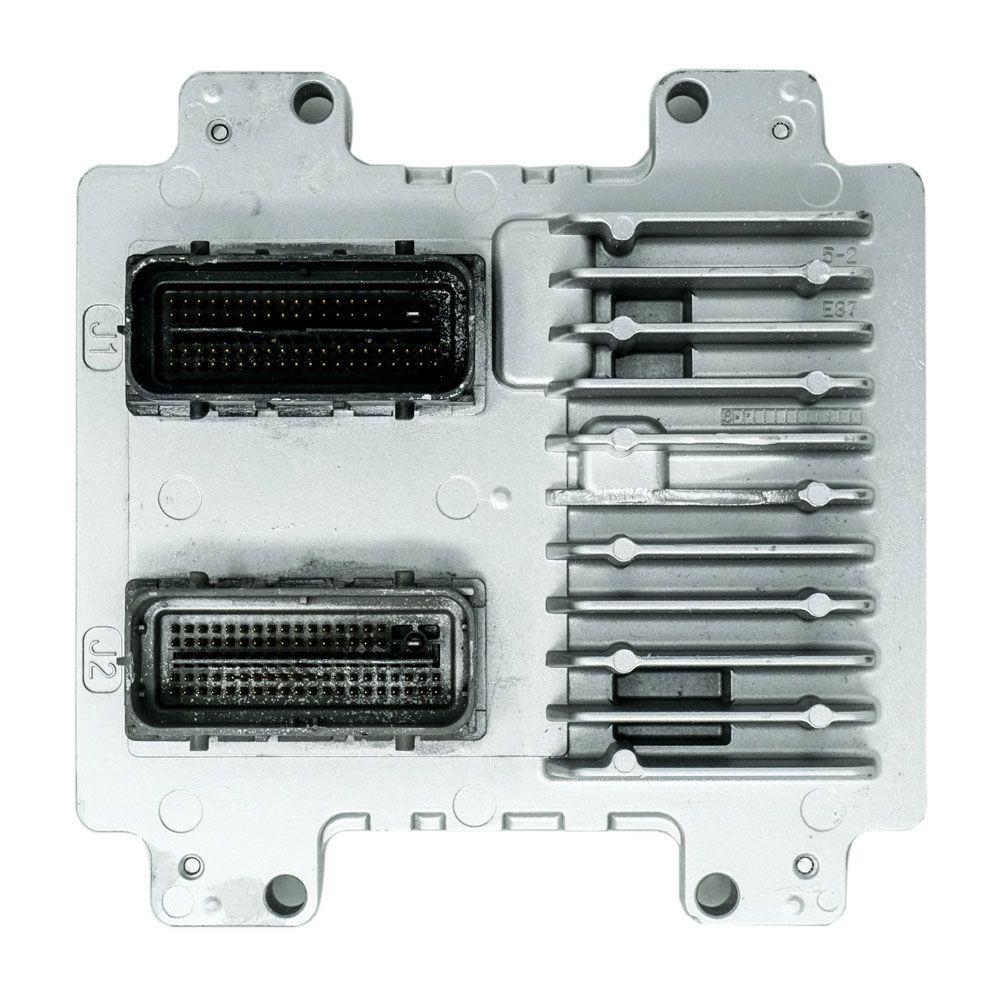
Flagship One stocks a refurbished, VIN-programmed PCM for the 2011 Buick Lucerne with a lifetime warranty, free shipping and no core charge. The full Buick Lucerne module lineup covers other engine configurations as well.
The engine control module in your 2011 Buick Lucerne plays a vital role in keeping the 3.9L V6 running smoothly. If you’re dealing with stalling, no-start conditions, or warning lights, the ECM may be the cause. Replacing it involves careful installation and, in most cases, a factory-mandated relearn procedure. Opting for a VIN-programmed unit can streamline the process, ensuring your Lucerne is back to reliable performance without unnecessary delays.