
Last updated on August 25th, 2026 at 12:46 pm
The Powertrain Control Module (PCM) in your 2009 Dodge Avenger manages engine and transmission functions. Failures may cause erratic performance, stored trouble codes, or communication loss with diagnostic tools.
If your 2009 Dodge Avenger is experiencing unexplained stalling, a no-start condition, or persistent check-engine lights, the Powertrain Control Module (PCM) may be the culprit. This critical component oversees engine performance and transmission behavior, and its failure can lead to a range of drivability issues. Understanding the role of the PCM, where it’s located, and what replacement involves helps you make informed decisions about repairs. Whether you’re diagnosing a problem or preparing for a module swap, knowing the steps and precautions ensures a smoother process and reduces the risk of further complications.
The Powertrain Control Module in your 2009 Dodge Avenger acts as the brain for both the engine and transmission. It processes data from sensors to optimize fuel delivery, ignition timing, and shift points, ensuring efficient operation. A malfunctioning PCM may disrupt these functions, leading to poor performance or even a vehicle that won’t start. When replacement becomes necessary, replacement engine computers for the Avenger are designed to restore proper communication between the engine and transmission, though programming may still be required to match your vehicle’s specifications.
2009 Dodge Avenger
OEM programmed ECM for your 2009 Dodge Avenger — plug & play, no dealer visit.
Free shipping · Lifetime warranty
In the 2009 Dodge Avenger, the PCM is positioned next to the air cleaner assembly, making it relatively accessible for removal. The factory procedure involves disconnecting the battery first to prevent voltage spikes, then unplugging the electrical connectors. Reinstallation follows the reverse steps, with the module secured in its original location. Labor estimates for removal and replacement are typically 0.5 hours, and the same time is allotted for the relearn process if required. No specialized tools are mentioned, but care should be taken to avoid damaging connectors during handling.
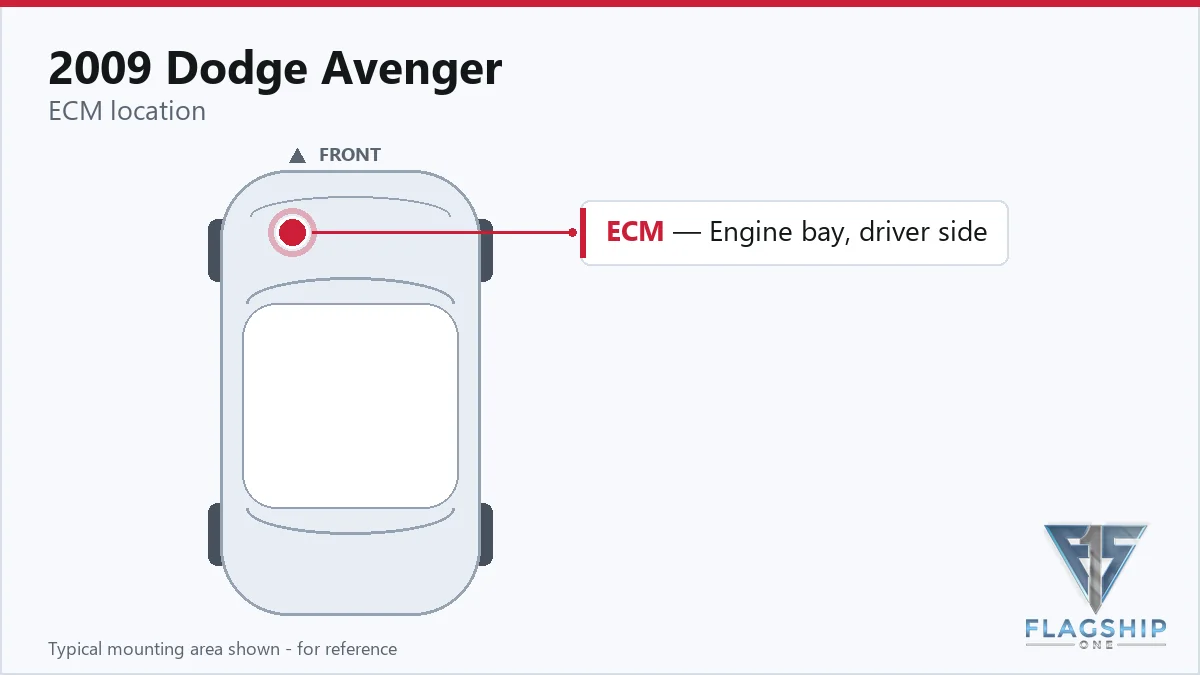
Work with the ignition off, and treat the module as static-sensitive: avoid touching the connector pins at any point.
| Operation | Configuration | Book Time |
|---|---|---|
| Engine Control Module Relearn | All configurations | 0.5 hr |
| Engine Control Module R&R | All configurations | 0.5 hr |
| Powertrain Control Module Relearn | All configurations | 0.5 hr |
| Powertrain Control Module R&R | All configurations | 0.5 hr |
After replacing the PCM in your 2009 Dodge Avenger, the factory procedure requires reprogramming radio stations and resetting the clock. However, a VIN-programmed replacement unit from Flagship One arrives pre-configured to your vehicle’s specifications, eliminating the need for additional programming steps. This ensures the module communicates correctly with the engine and transmission from the moment of installation, reducing the risk of post-replacement issues.
A failing PCM in your 2009 Dodge Avenger may cause a variety of symptoms, including intermittent stalling, a no-start condition, or erratic shifting. You might also notice the check-engine light illuminating, often accompanied by codes like internal control module memory checksum error. In some cases, the vehicle may enter a limp-home mode, limiting power to prevent further damage. If your scan tool fails to communicate with the PCM, that’s another sign the module may need attention. Addressing these symptoms promptly can prevent more severe drivability issues.
The 2009 Dodge Avenger’s PCM may store specific internal trouble codes when it malfunctions. These codes help pinpoint the issue and guide repairs.
| Code | Meaning | Full Guide |
|---|---|---|
| P0601 | Internal memory checksum error | Full P0601 guide → |
| P0606 | Module processor failure | Full P0606 guide → |
Factory service bulletin #18-021-10 addresses a condition where the Malfunction Indicator Lamp (MIL) illuminates with code P2270, indicating an O2 sensor signal biased lean. This bulletin provides guidance on diagnosing and resolving the issue, which may involve the PCM or related components. Following the bulletin’s recommendations can help ensure accurate repairs and prevent recurring problems.
| Bulletin | Subject | What It Addresses |
|---|---|---|
| 18-021-10 | 18-021-10 Flash: MIL Illumination P2270 – O2 Sensor 1/2 Signal Biased Lean | — |
Intermittent stalling in your Avenger may stem from a failing PCM, especially if accompanied by other symptoms like rough idling or trouble codes. The PCM controls critical engine functions, and its malfunction can disrupt fuel delivery or ignition timing, leading to stalling. A diagnostic scan can help confirm if the PCM is the root cause.
Skipping the PCM relearn procedure may result in poor engine performance, erratic shifting, or even a no-start condition. The relearn ensures the module adapts to your vehicle’s specific parameters, such as sensor readings and transmission behavior. Without it, the PCM may not communicate effectively with other systems.
Replacing the PCM in your Avenger is straightforward if you’re comfortable with basic mechanical tasks, such as disconnecting the battery and handling electrical connectors. However, if you’re unsure about the process or lack diagnostic tools, a professional technician can ensure the job is done correctly and the relearn procedure is performed.
If your 2009 Dodge Avenger is showing signs of PCM failure, you have options. A repair may address minor issues, but a replacement ensures long-term reliability. Given the labor time involved, opting for a pre-programmed module can save time and reduce the risk of post-installation complications. Consider your vehicle’s needs and choose the solution that best fits your situation.
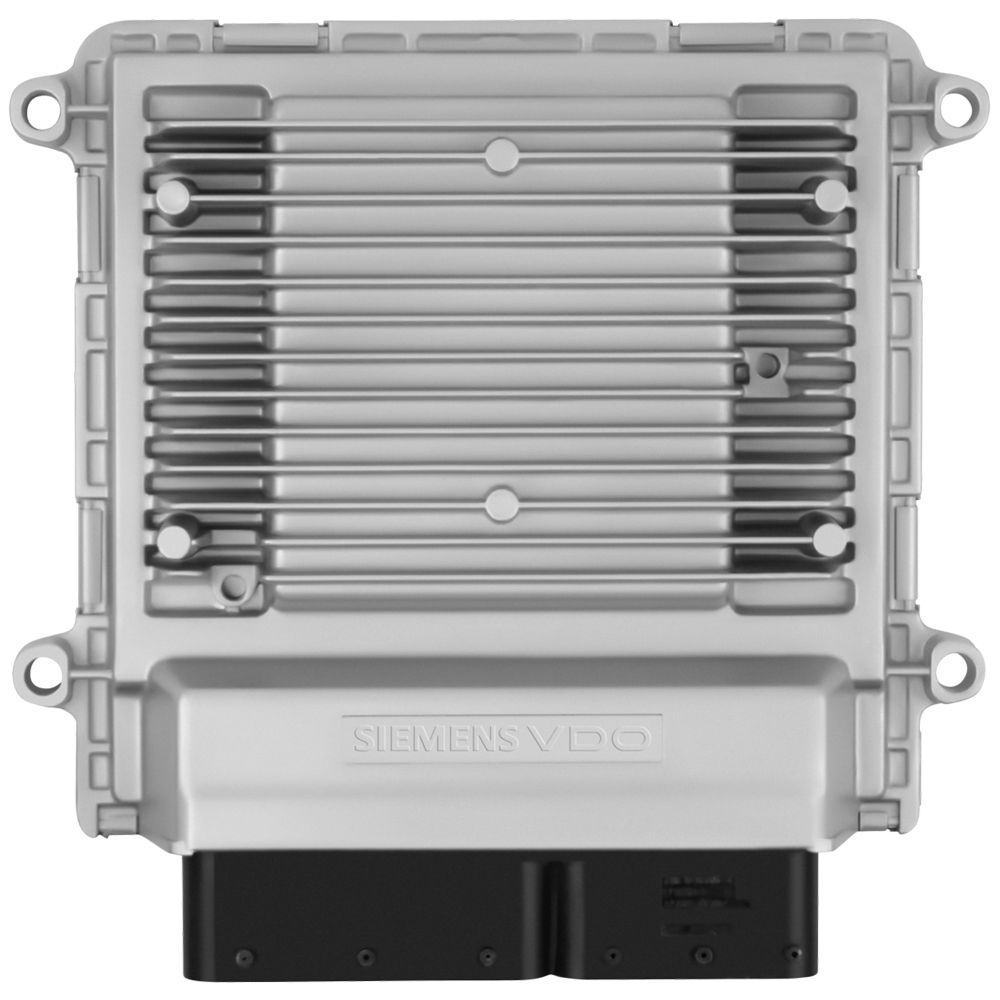
Flagship One stocks a refurbished, VIN-programmed PCM for the 2009 Dodge Avenger with a lifetime warranty, free shipping and no core charge. The full Dodge Avenger module lineup covers other engine configurations as well.
The 2009 Dodge Avenger relies on its PCM to manage critical engine and transmission functions. If you’re experiencing symptoms like stalling, no-start conditions, or stored trouble codes, addressing the PCM promptly can restore your vehicle’s performance. Whether you choose to repair or replace the module, understanding the process and precautions ensures a smoother outcome.