
Last updated on August 25th, 2026 at 12:53 pm
The Powertrain Control Module on your 2009 Sebring is the central computer that manages engine operation, transmission shifting, and emissions systems. When this module fails, the vehicle may not run at all or may run poorly.
If your 2009 Chrysler Sebring won’t start, stalls unexpectedly, or shows warning lights, the Powertrain Control Module may be the culprit. This guide explains what the PCM does in your specific vehicle, the replacement process, and what you need to know before purchasing a replacement unit. Whether you’re a DIY mechanic or discussing options with a professional, understanding the module’s role and the factory service procedure helps you make informed decisions about repair versus replacement options.
The Powertrain Control Module in your 2009 Chrysler Sebring with the 2.4L engine serves as the brain of the vehicle’s powertrain. This single unit manages the engine’s fuel injection, ignition timing, idle speed, and transmission shift points all in one computer. Unlike some vehicles that separate engine and transmission controls, the Sebring’s integrated design means both systems rely on the same module. When the PCM receives faulty data from sensors or develops internal memory problems, it may default to a protective mode that prevents the engine from running or cause drivability issues such as rough idle, hesitation under acceleration, or poor fuel economy. Replacement engine computers for the Sebring must be matched to the vehicle’s specific calibration to ensure proper operation of all connected systems.
Flagship One keeps Chrysler Sebring replacement engine computers in stock for exactly this failure pattern.
2009 Chrysler Sebring
OEM programmed ECM for your 2009 Chrysler Sebring — plug & play, no dealer visit.
Free shipping · Lifetime warranty
The control module on your 2009 Sebring is located next to the air cleaner assembly, requiring removal of the air intake ducting to access the unit. The factory procedure allocates 0.5 hours for the actual remove-and-replace operation and an additional 0.5 hours for the relearn procedure that follows. During replacement, technicians must first ensure the ignition key is fully off and the negative battery cable is disconnected before unplugging any electrical connectors—the factory explicitly warns that voltage spikes from improper disconnection can damage the new module. After the new unit is installed, the battery is reconnected, and the relearn procedure allows the PCM to adapt to your specific engine’s characteristics.
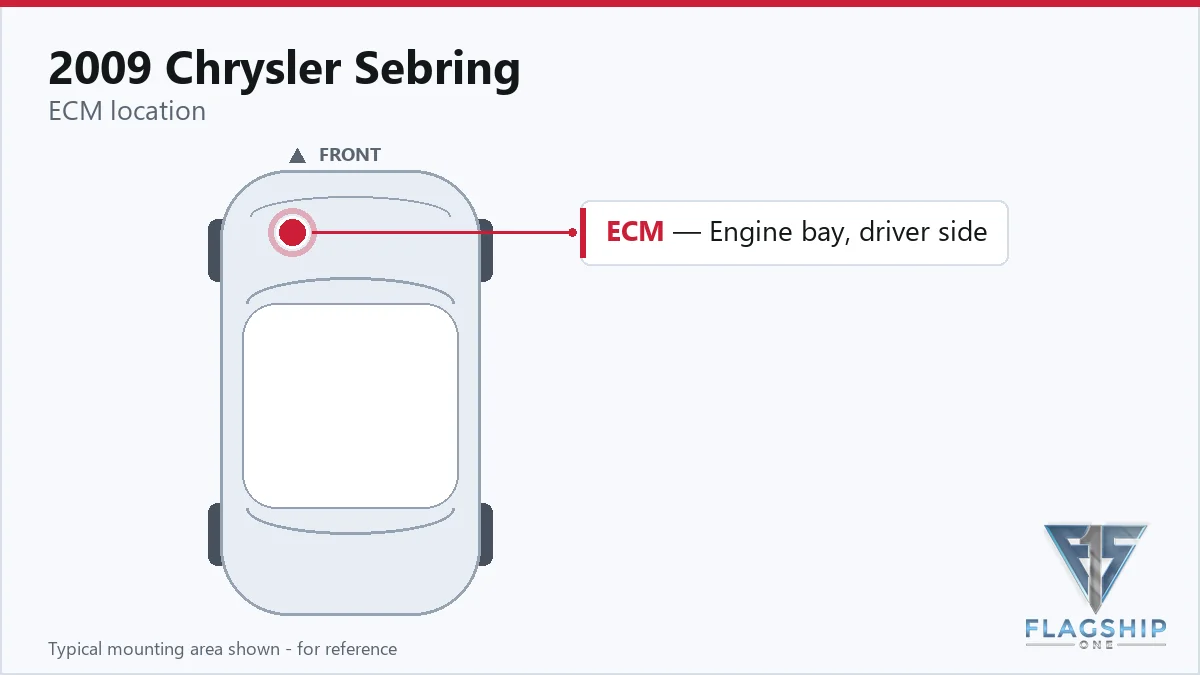
Work with the ignition off, and treat the module as static-sensitive: avoid touching the connector pins at any point.
| Operation | Configuration | Book Time |
|---|---|---|
| Powertrain Control Module Relearn | All configurations | 0.5 hr |
| Powertrain Control Module R&R | All configurations | 0.5 hr |
| Engine Control Module Relearn | All configurations | 0.5 hr |
| Engine Control Module R&R | All configurations | 0.5 hr |
After installing a replacement PCM in your 2009 Sebring, the factory procedure requires reprogramming the radio stations and adjusting the clock time—these settings are lost whenever the battery is disconnected. However, when you purchase a VIN-programmed replacement unit from Flagship One, the module arrives pre-configured with your specific vehicle’s calibration data, which means the essential engine and transmission programming is already completed before installation. This eliminates the need for dealer-side programming services and gets your vehicle back on the road faster. The radio and clock settings remain the only manual items you’ll need to reset.
Every VIN-programmed replacement unit from Flagship One arrives with these steps already completed.
When the PCM on a 2009 Chrysler Sebring fails, the vehicle may exhibit a range of symptoms from complete no-start conditions to intermittent drivability problems. Common indicators include the engine cranking but not starting, unexpected stalling while driving, or a persistent check engine light that may flash rather than stay steady. Diagnostic trouble codes stored in the module’s internal memory, such as P0601 indicating internal memory check sum failures, often appear when the PCM’s processor can no longer reliably store calibration data. Additional symptoms may include unresponsive throttle response, erratic transmission shifting, or a dead scan tool connection that prevents any code reading. These symptoms often develop gradually as internal electronics degrade, though sudden failure from a voltage spike during jump-starting or battery disconnect is also possible.
The 2009 Chrysler Sebring may store module-internal trouble codes that indicate the PCM itself has failed rather than an external sensor or component. These codes are generated by the module’s built-in self-diagnostic system and typically cannot be cleared by replacing sensors or clearing the codes through a scan tool—the root cause is the module’s internal electronics.
| Code | Meaning | Full Guide |
|---|---|---|
| P0601 | Internal memory checksum error | Full P0601 guide → |
| P0606 | Module processor failure | Full P0606 guide → |
Factory service bulletin #18-021-10 addresses MIL illumination with trouble code P2270, which relates to the oxygen sensor 1/2 signal being biased lean. While this bulletin specifically concerns an O2 sensor issue rather than direct PCM failure, it demonstrates that the 2009 Sebring’s engine management system can trigger check engine lights for emissions-related faults. The bulletin describes a flash update procedure to correct the sensor bias condition, which may be necessary if your replacement PCM encounters this same code after installation.
| Bulletin | Subject | What It Addresses |
|---|---|---|
| 18-021-10 | 18-021-10 Flash: MIL Illumination P2270 – O2 Sensor 1/2 Signal Biased Lean | — |
No—replacement PCM units must be matched to your vehicle’s specific VIN and engine combination. The module contains calibration data unique to your Sebring’s powertrain configuration.
If you have basic automotive skills and follow the factory caution about disconnecting the battery first, a competent DIY mechanic can handle the R&R portion. The relearn procedure may require a scan tool, though some auto parts stores will let you borrow one.
A new (non-VIN-programmed) PCM may trigger additional codes until it’s properly configured. Additionally, existing issues with sensors, wiring, or the O2 system (such as the condition described in TSB #18-021-10) will still illuminate the light independent of the module replacement.
When your 2009 Chrysler Sebring’s PCM fails, you have two primary repair paths: professional installation with a new dealer unit or a cost-effective VIN-programmed replacement from Flagship One. New OEM modules from the dealer carry full warranty coverage but require dealer programming appointments and higher parts costs. Flagship One’s replacement units arrive ready to install with your specific vehicle’s calibration already loaded, saving you the dealer programming fee and wait time. Consider your budget, timeline, and comfort level with automotive repair when choosing which route makes sense for your situation.
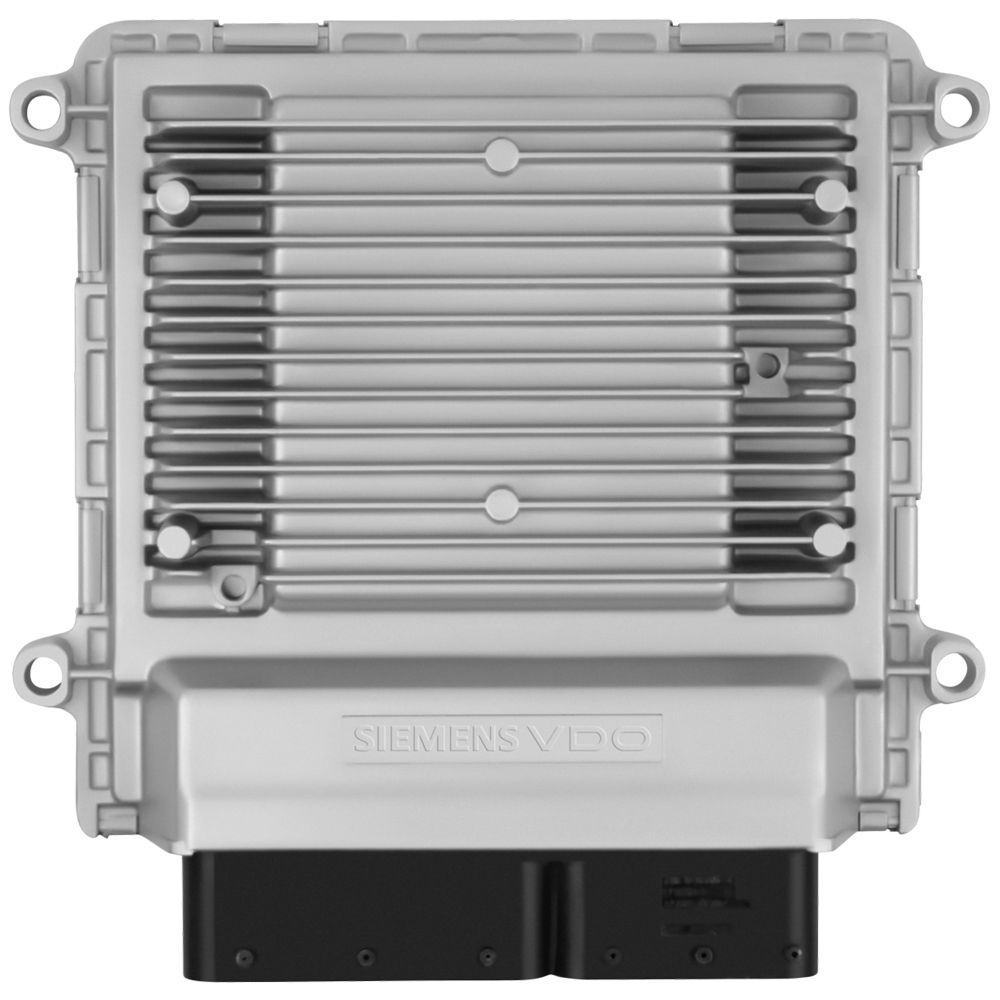
Flagship One stocks a refurbished, VIN-programmed PCM for the 2009 Chrysler Sebring with a lifetime warranty, free shipping and no core charge. The full Chrysler Sebring module lineup covers other engine configurations as well.
The 2009 Chrysler Sebring’s PCM is a critical component that manages your vehicle’s entire powertrain operation. Whether you ultimately choose a new dealer unit or a professionally refurbished replacement, understanding the module’s role, the factory caution against voltage damage, and the programming requirements helps ensure a successful repair. Flagship One stocks replacement units configured specifically for the 2009 Sebring—contact them to verify fitment for your exact vehicle.