
Last updated on August 25th, 2026 at 02:39 pm
The powertrain control module (PCM) in your 2009 Buick LaCrosse manages engine and transmission functions. Internal faults may trigger drivability issues, including stalling, poor acceleration, or failure to start. Replacement often resolves persistent electronic control problems.
If your 2009 Buick LaCrosse hesitates, stalls, or refuses to start, the powertrain control module (PCM) may be failing. This critical computer oversees fuel delivery, ignition timing, and transmission shifting. When it malfunctions, you’ll often notice erratic behavior or warning lights on the dashboard. Replacing the PCM involves removing the old unit, installing a new one, and performing a system relearn—unless you use a pre-programmed replacement. Understanding the process helps you anticipate labor time and avoid unnecessary steps. This guide explains what the PCM does, where it’s located, and how to recognize failure symptoms in your LaCrosse.
The powertrain control module in your 2009 Buick LaCrosse acts as the brain for engine and transmission functions. It processes sensor data to adjust fuel injection, ignition timing, and shift points, ensuring smooth operation. A failing PCM may cause hesitation, stalling, or even prevent the vehicle from starting. Since it integrates multiple systems, replacing it requires careful handling. When sourcing a new unit, you’ll need replacement engine computers for the LaCrosse to match the original specifications. Without proper calibration, the vehicle may not run correctly, so compatibility is essential.
In the 2009 Buick LaCrosse, the PCM is positioned next to the air cleaner assembly. To access it, technicians typically remove the air intake ducting and unbolt the module’s mounting bracket. The factory labor time for replacement is 1.1 hours for the 3.8L engine. After removal, the new unit must be secured with the correct fasteners, though no specific torque values are provided. Reinstalling the air intake components completes the physical swap. Since the module is near the engine bay’s airflow path, it’s exposed to heat and vibration, which may contribute to long-term wear.
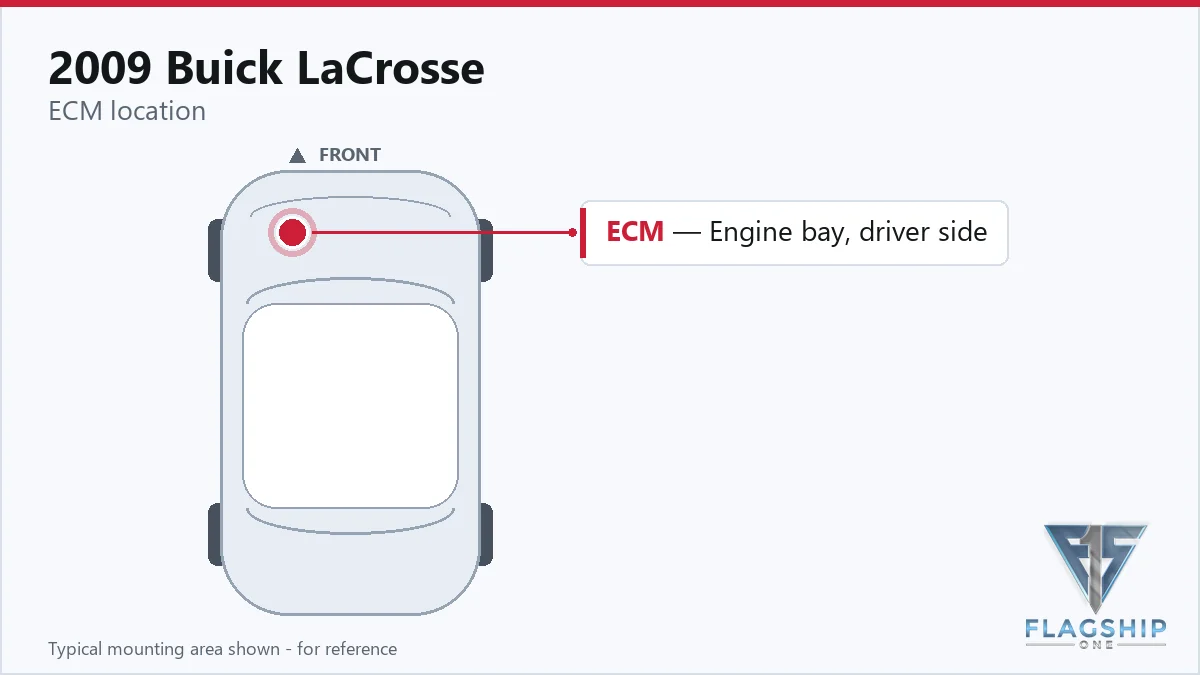
Work with the ignition off, and treat the module as static-sensitive: avoid touching the connector pins at any point.
| Operation | Configuration | Book Time |
|---|---|---|
| Powertrain Control Module R&R | 3.8L | 1.1 hr |
| Powertrain Control Module R&R | 5.3L | 1.4 hr |
| Engine Control Module Relearn | All configurations | 0.5 hr |
| Engine Control Module R&R | 3.8L | 1.1 hr |
| Engine Control Module R&R | 5.3L | 1.4 hr |
2009 Buick LaCrosse 3.8L
OEM programmed ECM for your 2009 Buick LaCrosse 3.8L — plug & play, no dealer visit.
Free shipping · Lifetime warranty
Before removing the original PCM from your 2009 Buick LaCrosse, the factory procedure requires capturing its data with a scan tool. This step ensures the new module can be programmed with the vehicle’s specific settings. However, if you install a VIN-programmed replacement unit, this data transfer is unnecessary, as the module arrives ready to plug in and start the engine. The factory also specifies a 0.5-hour relearn process to synchronize the PCM with the vehicle’s systems, but pre-programmed units eliminate this step entirely.
A failing PCM in your 2009 Buick LaCrosse may cause a range of drivability issues. Common symptoms include intermittent stalling, rough idle, or a complete no-start condition. You might also notice poor acceleration, erratic shifting, or warning lights on the dashboard. In some cases, the vehicle may enter a reduced-power mode to prevent further damage. Internal faults often trigger specific trouble codes, such as internal control module memory checksum error, which indicate the module’s memory or processing functions are compromised. If these symptoms appear, the PCM may need replacement to restore proper operation.
The 2009 Buick LaCrosse’s PCM may store several internal trouble codes when it malfunctions. These codes typically point to memory corruption, communication errors, or sensor circuit faults within the module itself. Addressing them often requires replacement rather than repairs.
Common signs include stalling, no-start conditions, or stored trouble codes like P0601. A scan tool can confirm internal module faults. If the vehicle exhibits erratic behavior without other obvious causes, the PCM may be failing.
Replacement is physically straightforward but requires careful handling. The module is located near the air cleaner, and labor time is typically 1.1 hours. However, programming the new unit requires specialized tools unless you use a pre-programmed replacement.
Without a relearn, the vehicle may run poorly or fail to start. The PCM needs to synchronize with the engine and transmission systems. Pre-programmed units skip this step, as they arrive ready to install.
If your 2009 Buick LaCrosse is experiencing PCM-related issues, you have options. A dealer may recommend a new unit with programming, while a refurbished replacement can offer a cost-effective alternative. Pre-programmed modules eliminate the need for post-install data transfer, saving time and hassle. Consider your budget and urgency when deciding between repair and replacement.
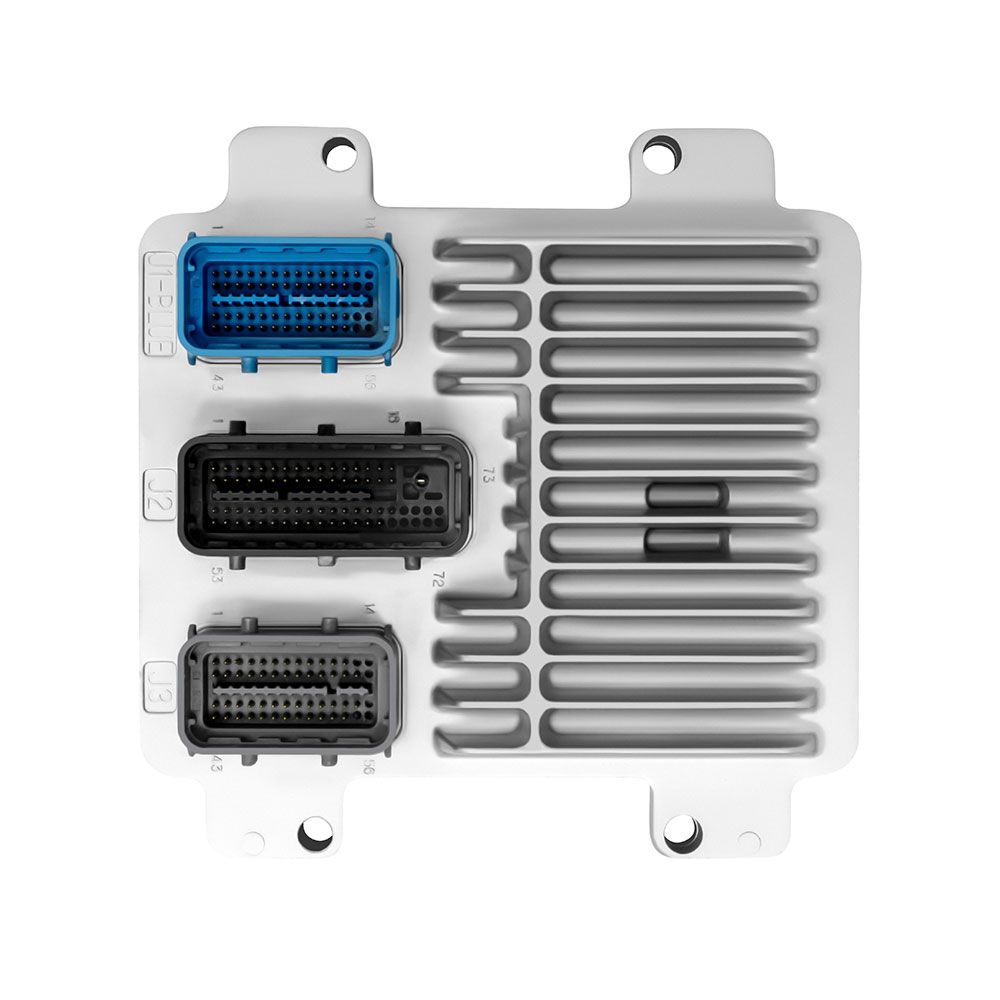
Flagship One stocks a refurbished, VIN-programmed PCM for the 2009 Buick LaCrosse with a lifetime warranty, free shipping and no core charge. The full Buick LaCrosse module lineup covers other engine configurations as well.
The 2009 Buick LaCrosse relies on its PCM for smooth operation, and recognizing failure symptoms early can prevent further issues. Whether you opt for a dealer visit or a pre-programmed replacement, understanding the process helps you make an informed decision. Addressing PCM problems promptly ensures your LaCrosse remains reliable on the road.