
Last updated on August 25th, 2026 at 02:37 pm
The powertrain control module (PCM) or engine control module (ECM) in your 2008 BMW 3 Series manages fuel injection, ignition timing, and emissions systems. Failures may cause stalling, misfires, or a no-start condition, often triggered by voltage spikes or corrosion.
If your 2008 BMW 3 Series is experiencing unexplained stalling, rough idling, or a check engine light that won’t clear, the powertrain control module (PCM) or engine control module (ECM) may be the culprit. This small but critical computer manages everything from fuel delivery to ignition timing, and when it fails, your vehicle’s performance can suffer in noticeable ways. Replacing it isn’t as simple as swapping a fuse—it requires careful handling, proper access, and often, a relearn procedure to sync the new module with your BMW’s systems. Understanding the role of this module, where it’s located, and what to expect during replacement can save you time and frustration. Whether you’re diagnosing a persistent issue or preparing for a repair, knowing the facts about your 3 Series’ PCM/ECM will help you make informed decisions about maintaining your vehicle’s reliability.
The powertrain control module (PCM) in your 2008 BMW 3 Series is the brain behind your engine’s performance. It constantly monitors sensors for data like air intake, throttle position, and exhaust oxygen levels, then adjusts fuel injection, ignition timing, and emissions controls in real time. Without a properly functioning PCM, your engine may run inefficiently, fail to start, or even stall unexpectedly. This module also communicates with other systems, such as the transmission and onboard diagnostics, ensuring smooth operation across the board. When it fails, symptoms can range from subtle drivability issues to complete engine shutdown. Replacing it with replacement engine computers for the 3 Series ensures compatibility and restores your vehicle’s performance, but the process requires precision to avoid damaging sensitive electronics during installation.
2008 BMW 3 Series
OEM programmed ECM for your 2008 BMW 3 Series — plug & play, no dealer visit.
Free shipping · Lifetime warranty
The PCM/ECM in your 2008 BMW 3 Series is housed in the electronics box (E-box) located in the engine compartment, tucked behind the microfilter housing. To access it, you’ll need to switch off the ignition, clamp the battery to prevent electrical shorts, and remove the microfilter housing. This process isn’t overly complex, but it does require patience to avoid damaging surrounding components. The factory labor time for removing and reinstalling the module is 2.2 hours, which includes the careful handling needed to prevent electrostatic discharge (ESD). ESD protection is critical—even a small static shock can permanently damage the module’s sensitive circuitry. Once the old unit is removed, the new one can be installed in the same location, but proper torque and connector seating are essential to avoid future issues.
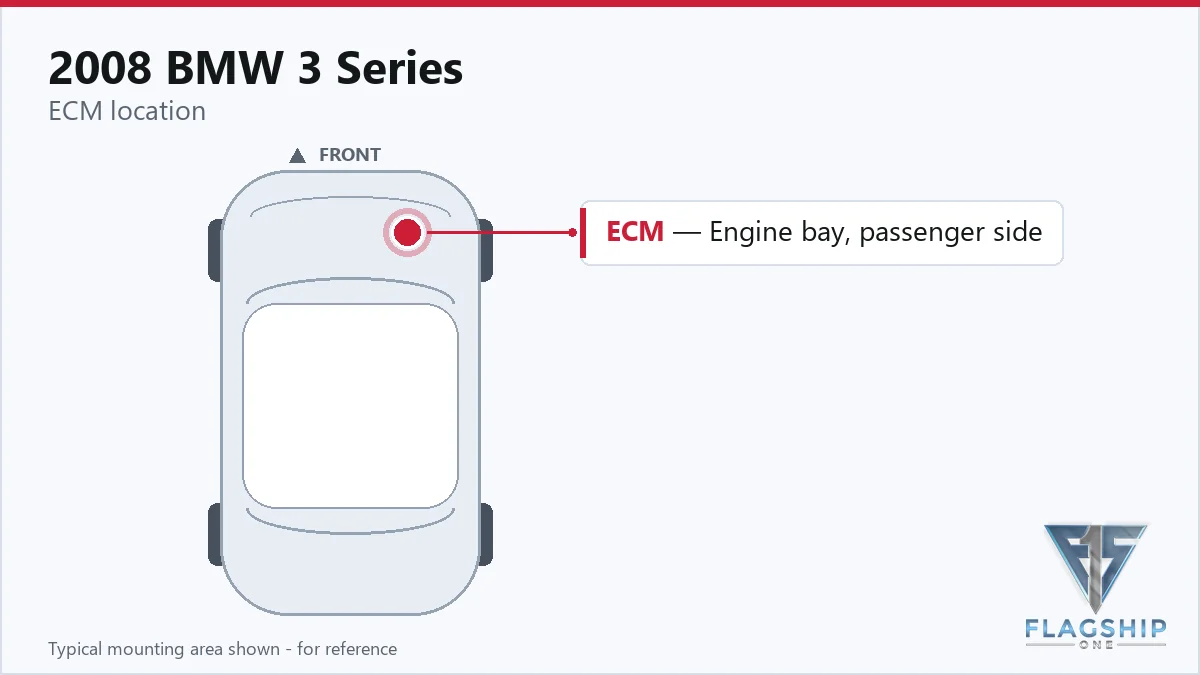
Work with the ignition off, and treat the module as static-sensitive: avoid touching the connector pins at any point.
| Operation | Configuration | Book Time |
|---|---|---|
| Powertrain Control Module R&R | All configurations | 2.2 hr |
| Engine Control Module R&R | All configurations | 2.2 hr |
| Engine Control Module Relearn | All configurations | 0.5 hr |
After replacing the PCM/ECM in your 2008 BMW 3 Series, the factory procedure requires a 0.5-hour relearn process to synchronize the new module with your vehicle’s systems. This step ensures that the module recognizes the engine’s sensors, fuel trims, and other critical parameters. However, if you opt for a VIN-programmed replacement unit, this relearn step is already completed before the module arrives. The unit is pre-programmed to match your vehicle’s specific configuration, saving you time and reducing the risk of post-installation errors. This means you can focus on the physical installation without worrying about additional programming steps, though it’s still important to follow proper ESD precautions during handling.
When the PCM/ECM in your 2008 BMW 3 Series begins to fail, you may notice a range of symptoms that can affect drivability and performance. A common early sign is an illuminated check engine light, often accompanied by fault codes stored in the module’s memory. For example, a memory integrity fault may appear, indicating internal corruption within the PCM. Other symptoms include rough idling, hesitation during acceleration, or stalling, which can occur if the module fails to regulate fuel or ignition timing properly. In some cases, the engine may crank but not start at all, leaving you stranded. You might also experience poor fuel economy or unusual transmission behavior, as the PCM communicates with the transmission control module to manage shifting. If your scan tool fails to communicate with the PCM, that’s another red flag—it suggests the module isn’t responding, which could mean internal failure or a wiring issue. Addressing these symptoms promptly can prevent further damage to your vehicle’s systems.
Factory service bulletins for the 2008 BMW 3 Series highlight issues related to the PCM/ECM, particularly when the check engine light is illuminated and faults are stored in the module. These bulletins often address drivability concerns, such as rough idling or stalling, and provide diagnostic steps to confirm whether the PCM is the root cause. While the exact bulletin numbers aren’t specified, following the recommended procedures can help technicians isolate the problem and determine if a replacement is necessary. If your vehicle is exhibiting these symptoms, consulting the latest service bulletins may provide additional guidance for resolving the issue.
| Bulletin | Subject | What It Addresses |
|---|---|---|
| — | Check Engine Light Illuminated, Faults Stored in DME/ECM | — |
Random stalling in your 2008 BMW 3 Series can often be traced to the PCM, especially if the module is failing to regulate fuel or ignition timing. The PCM relies on data from multiple sensors, and if it misinterprets this data or loses communication with a sensor, it may cut fuel or spark, causing the engine to stall. A diagnostic scan can help determine if the PCM is storing fault codes related to these issues.
If your PCM is storing fault codes related to internal memory corruption or communication failures, replacement is often the most reliable solution. Reprogramming may resolve software-related issues, but if the module has physical damage or hardware failure, a new unit will be necessary. A professional diagnostic scan can help determine whether reprogramming or replacement is the best course of action.
Failing to follow electrostatic discharge (ESD) precautions can permanently damage the PCM’s sensitive circuitry. Even a small static shock can corrupt the module’s memory or disrupt its ability to communicate with sensors. This may result in immediate failure or intermittent issues that are difficult to diagnose. Always use an ESD-safe work environment and grounding techniques when handling the PCM.
Yes, the PCM in your 2008 BMW 3 Series communicates with the transmission control module to manage shifting. If the PCM is failing, it may send incorrect signals to the transmission, leading to harsh or delayed shifts. This can also trigger transmission-related fault codes, so it’s important to diagnose the PCM as part of any transmission issue investigation.
Driving with a faulty PCM can be risky, as the module controls critical engine functions. If the PCM is failing, your vehicle may stall unexpectedly, lose power, or even refuse to start. Additionally, a malfunctioning PCM can cause poor fuel economy or damage other components, such as the catalytic converter. If you suspect PCM issues, it’s best to address them promptly to avoid further complications.
If your 2008 BMW 3 Series is showing signs of PCM failure, you have options for repair or replacement. While a dealership may offer a new module, a refurbished or remanufactured unit can provide the same reliability at a lower cost. Given the labor involved in accessing and replacing the PCM, choosing a VIN-programmed unit can save you time and ensure a smooth installation. Whether you’re dealing with a no-start condition or persistent drivability issues, addressing the PCM promptly can restore your vehicle’s performance and prevent further damage.
Flagship One stocks a refurbished, VIN-programmed PCM for the 2008 BMW 3 Series with a lifetime warranty, free shipping and no core charge. The full BMW 3 Series module lineup covers other engine configurations as well.
The PCM in your 2008 BMW 3 Series plays a vital role in keeping your engine running smoothly. When it fails, the symptoms can range from subtle drivability issues to complete engine shutdown. Understanding the module’s location, replacement process, and common failure signs can help you make informed decisions about repairs. If you’re experiencing PCM-related problems, consider a VIN-programmed replacement unit to simplify the process and get your 3 Series back on the road reliably.