
Last updated on August 25th, 2026 at 12:12 pm
The Powertrain Control Module (PCM) in a 2007 Mazda 5 manages engine and transmission functions. When it fails, you may experience hard starts, erratic shifting, or a no-start condition. A malfunctioning Engine Control Module (ECM) can trigger warning lights and prevent the vehicle from running properly.
When your 2007 Mazda 5 suddenly refuses to start or begins stalling without warning, the problem may not be a dead battery or a failing alternator—it could be the engine computer. The Powertrain Control Module (PCM), also called the Engine Control Module (ECM), is the brain behind your vehicle’s engine and transmission operation. It processes data from dozens of sensors and adjusts fuel delivery, ignition timing, and shift points in real time. A failing module can produce a range of confusing symptoms, from intermittent misfires to a complete no-start condition. This article explains what the PCM/ECM does in your 2.3L Mazda 5, how to recognize when it’s failing, and what a replacement involves. You’ll learn about the specific trouble codes that point to internal module failure, the labor time required for replacement, and how a pre-programmed unit can eliminate the need for dealer-level tools. By understanding the role of this critical component, you can make an informed repair decision and get your Mazda 5 back on the road reliably.
In the 2007 Mazda 5, the Powertrain Control Module (PCM) is the central electronic unit that governs both engine and transmission operation. Often called the Engine Control Module (ECM), it receives continuous input from sensors such as the mass airflow sensor, throttle position sensor, oxygen sensors, and crankshaft position sensor. Using this data, the module calculates the optimal air-fuel mixture, ignition timing, and transmission shift strategy to maintain performance and fuel efficiency. It also monitors emissions systems and communicates with other onboard modules, including the immobilizer and instrument cluster. When the PCM malfunctions, these calculations become unreliable. The engine may run rich or lean, the transmission may shift erratically, or the vehicle may fail to start entirely. Because the module is integral to so many functions, a single internal fault can trigger multiple warning lights and diagnostic trouble codes. For owners seeking a solution, replacement engine computers for the Mazda 5 are available that arrive pre-programmed with your VIN, eliminating the need for dealer-level tools. Understanding the PCM’s role helps you appreciate why a high-quality replacement is essential for restoring your vehicle’s drivability and reliability.
On the 2007 Mazda 5, the PCM/ECM is located in the engine compartment, typically mounted near the air cleaner housing or on the firewall. Accessing the module requires removing a few trim panels or the air intake duct. The factory labor guide lists a replacement time of 0.6 hours for vehicles without an immobilizer system and 0.7 hours for those with an immobilizer. An additional 0.5 hours is allotted for a PCM or ECM relearn procedure, which may involve idle speed learning or immobilizer synchronization. The physical swap is straightforward: disconnect the negative battery cable, unplug the electrical connectors from the module, remove the mounting fasteners, and install the new unit in reverse order. No special tools are required beyond basic hand tools. If your vehicle is equipped with an immobilizer, the replacement module must be properly programmed to recognize the key, or the engine will not start. However, when you use a pre-programmed unit, this step is already completed, and the vehicle should start immediately after installation. Always double-check that all connectors are fully seated and the battery is reconnected securely before attempting to start the engine.
Work with the ignition off, and treat the module as static-sensitive: avoid touching the connector pins at any point.
| Operation | Configuration | Book Time |
|---|---|---|
| Powertrain Control Module R&R | Without Immobilize System | 0.6 hr |
| Powertrain Control Module R&R | With Immobilize System | 0.7 hr |
| Powertrain Control Module Relearn | All configurations | 0.5 hr |
| Engine Control Module R&R | Without Immobilize System | 0.6 hr |
| Engine Control Module R&R | With Immobilize System | 0.7 hr |
| Engine Control Module Relearn | All configurations | 0.5 hr |
2007 Mazda 5
OEM programmed ECM for your 2007 Mazda 5 — plug & play, no dealer visit.
Free shipping · Lifetime warranty
After installing a new PCM or ECM in a 2007 Mazda 5, the factory service procedure typically requires a series of programming steps using a scan tool. This includes writing the vehicle identification number (VIN) to the module, performing an immobilizer initialization if equipped, and completing a relearn procedure for the idle air volume and transmission shift points. The labor guide allocates 0.5 hours for this relearn process. Without these steps, the engine may not start, or it may run poorly and set diagnostic trouble codes. However, when you purchase a pre-programmed replacement unit from Flagship One, all of these programming tasks are already completed before the module ships. Our technicians use your VIN and vehicle options to load the correct calibration and immobilizer data, so the module is truly plug-and-play. You simply install it, reconnect the battery, and start the engine. No scan tool, no dealer visit, and no additional programming fees. This saves you time and eliminates the frustration of dealing with complex software procedures.
A failing PCM or ECM in the 2007 Mazda 5 often produces symptoms that can be mistaken for other problems. The most common sign is a no-start condition: the engine cranks but will not fire, or it starts briefly and then stalls. You may also experience intermittent stalling while driving, rough idling, or a sudden loss of power. The transmission may shift harshly, hang in gear, or fail to engage. The check engine light will typically illuminate, and a scan tool may reveal multiple trouble codes that do not seem related. Communication errors between the module and the scan tool are another red flag—if your OBD-II scanner cannot connect, the PCM may be dead. Specific internal failure codes, such as internal control module memory checksum error, indicate that the module’s processor or memory has failed. Other codes like P0602, P0604, P0606, and P0607 also point to internal module faults. You might notice that the vehicle’s cooling fans run constantly, or the instrument cluster displays erratic readings. In some cases, the immobilizer system may prevent starting because the module cannot recognize the key. Fuel economy may drop noticeably, and the engine may run excessively rich or lean. You might smell unburned fuel from the exhaust. The vehicle may enter limp mode, limiting speed and power to protect the engine. These symptoms can appear suddenly or develop gradually over time. When the module fails internally, no amount of sensor replacement will fix the problem—the computer itself must be replaced.
The following diagnostic trouble codes are commonly associated with internal failures of the PCM or ECM in a 2007 Mazda 5. If you retrieve any of these codes with a scan tool, the module itself is likely the cause, not an external sensor or wiring issue. Addressing these codes promptly can prevent further damage and get your vehicle back to reliable operation.
Mazda has issued service bulletin 01-003/09, which addresses a malfunction indicator lamp (MIL) illumination with diagnostic trouble code P0441 on multiple models, including the 2007 Mazda 5. This bulletin may involve reprogramming the PCM to correct an overly sensitive evaporative emissions system monitor. Additionally, a Mazda Tips bulletin provides information on module replacement and reprogramming, indicating which modules are present on the Mazda5 and whether they are reprogrammable or configurable. This resource helps technicians determine the correct procedure when replacing a module. If your vehicle exhibits a P0441 code, checking for the latest PCM calibration is recommended. However, if the module has internal faults, reprogramming alone will not resolve the issue, and replacement is necessary.
| Bulletin | Subject | What It Addresses |
|---|---|---|
| — | Mazda Tips: Module Replacement/Reprogramming Information | s SEE CHART BELOW INDICATING WHICH MODULES ARE PRESENT ON THE MAZDA5 AND IF THEY ARE REPROGRAMMABLE AND OR |
| — | 01 003/09 Multi Model MIL Illumination DTC P0441 | — |
Common signs include a no-start condition, stalling, rough idle, transmission shifting problems, and multiple trouble codes. If your scan tool cannot communicate with the module, that is a strong indicator of internal failure.
Yes, the factory procedure requires VIN programming and a relearn. However, a pre-programmed unit from Flagship One arrives with these steps already completed, so you can install it and start the engine immediately.
In the 2007 Mazda 5, the terms are often used interchangeably. The PCM (Powertrain Control Module) manages both engine and transmission, while ECM typically refers to engine control only. The vehicle uses a single module for both functions.
The physical replacement is straightforward and can be done with basic hand tools in under an hour. The critical part is programming, but with a pre-programmed unit, no special skills or tools are required.
Codes such as P0601, P0602, P0604, P0606, P0607, P0610, P0638, P0661, P0662, P2502, P2503, P2504, P2507, U0121, and U0155 all point to internal module faults. If you see any of these, the PCM is likely the culprit.
When your Mazda 5’s engine computer fails, you have two main options: have a dealership install and program a new module, which can be expensive and time-consuming, or choose a refurbished, pre-programmed replacement that you can install yourself. A quality remanufactured unit offers the same reliability at a fraction of the cost and eliminates the need for a tow and dealer labor. By opting for a plug-and-play solution, you can get your 2007 Mazda 5 back on the road the same day the part arrives.
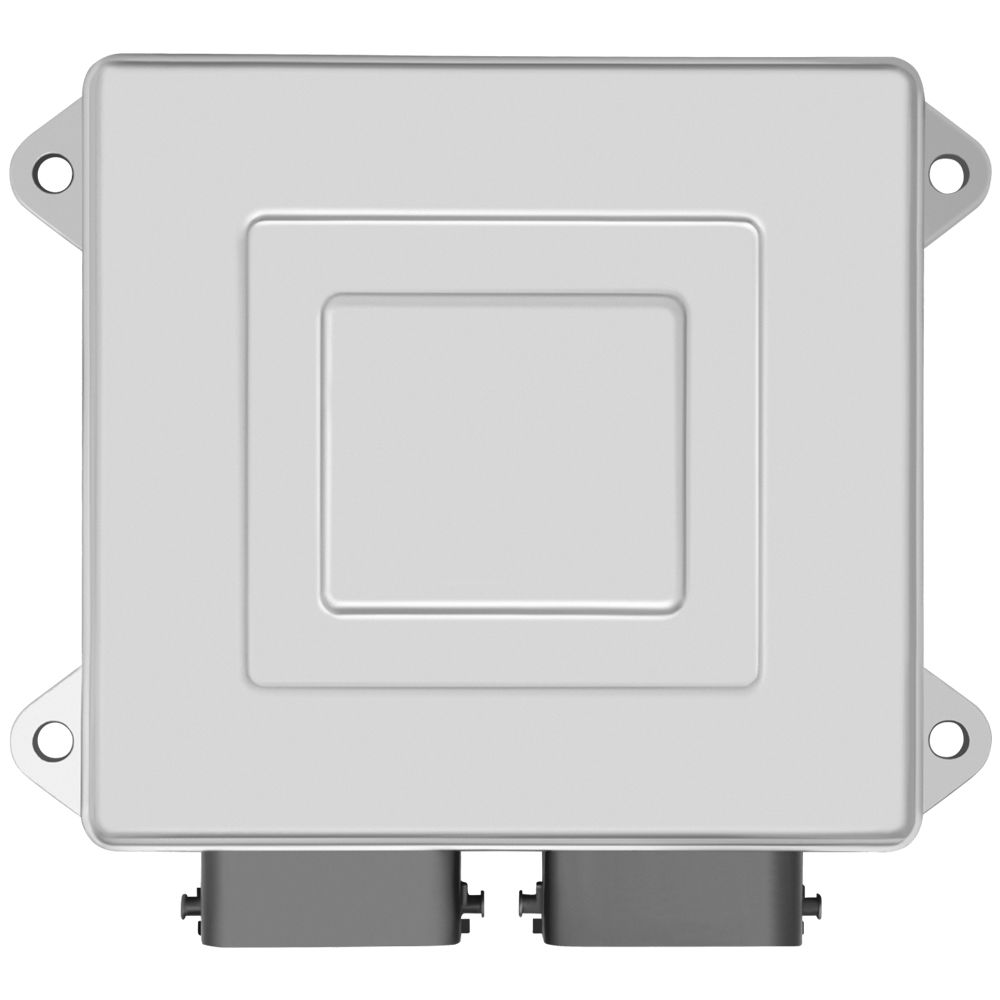
Flagship One stocks a refurbished, VIN-programmed PCM for the 2007 Mazda 5 with a lifetime warranty, free shipping and no core charge. The full Mazda 5 module lineup covers other engine configurations as well.
A failing PCM or ECM doesn’t have to sideline your 2007 Mazda 5. By recognizing the symptoms early and choosing a pre-programmed replacement, you can avoid lengthy diagnostic fees and get back to driving with confidence. Whether you’re dealing with a no-start, shifting issues, or a persistent check engine light, a reliable module is the key to restoring your vehicle’s performance. Explore your options today and take the first step toward a smooth-running Mazda 5.