
Last updated on August 25th, 2026 at 12:15 pm
The powertrain control module (PCM) on a 2007 GMC Sierra with the 8.1L V8 is the vehicle’s primary computer, managing engine and transmission functions. When internal memory fails, codes like P0601 through P1621 often appear with no external cause found. This guide explains what the module does, how replacement and relearn procedures work, and what Flagship One provides.
When a 2007 GMC Sierra equipped with the 8.1L V8 refuses to start properly, runs rough, or sets multiple unrelated fault codes, the powertrain control module is frequently the underlying cause. This computer, often referred to as the PCM or ECM depending on the service literature you consult, sits at the center of your truck’s engine and transmission management. It monitors sensors throughout the drivetrain and makes thousands of decisions per second to keep the engine running smoothly and the automatic transmission shifting appropriately.
The 8.1L big-block gas engine found in the 2007 Sierra 2500HD and Sierra 3500HD places significant electrical demands on its control module. Heat, vibration, and age can degrade the internal circuitry over time, leading to a condition sometimes called module death, where the unit generates fault codes internally with no corresponding problem in the wiring or sensors. When this happens, you may scan the truck and find a series of codes like P0601, P0602, or P0603 with no obvious explanation.
This guide walks through what the module does on this specific truck, where it is located, what labor steps are involved in replacement, and what the factory post-installation programming procedure requires. By the end, you will have a clear picture of what to expect whether you are diagnosing the problem yourself or working with a shop to complete the repair.
The powertrain control module on your 2007 GMC Sierra 2500HD is a dedicated on-board computer that manages the operation of both the engine and the transmission. In practical terms, this single unit often combines the functions that some manufacturers separate into an engine control module (ECM) and a transmission control module (TCM). By housing these responsibilities in one assembly, the Sierra can coordinate fuel delivery, ignition timing, variable valve timing, and automatic gear selection as a unified system rather than two separate computers trying to communicate.
The module receives data from dozens of sensors positioned throughout the engine bay and undercarriage. It uses this stream of real-time information to calculate the correct air-fuel mixture, determine optimal spark advance, manage the torque converter clutch, and command shifts in the Allison automatic transmission commonly paired with the 8.1L engine. The decisions happen continuously and instantly, adjusting to changes in throttle position, coolant temperature, manifold absolute pressure, vehicle speed, and many other parameters.
Within the module’s internal circuitry, a permanent memory section stores the calibration programming that tells the computer how to operate your specific engine. A separate area holds fault code data and learned adaptive values that the module accumulates over time based on your driving patterns and the specific condition of internal components. When the internal memory degrades due to heat cycling, voltage spikes, or simple age, these storage areas can become corrupted, producing the string of module-internal codes you may see during diagnosis. The vehicle essentially loses the ability to reliably manage its own basic functions, which is why drivability problems can appear suddenly and resist conventional troubleshooting.
For owners facing this scenario, sourcing a reliable replacement is the critical next step. Flagship One offers replacement engine computers for the Sierra 2500HD that arrive ready for installation, minimizing the complexity of the repair process.
Flagship One keeps GMC Sierra replacement engine computers in stock for exactly this failure pattern.
2007 GMC Sierra
OEM programmed ECM for your 2007 GMC Sierra — plug & play, no dealer visit.
Free shipping · Lifetime warranty
On the 2007 GMC Sierra 2500HD and 3500HD, the powertrain control module is typically mounted on the engine side of the firewall in the engine compartment. Its positioning places it in a relatively protected location against the bulkhead that separates the passenger cabin from the engine bay, though heat from the engine can still affect it over time. The module is enclosed in a metal housing and connected to the truck’s wiring through a multi-pin electrical connector.
Factory labor standards assign 1.4 hours for the removal and replacement of the module on these heavy-duty Sierras. This book time covers disconnecting the battery before any work begins, removing any protective covers or brackets, unplugging the electrical connector, extracting the old unit, and installing the new one in the reverse sequence. A technician then connects the new module, routes all wiring properly, and reassembles any components that were removed during access.
An additional 0.5 hours is assigned for the relearn procedure that must follow module installation. This step allows the new control module to establish communication with all vehicle systems, reset adaptive fuel and transmission values to their defaults, and begin learning your specific driving patterns. Skipping or rushing this process often results in poor drivability, rough shifting, or a persistent check engine light even though the new module is functioning correctly.
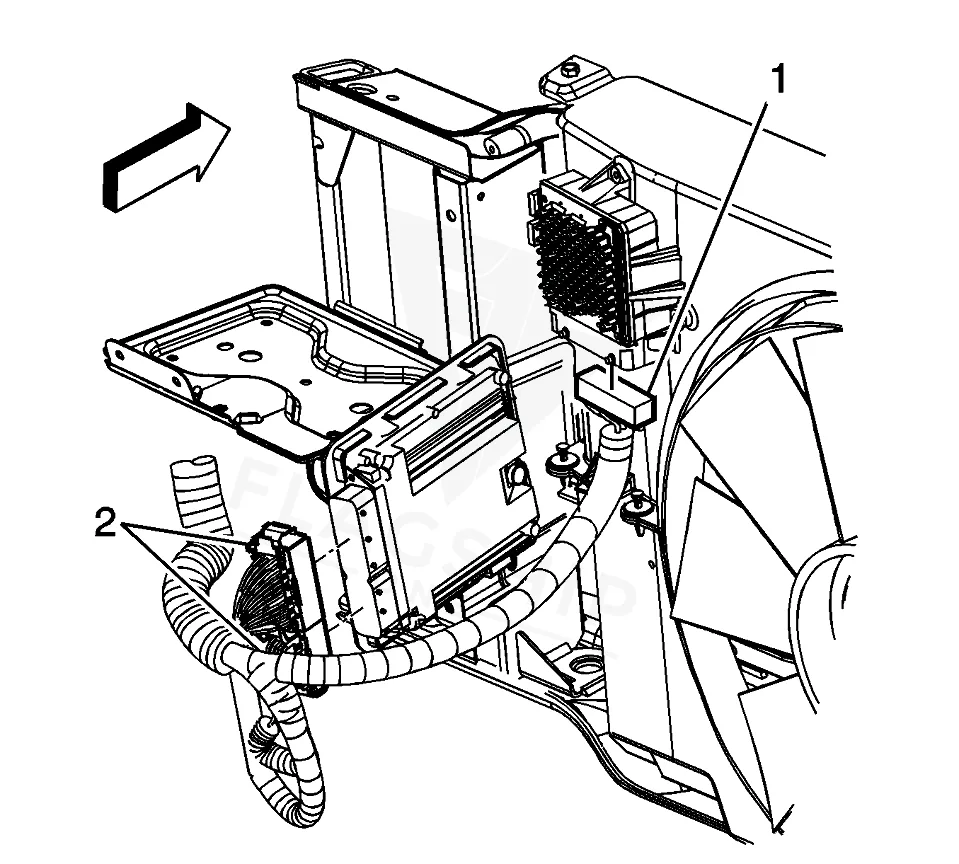
Work with the ignition off, and treat the module as static-sensitive: avoid touching the connector pins at any point.
| Operation | Configuration | Book Time |
|---|---|---|
| Powertrain Control Module R&R | Sierra 1500 | 1.4 hr |
| Powertrain Control Module R&R | Sierra 2500 HD | 1.4 hr |
| Powertrain Control Module R&R | Sierra 3500 HD | 1.4 hr |
| Powertrain Control Module Relearn | Sierra 1500 | 0.5 hr |
| Powertrain Control Module Relearn | Sierra 2500 HD | 0.5 hr |
| Powertrain Control Module Relearn | Sierra 3500 HD | 0.5 hr |
| Engine Control Module Relearn | Sierra 1500 | 0.5 hr |
| Engine Control Module Relearn | Sierra 2500 HD | 0.5 hr |
After the new powertrain control module is physically installed in your 2007 GMC Sierra 2500HD, the factory service procedure requires performing a relearn sequence before the vehicle is considered fully repaired. The relearn process re-establishes baseline communication between the module and the various control systems throughout the truck, allowing the new computer to adapt to the specific condition of your engine and transmission.
General Motors service information emphasizes the importance of using a diagnostic scan tool to capture the data stored in the original module before it is removed. This preserved information can then be transferred into the replacement unit, which may restore certain learned values and customer-specific preferences. However, the quality of this data transfer depends on whether the original module was still capable of exporting its information at the time of failure.
One significant advantage of purchasing a replacement from Flagship One is that units arrive pre-configured with your vehicle’s specific VIN already programmed in. This means the new module will be recognized by your Sierra’s systems immediately after installation, and the initial communication setup that would otherwise require a dealer or tuning equipment is already complete. You still need to complete the relearn procedure to allow the module to optimize fuel delivery and transmission feel for your particular truck, but the most time-consuming programming step is handled before the part reaches your door.
Every VIN-programmed replacement unit from Flagship One arrives with these steps already completed.
When the powertrain control module on a 2007 GMC Sierra with the 8.1L engine begins to fail, the symptoms can range from subtle to severe, and they often appear without warning. The truck may crank normally but fail to start, or it may start and then stall moments later. In other cases, the engine runs but runs poorly, with a noticeable lack of power, rough idle, or hesitation under acceleration. These drivability complaints frequently resist conventional diagnosis because the underlying cause is not a faulty sensor or a wiring issue but rather the computer that reads those sensors.
Transmission behavior often changes as well. You may notice harsh or delayed shifting, failure to shift into certain gears, or the transmission staying in a default gear known as limp mode. The check engine light will typically illuminate, and a diagnostic scan may reveal multiple fault codes that seem unrelated to each other, such as codes for misfire, oxygen sensor performance, and catalyst efficiency all appearing simultaneously.
One hallmark of module-internal failure on these vehicles is the presence of specific trouble codes that point directly to internal memory problems. Code P0601 indicates that the module has detected a checksum error in its internal memory, suggesting that data stored in one of the module’s memory sectors has become corrupted. Code P0602, Code P0603, and Code P0604 represent similar internal integrity failures within different memory sections. Code P062F points to a malfunction in the module’s long-term memory preservation circuit, and Code P1621 indicates that the module is unable to reliably read or write its own stored data. When a scan tool returns several of these codes together, it strongly suggests that the module itself rather than any external circuit is the root cause.
The following trouble codes are documented as occurring on 2007 GMC Sierra models equipped with the 8.1L V8 when the powertrain control module experiences internal failure. These codes all share a common characteristic: they indicate a fault within the module’s own circuitry or memory rather than in an external sensor or wiring harness. Because they arise from the module’s internal self-diagnostic system, these codes will often appear together or in a recurring pattern even after any related sensors or connectors have been inspected and found to be within specification. Recognizing these codes as module-internal is the critical first step toward a correct repair.
Factory service bulletin PIP4224B, issued April 4, 2008, addresses a cancellation of the E-37 engine control module part restriction for the vehicles covered here. This bulletin indicates that at one point, General Motors had restricted or regulated the availability of the E-37 ECM for these applications, and that restriction was subsequently removed. For owners and technicians working on 2007 Sierra 2500HD and 3500HD models, this bulletin confirms that the replacement module is an available service part through normal channels. The bulletin does not describe a design flaw or a recommended repair procedure beyond the standard replacement process; its primary relevance to current service is confirming that the part is not subject to special ordering constraints.
| Bulletin | Subject | What It Addresses |
|---|---|---|
| — | Cancellation of E-37 Engine Control Module (ECM) Part Restriction – (Apr 4, 2008) | — |
A competent do-it-yourself mechanic with diagnostic tools and basic electrical knowledge can perform the physical removal and installation of the module. However, the post-installation relearn procedure typically requires a compatible scan tool to initialize the new module and allow it to communicate with the truck’s systems. If you purchase a VIN-programmed replacement from Flagship One, the initial programming step is already complete, which reduces the equipment burden on the installer.
When the powertrain control module’s internal memory becomes corrupted, it loses the ability to accurately process data from the vehicle’s sensors. This causes it to generate fault codes for multiple systems simultaneously because the problem is not with the individual sensors but with the computer that interprets their signals. A technician seeing codes for misfire, oxygen sensor heater, and transmission range sensor all at once on the same truck is a strong indicator that the module itself is the common source.
The factory book time assigns 0.5 hours for the relearn procedure on the 2007 Sierra 2500HD. In practice, the relearn process involves connecting a scan tool, following a specific menu-driven sequence to initialize the new module, clearing fault codes, and then allowing the truck to idle and run through various operating conditions so the module can begin building its adaptive values. The actual time varies depending on the specific tool being used and whether any additional issues surface during the process.
Skipping the relearn process on a 2007 Sierra typically results in suboptimal drivability. The truck may exhibit rough idle, poor throttle response, harsh or delayed transmission shifts, and reduced fuel efficiency. The check engine light may also remain illuminated or reappear shortly after clearing it. While the engine will generally run, the vehicle will not perform the way it should, and continued driving without the relearn complete can lead to premature wear on transmission components due to incorrect shift calibrations.
A used module pulled from another Sierra may physically fit, but it will not be programmed for your specific truck. Without VIN programming, the module will not communicate properly with the vehicle’s security system, the transmission may not shift correctly, and some vehicles will not start at all due to immobilizer incompatibility. Purchasing a new or professionally refurbished replacement that is pre-programmed with your truck’s VIN eliminates this compatibility problem and ensures a reliable repair.
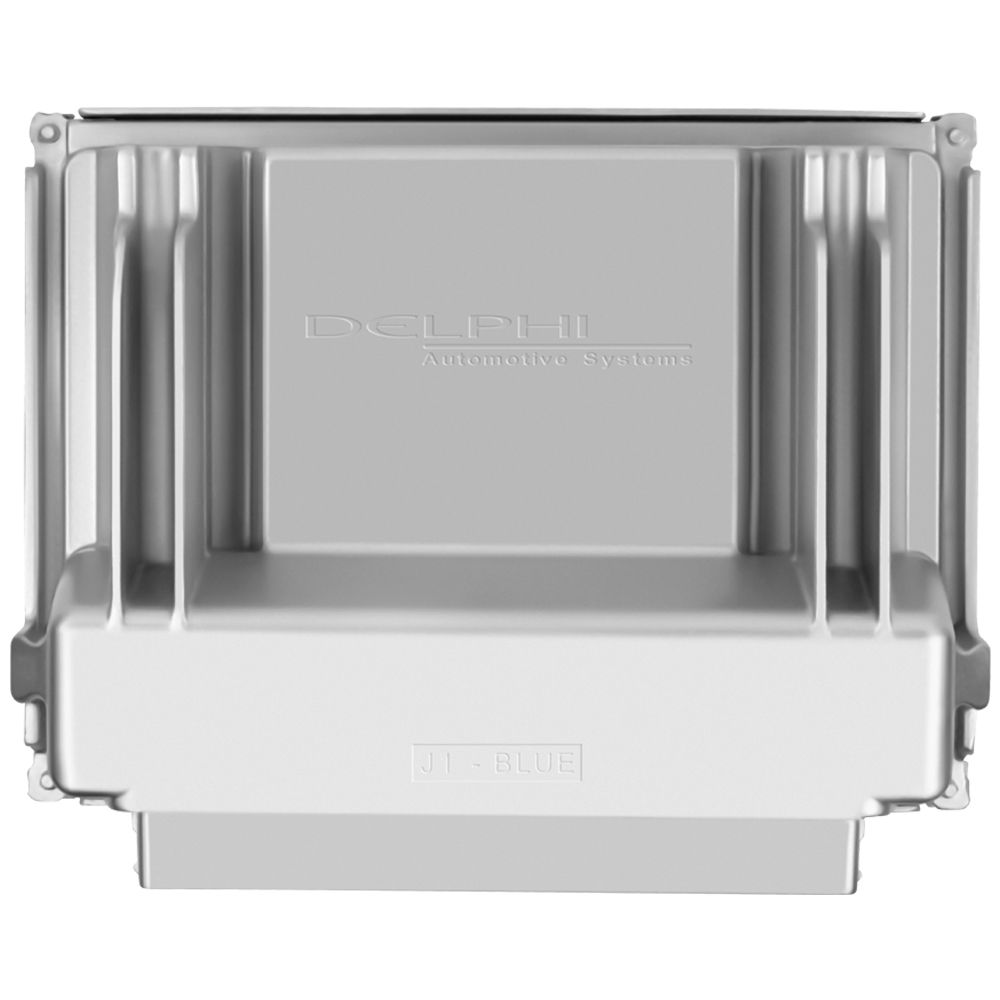
Flagship One stocks a refurbished, VIN-programmed PCM for the 2007 GMC Sierra with a lifetime warranty, free shipping and no core charge. The full GMC Sierra module lineup covers other engine configurations as well.
The powertrain control module on your 2007 GMC Sierra with the 8.1L V8 is a complex and critical component, and its failure can produce a wide range of drivability symptoms that are easy to misdiagnose. Understanding the module’s role in managing both engine and transmission functions, knowing the symptoms associated with internal memory faults, and being aware of the relearn procedure required after replacement will help you make informed decisions about the repair. Whether you tackle the job yourself or work with a professional, sourcing a properly programmed replacement module for your specific Sierra is the foundation of a lasting fix.