
Last updated on August 25th, 2026 at 12:16 pm
In the 2007 Dodge Charger, the Powertrain Control Module (PCM) manages engine and transmission functions, translating sensor data into commands. A PCM failure can cause starting problems, irregular acceleration, or shift logic errors.
When the 2007 Dodge Charger starts to behave oddly—whether it stalls, misfires, or shifts erratically—one of the first components to suspect is the Powertrain Control Module, or PCM. The PCM sits at the heart of the vehicle’s electronic network, translating sensor inputs into engine and transmission commands. If you notice symptoms such as a rough idle, unexpected hesitation, or the check engine light illuminating, it may be time to examine the PCM. In this guide you’ll learn exactly what the PCM does in this Charger, where it sits, how to replace or relearn it, and what symptoms to watch for. You’ll also discover how Flagship One’s pre‑programmed units can simplify the process, saving you time and potential headaches.
The PCM in a 2007 Dodge Charger serves as the central electronic brain that coordinates engine timing, fuel delivery, and transmission shift timing. It receives data from sensors such as throttle position, crankshaft position, and coolant temperature, and it uses this information to calculate the optimal fuel-air mixture and spark timing. When the PCM is compromised, the vehicle may exhibit symptoms such as irregular idle, stalling, or improper shift behavior. Powertrain Control Module replacement for the 2007 Dodge Charger The module’s health directly affects performance, fuel economy, and drivability, making it essential to keep it functioning correctly.
2007 Dodge Charger
OEM programmed ECM for your 2007 Dodge Charger — plug & play, no dealer visit.
Free shipping · Lifetime warranty
The PCM is located inside the engine compartment, close to the firewall. To replace it, you must first disconnect the battery for safety. After removing any necessary covers, the module can be lifted out. Reinstallation takes roughly 0.4 hours of labor. Once the new PCM is in place, a relearn procedure of 0.5 hours ensures it is properly synchronized with the vehicle’s systems.
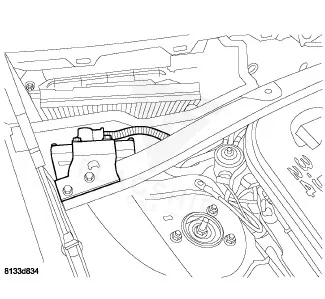
Work with the ignition off, and treat the module as static-sensitive: avoid touching the connector pins at any point.
| Operation | Configuration | Book Time |
|---|---|---|
| Engine Control Module Relearn | Charger | 0.5 hr |
| Engine Control Module Relearn | Magnum | 0.5 hr |
| Engine Control Module R&R | Charger | 0.4 hr |
| Engine Control Module R&R | Magnum | 0.4 hr |
| Powertrain Control Module Relearn | Charger | 0.5 hr |
| Powertrain Control Module Relearn | Magnum | 0.5 hr |
| Powertrain Control Module R&R | Charger | 0.4 hr |
| Powertrain Control Module R&R | Magnum | 0.4 hr |
Following a PCM replacement, a relearn sequence is typically required to align the new module with the vehicle’s engine and transmission parameters. Flagship One units are shipped already VIN‑programmed, so this relearn step is already completed. Consequently, the only work left is to install the unit and verify proper communication. VIN‑programmed replacement unit for the correct application.
Common signs that the PCM may be at fault include a sudden loss of power, erratic idle, or a check engine light that stays on after a reset. If a scan tool reports P0601 or P0606, the PCM is experiencing internal communication failures or memory issues. Such codes often accompany symptoms like stalling, misfires, or shifting problems. Addressing the PCM promptly can prevent further engine damage.
The following codes are specific to the 2007 Dodge Charger’s PCM and indicate internal module issues:
| Code | Meaning | Full Guide |
|---|---|---|
| P0601 | Internal memory checksum error | Full P0601 guide → |
| P0606 | Module processor failure | Full P0606 guide → |
Two service bulletins are relevant for the 2007 Dodge Charger’s PCM. Bulletin #08‑030‑06 Rev. A focuses on PCM initialization procedures, while Rc‑If43‑06 Safety Recall F43 addresses PCM reprogramming for transmission shift logic.
| Bulletin | Subject | What It Addresses |
|---|---|---|
| 08-030-06 Rev. A | 08-030-06 Rev. A Powertrain Control Module Initialization | — |
| — | Rc-If43-06 Safety Recall F43 Reprogram PCM – Transmission Shift Logic | — |
If the vehicle stalls after a jump, the first step is to confirm the PCM is receiving stable voltage. Check the battery and alternator output, and ensure all wiring harnesses are securely connected. A diagnostic scan may reveal P0601 or P0606 codes indicating PCM communication issues.
A PCM relearn can correct many shift logic problems by recalibrating the transmission control data. If shifting issues persist after relearn, it may indicate a deeper PCM fault or a related component such as the transmission control module.
The replacement labor time is approximately 0.4 hours, plus a 0.5‑hour relearn if the unit is not pre‑programmed. Flagship One’s VIN‑programmed units eliminate the relearn, leaving only the installation time.
If the check engine light is triggered by PCM‑related codes like P0601 or P0606, a new PCM can resolve the issue. However, if the light is due to other mechanical faults, those will still need to be addressed.
Ignoring a P0606 code can lead to progressive degradation of the PCM’s memory, potentially resulting in engine misfires, reduced fuel efficiency, or complete loss of engine control. Prompt replacement is advisable to avoid costly repairs.
When the 2007 Dodge Charger shows signs of PCM trouble, you have two viable paths: a full refurbishment of the existing module or a replacement with a new unit. A refurbished PCM can restore functionality at a lower cost, while a new unit offers fresh reliability and warranty coverage. Both options can be completed efficiently with the right tools and knowledge.

Flagship One stocks a refurbished, VIN-programmed PCM for the 2007 Dodge Charger with a lifetime warranty, free shipping and no core charge. The full Dodge Charger module lineup covers other engine configurations as well.
For the 2007 Dodge Charger, keeping the PCM healthy is crucial for smooth performance and reliability. Whether you choose to refurbish or replace, addressing PCM issues early can prevent further damage and keep your vehicle running confidently.