
Last updated on August 25th, 2026 at 12:47 pm
The Powertrain Control Module (PCM) in the 2006 Dodge Ram 3.7L manages engine and transmission functions. Failures may cause drivability issues, no-start conditions, or internal fault codes due to corrupted memory or electrical faults.
If your 2006 Dodge Ram 3.7L hesitates, stalls, or refuses to start, the Powertrain Control Module (PCM) may be at fault. This critical computer oversees engine performance and transmission behavior. Replacing it involves more than just swapping hardware—factory procedures require precise reprogramming to avoid additional issues. Understanding the steps, labor times, and symptoms helps you make informed decisions about repairs or replacements, ensuring your vehicle runs reliably without unnecessary complications.
The Powertrain Control Module (PCM) in your 2006 Dodge Ram 3.7L acts as the brain for engine and transmission operations. It processes sensor data to optimize fuel delivery, ignition timing, and shift points. When it fails, drivability suffers—common issues include stalling, rough idle, or failure to start. Replacing it requires replacement PCMs for the Dodge Ram that match the vehicle’s original specifications. Without proper programming, the new module may not communicate correctly with other systems, leading to further faults or poor performance.
2006 Dodge Ram 3.7L
OEM programmed replacements — plug & play, no dealer visit.
Find yours by year, make & model →
Free shipping · Lifetime warranty
The PCM in the 2006 Dodge Ram 3.7L is mounted in the engine compartment, attached to the passenger-side dash panel. Replacing it involves disconnecting the battery, removing the dash panel cover, and unplugging the module’s electrical connectors. Labor time for removal and reinstallation is typically 0.8 hours. After installation, the ABS controller should be temporarily disconnected to prevent VIN broadcast issues, as the PCM communicates this data over the vehicle’s network.
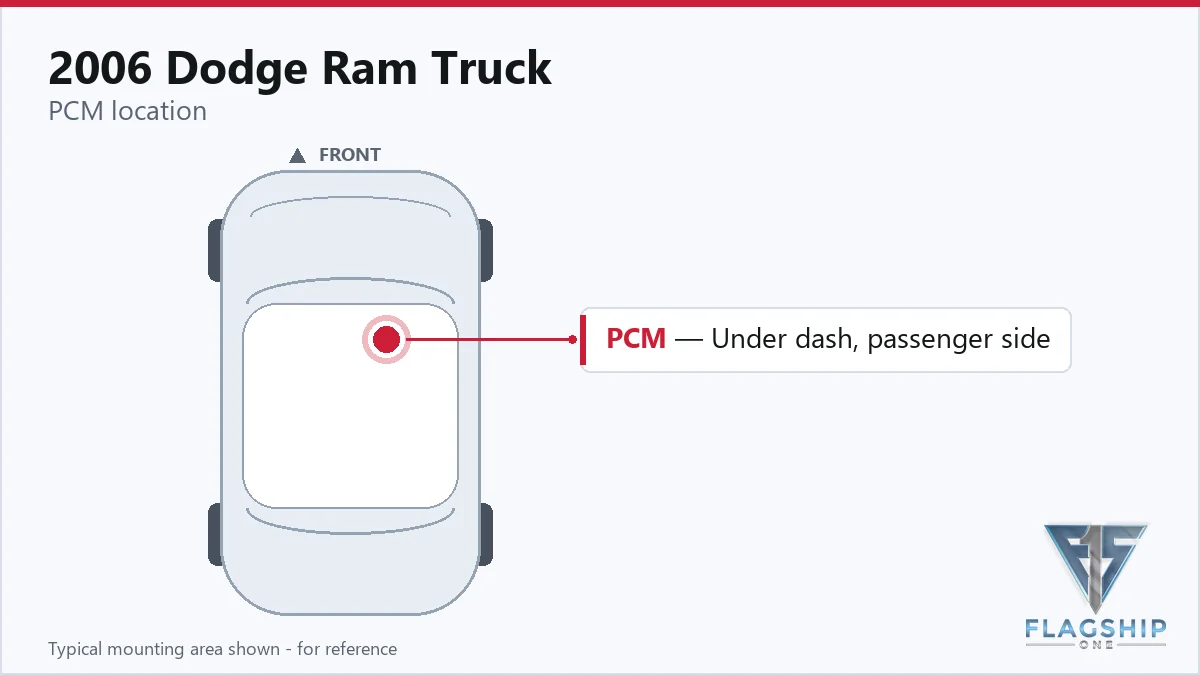
Work with the ignition off, and treat the module as static-sensitive: avoid touching the connector pins at any point.
| Operation | Configuration | Book Time |
|---|---|---|
| Engine Control Module Relearn | All configurations | 0.5 hr |
| Engine Control Module Reset | All configurations | 0.3 hr |
| Engine Control Module R&R | 3.7L | 0.8 hr |
| Engine Control Module R&R | 4.7L | 0.8 hr |
| Engine Control Module R&R | 5.7L | 0.8 hr |
| Engine Control Module R&R | 8.3L | 0.8 hr |
| Powertrain Control Module Relearn | All configurations | 0.5 hr |
| Powertrain Control Module R&R | 3.7L | 0.8 hr |
After installing a new PCM in your 2006 Dodge Ram 3.7L, the factory requires reprogramming the original Vehicle Identification Number (VIN) and mileage using a scan tool. Skipping this step may trigger a diagnostic trouble code. A VIN-programmed replacement unit from Flagship One arrives pre-configured, eliminating the need for this procedure. However, if reprogramming is necessary, ensure the ABS controller is disconnected during the process to avoid communication conflicts with other systems.
A failing PCM in the 2006 Dodge Ram 3.7L may cause a range of issues, such as intermittent stalling, rough idle, or a no-start condition. You might also notice poor acceleration or transmission shifting problems. Onboard diagnostics may log internal faults like internal control module memory checksum error, indicating corrupted data or hardware failure. If your scan tool fails to communicate with the PCM, the module itself could be unresponsive, requiring replacement.
The 2006 Dodge Ram 3.7L PCM may log specific internal trouble codes when it malfunctions. These codes help diagnose whether the issue stems from memory corruption, electrical faults, or communication errors within the module itself.
| Code | Meaning | Full Guide |
|---|---|---|
| P0601 | Internal memory checksum error | Full P0601 guide → |
| P0606 | Module processor failure | Full P0606 guide → |
Factory service bulletins for the 2006 Dodge Ram address PCM initialization procedures and reprogramming requirements. Bulletin #08-030-06 Rev. A outlines steps for Powertrain Control Module initialization, while Rc-F15-06 covers reprogramming the Wireless Control Module. These bulletins highlight the importance of following factory procedures to avoid drivability issues or additional fault codes after replacement.
| Bulletin | Subject | What It Addresses |
|---|---|---|
| 08-030-06 Rev. A | 08-030-06 Rev. A Powertrain Control Module Initialization | — |
| — | Rc-F15-06 Customer Satisfaction Notification F15 – Reprogram Wireless Control Module | — |
The P0601 code indicates an internal control module memory error. If the new PCM isn’t reprogrammed with the vehicle’s original VIN and mileage, the module may fail its self-check. This often occurs when the replacement unit isn’t properly initialized or if the ABS controller interferes during installation.
Driving with a failing PCM may lead to unpredictable behavior, such as stalling or poor acceleration. In some cases, the vehicle may not start at all. If the module is logging internal faults, it’s best to address the issue promptly to avoid further complications.
Common signs include a no-start condition, stalling, or transmission shifting issues. If your scan tool shows internal PCM codes like P0601 or P0606, or fails to communicate with the module, replacement may be necessary. Always verify other potential causes before replacing the PCM.
If your 2006 Dodge Ram 3.7L is experiencing PCM-related issues, you have options. A repair may address minor faults, but a replacement ensures long-term reliability. Flagship One provides pre-programmed units that eliminate the need for post-installation VIN and mileage updates, simplifying the process. Consider your vehicle’s age and condition when deciding between repair and replacement.
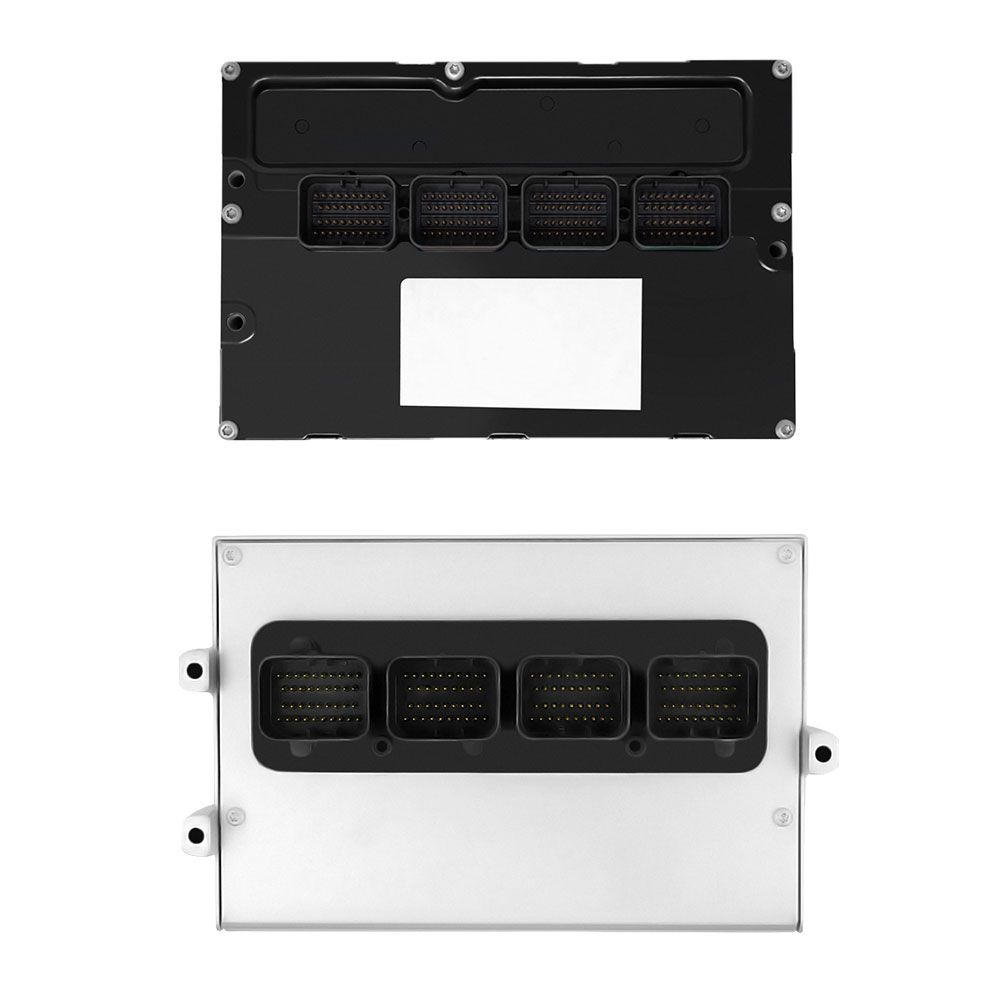
Flagship One stocks a refurbished, VIN-programmed PCM for the 2006 Dodge Ram Truck with a lifetime warranty, free shipping and no core charge. The full Dodge Ram Truck module lineup covers other engine configurations as well.
The 2006 Dodge Ram 3.7L relies on its PCM for smooth engine and transmission operation. If you’re facing drivability issues or internal fault codes, addressing the PCM promptly can restore performance. Whether you opt for repair or replacement, following factory procedures ensures your vehicle runs reliably for miles to come.