
Last updated on August 25th, 2026 at 01:53 pm
The powertrain control module (PCM) in your 2004 Mitsubishi Galant acts as the vehicle’s central computer, managing engine performance, fuel delivery, and emissions systems. Failure may cause erratic behavior, including stalling, poor acceleration, or diagnostic trouble codes.
If your 2004 Mitsubishi Galant has been acting unpredictably—stalling at stops, refusing to start, or throwing cryptic check-engine lights—you may be dealing with a failing powertrain control module (PCM). This small but critical component acts as the brain of your vehicle, coordinating everything from fuel injection to ignition timing. When it malfunctions, the symptoms can range from subtle performance hiccups to complete immobilization. Replacing the PCM isn’t just about swapping a part; Mitsubishi’s factory procedures include specific cautions, particularly around the immobilizer system, to ensure the new module communicates correctly with your Galant’s security features. Understanding these steps upfront can save you time and frustration, whether you’re tackling the job yourself or leaving it to a shop. The good news? A properly installed replacement unit can restore smooth operation without the guesswork of intermittent failures.
The powertrain control module (PCM) in your 2004 Mitsubishi Galant is a dual-purpose computer that oversees both engine management and automatic transmission functions. It constantly monitors inputs from sensors—like the throttle position, oxygen levels, and crankshaft speed—to adjust fuel delivery, ignition timing, and shift points in real time. This ensures your Galant runs efficiently while meeting emissions standards. When the PCM fails, it may disrupt these calculations, leading to poor fuel economy, rough idling, or even a no-start condition. Mitsubishi’s design integrates the PCM with the vehicle’s immobilizer system, meaning a replacement module must be properly initialized to avoid security-related issues. For owners, this means replacement engine computers for the Galant aren’t just plug-and-play; they require careful attention to factory procedures to avoid triggering additional faults or leaving the vehicle inoperable.
2004 Mitsubishi Galant
OEM programmed replacements — plug & play, no dealer visit.
Find yours by year, make & model →
Free shipping · Lifetime warranty
In the 2004 Mitsubishi Galant, the PCM is located in the engine bay, typically mounted near the firewall on the driver’s side. Accessing it involves removing a protective cover and disconnecting the wiring harness, which requires basic hand tools. The factory labor time for removing and reinstalling the engine control module (ECM) is 0.5 hours. After installation, Mitsubishi specifies an additional 0.5 hours for a powertrain control module relearn procedure to ensure the new unit synchronizes with the vehicle’s systems. No specialized torque specifications are provided for this process, but securing the module and connectors firmly is critical to prevent vibration-related issues or moisture intrusion.
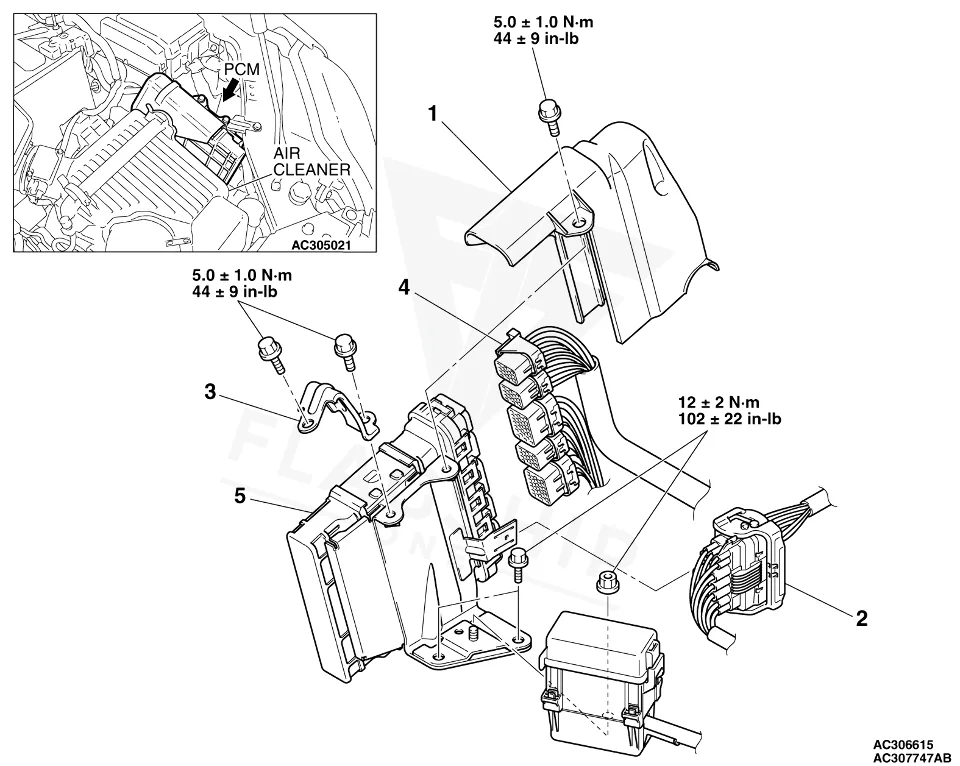
Work with the ignition off, and treat the module as static-sensitive: avoid touching the connector pins at any point.
| Operation | Configuration | Book Time |
|---|---|---|
| Powertrain Control Module Relearn | All configurations | 0.5 hr |
| Engine Control Module R&R | All configurations | 0.5 hr |
After replacing the PCM in your 2004 Mitsubishi Galant, the factory requires an initialization procedure to ensure the new module communicates correctly with the vehicle’s immobilizer system. This step is outlined in Mitsubishi’s GROUP 54A documentation and is critical to avoid security-related faults or a no-start condition. The process typically involves using a scan tool to perform a relearn, which can take up to 0.5 hours of labor. However, if you install a VIN-programmed replacement unit, these steps are already completed, saving you time and reducing the risk of errors during the procedure. This pre-programming ensures the module is ready to integrate seamlessly with your Galant’s existing systems, including the engine, transmission, and security features, without additional dealer visits or tool requirements.
A failing PCM in your 2004 Mitsubishi Galant may produce a range of symptoms, often mimicking other issues like sensor failures or fuel system problems. Common signs include intermittent stalling, especially at idle or during deceleration, as the module struggles to maintain stable engine operation. You might also notice poor acceleration, hesitation, or a rough idle, as the PCM’s ability to adjust fuel and ignition timing becomes compromised. In some cases, the vehicle may fail to start altogether, particularly if the module loses communication with the immobilizer system. Diagnostic trouble codes, such as an internal processor fault, may appear, indicating the PCM itself is the source of the problem. Other potential codes could relate to misfires, fuel trim issues, or transmission shifting irregularities, as the module’s calculations become erratic. If your scan tool fails to communicate with the PCM entirely, that’s a strong sign the module has failed and needs replacement.
The 2004 Mitsubishi Galant’s PCM may generate specific internal trouble codes when it begins to fail. These codes are distinct from sensor-related faults and often point directly to the module’s hardware or software issues. The table below lists the documented module-internal codes for this vehicle.
| Code | Meaning | Full Guide |
|---|---|---|
| P0606 | Module processor failure | Full P0606 guide → |
Mitsubishi’s factory service documentation includes a caution for owners and technicians replacing the PCM in the 2004 Galant. Specifically, GROUP 54A, titled ‘Ignition Switch – General Description, Caution When Replacing Immobilizer System Related Parts,’ outlines the critical steps to follow during installation. This bulletin emphasizes the importance of initializing the new module to ensure compatibility with the vehicle’s immobilizer system. Failure to adhere to these procedures may result in a no-start condition or security-related faults, leaving the vehicle inoperable until the initialization is completed correctly.
Stalling after a PCM replacement often indicates the module wasn’t properly initialized with the vehicle’s immobilizer system. Mitsubishi’s factory procedure requires a relearn process to synchronize the new PCM with the security features. If this step is skipped, the engine may start but stall shortly after due to security-related faults. A scan tool capable of performing the initialization is typically needed to resolve this.
While your Galant may still run with a P0606 code, it’s not advisable to ignore it. This code indicates an internal processor fault in the PCM, which can lead to unpredictable behavior, including stalling, poor performance, or even a no-start condition. Addressing the issue promptly can prevent further damage or being stranded due to a sudden failure.
Distinguishing between a failing PCM and a sensor issue can be challenging, as both may produce similar symptoms. However, if multiple unrelated codes appear simultaneously—such as misfire, fuel trim, and transmission faults—it often points to the PCM. Additionally, if your scan tool fails to communicate with the module, that’s a strong indicator of PCM failure rather than a sensor problem.
Skipping the initialization procedure may result in your Galant failing to start or stalling shortly after startup. The immobilizer system relies on this step to recognize the new PCM as a trusted component. Without it, the vehicle’s security features may prevent the engine from running, leaving you with a no-start condition until the procedure is completed.
Replacing the PCM is a straightforward process if you’re comfortable working with electrical components and have basic hand tools. However, Mitsubishi’s initialization procedure requires a scan tool capable of performing the relearn, which may not be available to DIYers. If you’re unsure about this step, it’s best to have the replacement done by a professional to avoid potential issues with the immobilizer system.
If your 2004 Mitsubishi Galant is showing signs of PCM failure, you have a few options to consider. A repair shop can diagnose and replace the module, though labor costs for the relearn procedure may add up. Alternatively, a VIN-programmed replacement unit eliminates the need for additional programming, ensuring a smoother installation process. For owners looking to restore their vehicle’s reliability without the hassle of dealer visits, a pre-programmed module can be a practical solution, especially if the original PCM is beyond repair.
Flagship One stocks a refurbished, VIN-programmed PCM for the 2004 Mitsubishi Galant with a lifetime warranty, free shipping and no core charge. The full Mitsubishi Galant module lineup covers other engine configurations as well.
Replacing the PCM in your 2004 Mitsubishi Galant can resolve a host of performance issues, from stalling to no-start conditions. While the process involves careful attention to factory procedures, particularly around the immobilizer system, a properly installed replacement unit can restore your vehicle’s reliability. Whether you opt for a professional installation or tackle the job yourself, understanding the steps involved ensures a smoother experience. If you’re ready to address the issue, a VIN-programmed replacement module can simplify the process and get your Galant back on the road with confidence.