
Last updated on August 25th, 2026 at 01:59 pm
In the 2004 Mazda 6, the powertrain control module (PCM) and engine control module (ECM) manage fuel delivery, ignition timing, and emissions functions. A malfunction typically results from internal circuitry faults, sensor mismatches, or loss of communication, leading to drivability issues and diagnostic trouble codes.
When a 2004 Mazda 6 experiences a persistent check‑engine light or related trouble codes, the powertrain or engine control module could be at fault. This guide explains what these modules do, how they are accessed, the labor involved, and what programming is required after a swap. By the end, you will understand the typical repair steps, the relevance of factory bulletins, and how a VIN‑programmed replacement can simplify the process.
The powertrain control module and engine control module in a 2004 Mazda 6 act as the vehicle’s electronic brain, interpreting sensor data to regulate fuel injection, ignition timing, and emissions controls. They also coordinate transmission shift logic in models equipped with an automatic gearbox. Proper operation is essential for smooth acceleration, fuel efficiency, and compliance with emissions standards. replacement powertrain and engine computers for the 2004 Mazda 6 ensure the vehicle runs as designed.
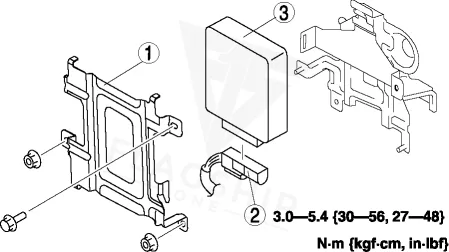
Both the PCM and ECM are mounted within the engine compartment, typically secured to the firewall or a bracket near the intake manifold. Removal involves disconnecting the electrical connector, unbolting the unit, and extracting it without damaging surrounding hoses. Replacement follows the reverse order, with the labor times listed as 0.4 hours when no immobilize system is present and 0.5 hours when the system is installed. After the hardware is in place, a relearn procedure of 0.5 hours is required for each module to synchronize sensor data.
| Operation | Configuration | Book Time |
|---|---|---|
| Powertrain Control Module R&R | Without Immobilize System | 0.4 hr |
| Powertrain Control Module R&R | With Immobilize System | 0.5 hr |
| Powertrain Control Module Relearn | All configurations | 0.5 hr |
| Engine Control Module R&R | Without Immobilize System | 0.4 hr |
| Engine Control Module R&R | With Immobilize System | 0.5 hr |
| Engine Control Module Relearn | All configurations | 0.5 hr |
2004 Mazda 6 Powertrain and
OEM programmed replacements — plug & play, no dealer visit.
Find yours by year, make & model →
Free shipping · Lifetime warranty
After installing a new PCM or ECM in a 2004 Mazda 6, the factory procedure calls for a module relearn to calibrate sensor offsets and communication parameters. Flagship One supplies units that are already VIN‑programmed, so the relearn step is the only factory‑required action. a VIN‑programmed replacement unit reduces the need for additional on‑site coding.
Typical signs of a failing PCM or ECM in a 2004 Mazda 6 include a steady or flashing MIL, rough idle, stalling, reduced power, and loss of transmission shift quality. Diagnostic scans often reveal internal fault codes such as Powertrain control module internal processor fault, indicating a hardware issue within the module itself. These symptoms usually worsen under load or when the vehicle is warm.
The following internal trouble codes are documented for the 2004 Mazda 6 and may appear when the PCM or ECM experiences a fault.
Service Bulletin 01 033/04 addresses MIL illumination with codes P2404 or P0456 on 2003‑2004 Mazda 6 models. Bulletin 01 052/06 covers a broader set of codes—including P0171, P0172, P0441, P0442, P0455, P0456, P2177, P2178, P2187, P2188—on 2004‑2006 Mazda 3 and Mazda 6. Bulletin 01 003/09 notes MIL illumination linked to DTC P0441 across multiple models.
| Bulletin | Subject | What It Addresses |
|---|---|---|
| — | 01 033/04 2003 2004 Mazda6 MIL Illumination With Dt Cs P2404 And/Or P0456 | — |
| — | 01 052/06 2004 2006 Mazda3, Mazda6 MIL Illumination, P0171 / P0172 / P0441 / P0442 / P0455 / P0 | — |
| — | 01 003/09 Multi Model MIL Illumination DTC P0441 | — |
The vehicle may limp or refuse to start if the PCM cannot process sensor data, and it will likely trigger a check‑engine light with related codes.
Standard hand tools are sufficient for removal and installation; the primary requirement is to follow the listed labor times and perform the relearn procedure.
A VIN‑programmed unit eliminates the need for on‑site coding, but the factory‑required relearn step must still be completed after installation.
When the PCM or ECM in your 2004 Mazda 6 fails, you can choose between a new factory‑spec unit or a refurbished Flagship One replacement. Both options require the same removal steps and relearn time, but a VIN‑programmed replacement may reduce shop time and simplify the process.
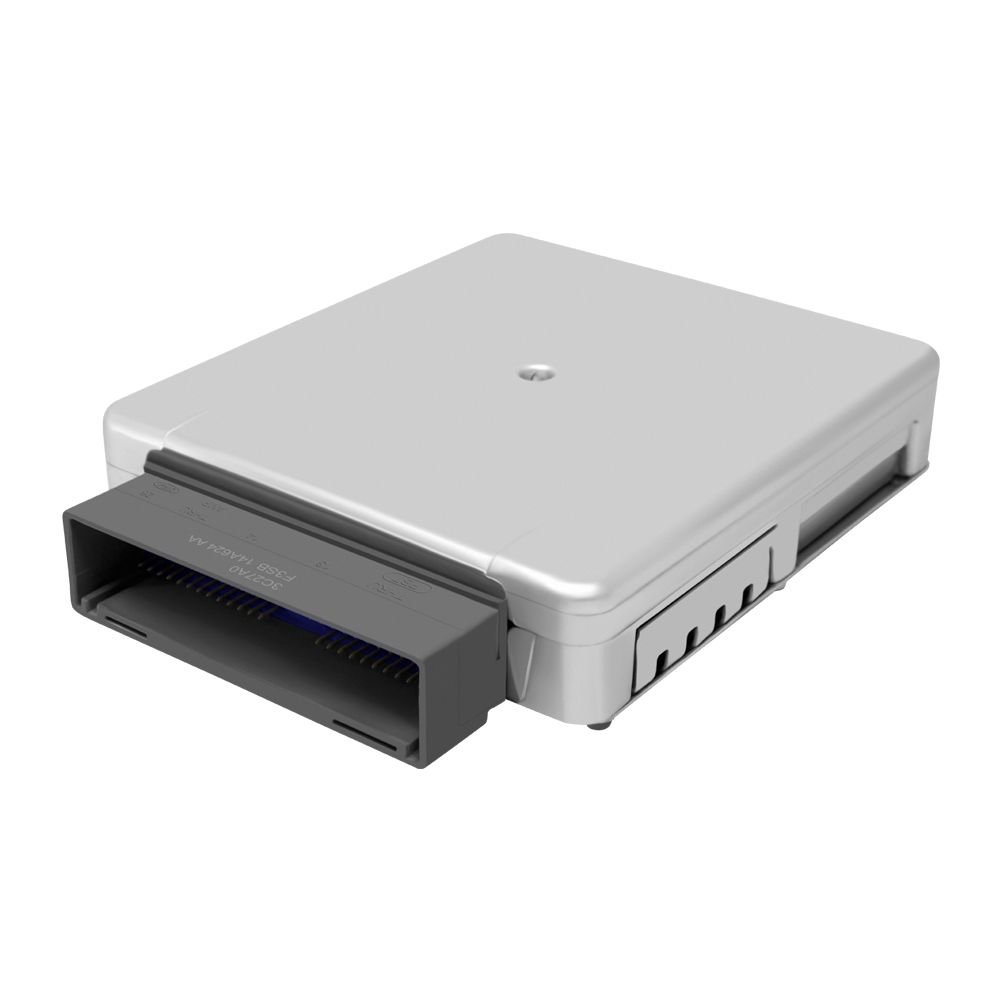
Flagship One stocks a refurbished, VIN-programmed PCM for the 2004 Mazda 6 with a lifetime warranty, free shipping and no core charge. The full Mazda 6 module lineup covers other engine configurations as well.
If your 2004 Mazda 6 exhibits MIL illumination or related performance issues, evaluating the PCM or ECM condition is a logical next step. Consider a VIN‑programmed replacement to streamline the repair while ensuring reliable operation.