
Last updated on August 25th, 2026 at 02:08 pm
In the 2004 Lexus IS300 the Engine Control Module (ECM) manages fuel delivery, ignition timing, and emissions control. When the ECM malfunctions, the engine may not start, stall, or trigger communication errors with diagnostic tools, leading to reduced performance and possible drivability warnings.
When a 2004 Lexus IS300 begins to exhibit irregular engine behavior, many owners suspect spark plugs or fuel filters first. However, the electronic brain of the car—the Engine Control Module—often plays a pivotal role. Understanding how the ECM interacts with the powertrain, what the factory recommends for its service, and how a properly programmed replacement can restore normal operation helps you avoid unnecessary parts swaps and costly downtime. This guide walks you through the module’s function, typical labor times, relevant service bulletins, and practical steps to keep your IS300 running smoothly.
2004 Lexus IS300
OEM programmed replacements — plug & play, no dealer visit.
Find yours by year, make & model →
Free shipping · Lifetime warranty
The Engine Control Module in a 2004 Lexus IS300 serves as the central processor for engine and transmission management. It receives data from sensors such as the throttle position, crankshaft angle, and oxygen levels, then calculates the precise fuel injection and ignition timing needed for efficient operation. By coordinating with the transmission control unit, it also influences shift timing and torque converter lock‑up. A malfunction can disrupt these calculations, causing loss of power, stalling, or a complete no‑start condition. Because the ECM directly controls emissions, any fault may also trigger regulatory warning lights. The module’s reliability is crucial for both performance and compliance, making it a core component of the vehicle’s overall health. For owners seeking a replacement, Lexus IS300 engine module offers a direct fit and maintains the vehicle’s original specifications.
The ECM is mounted within the engine compartment, typically secured to the firewall near the intake manifold. Access usually involves removing a few fasteners and disconnecting the main power connector. The factory labor estimate for removal and replacement is 0.6 hours, reflecting the relatively straightforward access path. After the new unit is installed, the technician must perform a relearn procedure, which the shop manual lists as 0.5 hours. This step ensures the vehicle’s adaptive strategies are calibrated to the new module’s parameters. No additional torque specifications are provided in the supplied data, so standard connector tightening practices apply.
| Operation | Configuration | Book Time |
|---|---|---|
| Engine Control Module R&R | All configurations | 0.6 hr |
| Engine Control Module Relearn | All configurations | 0.5 hr |
| Powertrain Control System Diagnosis & Testing | All configurations | 0.5 hr |
Once the ECM is physically installed, the factory process calls for a relearn routine to synchronize sensor baselines and transmission shift maps. This typically involves a series of key‑on, engine‑off cycles and a brief diagnostic session lasting about half an hour. Flagship One supplies a a VIN-programmed replacement unit that arrives already matched to your vehicle’s VIN, so the relearn steps are already completed, allowing you to skip the factory programming and move directly to final verification.
Owners of a 2004 Lexus IS300 may notice a range of issues when the ECM begins to fail. Common signs include an engine that cranks but does not start, intermittent stalling at idle, or a sudden loss of power during acceleration. Diagnostic scans often reveal communication errors, and the check engine light may flash a code such as communication fault. Other symptoms can involve erratic transmission shifting, rough idle, or unexpected fuel trim adjustments that cause poor fuel economy. Because the ECM also governs emission controls, a failing unit may trigger the secondary air injection warning or cause the vehicle to fail an emissions test. Addressing these symptoms early can prevent further damage to related sensors and actuators.
Technical Service Bulletin SS001‑01 outlines the revised ECU flash reprogramming process for 2001 and later models, while SS002‑07 details the Techstream ECU flash procedure applicable to 2001‑2008 Lexus vehicles. Both bulletins address firmware updates that may resolve intermittent communication or performance problems.
| Bulletin | Subject | What It Addresses |
|---|---|---|
| SS001-01 | :SS001-01: ECU Flash Reprogramming Process: 2001 & Later Applicable Models (Revised) | — |
| SS002-07 | :SS002-07: 01-08 Applicable Lexus: Techstream ECU Flash Reprogramming Procedure | — |
The factory book time for removal and installation is about 0.6 hours, and the subsequent relearn procedure adds roughly 0.5 hours.
When using a Flagship One VIN‑programmed unit, the factory programming steps are already completed, so no additional tools are required.
Bulletins SS001‑01 and SS002‑07 describe the ECU flash reprogramming procedures relevant to this model year.
Yes, because the ECM shares data with the transmission control unit, a malfunction can lead to harsh or delayed shifts.
While the physical replacement is straightforward, the relearn process and proper handling of electrical connectors are best performed by a qualified technician.
When the ECM in your 2004 Lexus IS300 needs service, you can choose a brand‑new factory unit or a high‑quality refurbished replacement. Both options restore the vehicle’s electronic control, but a Flagship One refurbished module arrives pre‑programmed, reducing shop time and eliminating the need for on‑site coding.
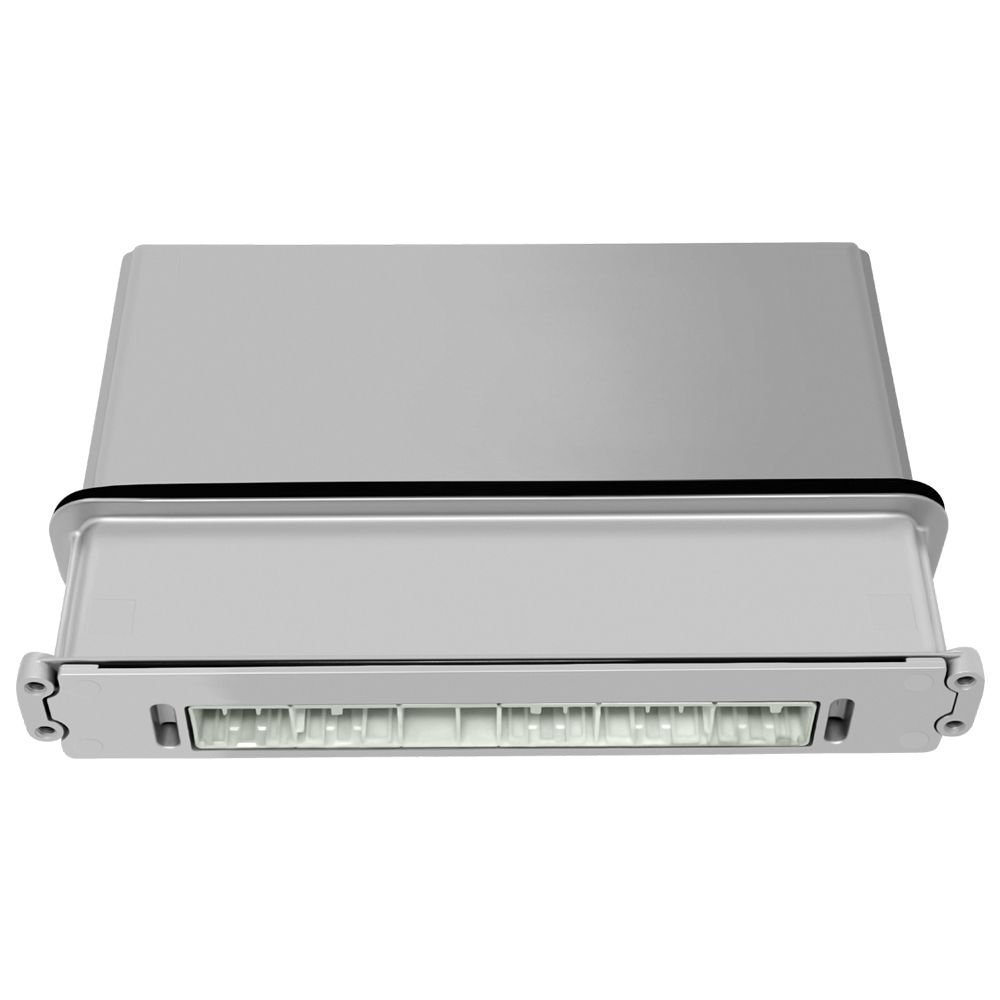
Flagship One stocks a refurbished, VIN-programmed PCM for the 2004 Lexus IS300 with a lifetime warranty, free shipping and no core charge. The full Lexus IS300 module lineup covers other engine configurations as well.
The ECM is a vital component of the 2004 Lexus IS300, and addressing its failure promptly can keep your engine running reliably. Consider a VIN‑programmed replacement to simplify the repair and get back on the road with confidence.