
Last updated on August 25th, 2026 at 01:01 pm
The Engine Control Module in your 2004 Audi A6 is the primary computer managing the 3.0L engine’s fuel injection, ignition timing, emissions controls, and sensor inputs. When this unit fails, your vehicle may exhibit drivability problems or fail to start entirely.
If your 2004 Audi A6 is experiencing starting issues, illuminated warning lamps, or unexplained drivability symptoms, the Engine Control Module may be the culprit. This guide explains what the ECM does in your specific vehicle, common failure indicators, and what the replacement process involves. You’ll learn the expected labor times, programming requirements, and why choosing a pre-programmed replacement unit can streamline your repair. Whether you’re diagnosing a no-start condition or planning a preventive replacement, this information helps you understand what to expect from the repair process.
The Engine Control Module in your 2004 Audi A6 serves as the central nervous system for the 3.0L engine, continuously monitoring dozens of sensors and adjusting fuel delivery, ignition timing, and emissions systems in real time. This computer interfaces with the Powertrain Control Module to coordinate shifting and drivetrain behavior. When the ECM encounters internal faults or loses calibration data, it may trigger a check engine light or prevent the engine from running altogether. replacement engine computers for the A6 are available as new or refurbished units, with the key difference being whether the module arrives pre-programmed with your vehicle’s specific VIN and configuration data.
2004 Audi A6
OEM programmed ECM for your 2004 Audi A6 — plug & play, no dealer visit.
Free shipping · Lifetime warranty
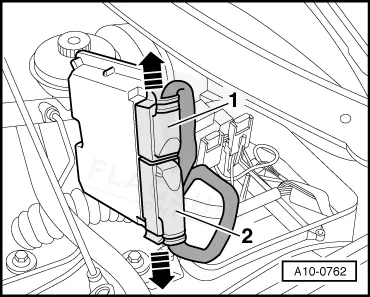
The Engine Control Module on your 2004 Audi A6 is located within the vehicle’s wiring infrastructure, requiring access to component locations and troubleshooting diagrams for accurate diagnosis. According to factory labor guidelines, the ECM R&R procedure for the A6 is rated at 1.2 hours, while the Allroad Quattro variant requires 1.1 hours. A reset procedure takes approximately 0.3 hours if the original module is being retained. The replacement process involves disconnecting battery power, removing the old unit, installing the new module, and reconnecting all associated wiring and sensors. If diagnostic testing reveals no fault in the ECM itself, the Motronic ECM power supply relay (designated J271) may require replacement instead.
| Operation | Configuration | Book Time |
|---|---|---|
| Engine Control Module Reset | A6 | 0.3 hr |
| Engine Control Module Reset | A6 Quattro | 0.3 hr |
| Engine Control Module R&R | A6 | 1.2 hr |
| Engine Control Module R&R | A6 Quattro | 1.2 hr |
| Engine Control Module R&R | Allroad Quattro | 1.1 hr |
| Engine Control Module Relearn | All configurations | 0.5 hr |
| Powertrain Control Module R&R | A6 | 1.2 hr |
| Powertrain Control Module R&R | A6 Quattro | 1.2 hr |
After replacing the Engine Control Module in your 2004 Audi A6, the factory procedure requires a relearn process to calibrate the new unit to your vehicle’s specific sensors and configuration. This relearn procedure is rated at 0.5 hours in the labor guide. The module must establish communication with the PCM and all connected sensors before normal operation resumes. a VIN-programmed replacement unit arrives pre-configured with your vehicle’s specific identification data, which eliminates the need for certain post-installation programming steps that would otherwise be required when using an unprogrammed replacement.
When the Engine Control Module in your 2004 Audi A6 begins to fail, you may encounter several telltale indicators. Common symptoms include a no-start condition where the engine cranks but won’t run, intermittent stalling during operation, or rough idle behavior. The check engine light may illuminate with various misfire-related codes, and in some cases the scan tool may fail to communicate with the ECM entirely. Shifting irregularities can occur since the ECM coordinates with the transmission control module. If your vehicle displays fault codes P1411 or P1423, this suggests the ECM has detected internal processing issues. emissions control malfunction codes specifically related to the ECM should prompt consideration of module replacement rather than sensor-level repairs.
Factory service bulletin information for the 2004 Audi A6 indicates that the check engine light may illuminate with fault codes P1411 and P1423 stored in the Engine Control Module. These bulletins address situations where the ECM has logged emissions-related internal faults. Technicians are directed to perform comprehensive diagnostic testing before replacing the module, as the bulletin specifically notes that if no fault is found during standard testing procedures, the Motronic ECM power supply relay (J271) should be replaced rather than the ECM itself.
| Bulletin | Subject | What It Addresses |
|---|---|---|
| — | 01 MIL on (P1411, P1423 in ECM) | — |
While mechanically capable DIYers can perform the replacement, the 0.5-hour relearn procedure typically requires dealer-level scan tools or advanced aftermarket diagnostic equipment to complete the calibration process properly.
According to factory diagnostic procedures, if testing reveals no fault within the ECM itself, the Motronic ECM power supply relay (J271) should be replaced first before considering ECM replacement.
A used ECM would require programming to match your specific VIN and configuration; otherwise, the module may not communicate properly with your vehicle’s sensors and systems.
When your 2004 Audi A6 requires Engine Control Module service, you have two primary paths: a new or refurbished replacement unit, or a used module with subsequent programming needs. The pre-programmed option from Flagship One arrives configured with your vehicle’s specific data, potentially saving you dealer programming fees. Consider your budget, timeline, and access to programming equipment when making your decision.
Flagship One stocks a refurbished, VIN-programmed PCM for the 2004 Audi A6 with a lifetime warranty, free shipping and no core charge. The full Audi A6 module lineup covers other engine configurations as well.
The Engine Control Module in your 2004 Audi A6 is a critical component that manages engine operation, emissions, and sensor integration. Understanding the labor times, programming requirements, and diagnostic procedures helps you make informed decisions about replacement options. Whether you pursue a new unit or a refurbished alternative, ensure the module is properly configured for your specific vehicle.