
Last updated on August 25th, 2026 at 01:37 pm
The powertrain control module (PCM) in the 2001 Ford Excursion 6.8L manages fuel delivery, ignition timing, and transmission shifts. When it fails, the engine may crank without starting, stall unexpectedly, or exhibit poor performance and diagnostic communication loss.
When a 2001 Ford Excursion with the 6.8L V10 begins to show erratic behavior—hard starting, sudden stalling, or transmission shift anomalies—the powertrain control module often becomes a prime suspect. This computer is the central command for nearly every engine and transmission function, and its failure can mimic a wide range of mechanical problems. Many owners first notice intermittent issues that gradually worsen, making diagnosis frustrating. A no-start condition where the engine cranks but never fires is a classic sign, especially if the check engine light fails to illuminate during key-on. Other times, the vehicle may run but deliver poor fuel economy, rough idle, or harsh gear changes. Understanding what the module does, where it lives, and what replacement involves can save hours of guesswork. This guide explains the role of the Excursion’s engine computer, common failure symptoms, the straightforward removal and installation process, and the critical programming steps that ensure a replacement unit works correctly from the first turn of the key.
The powertrain control module in the 2001 Ford Excursion 6.8L is the electronic brain that orchestrates every combustion event and gear change. It receives real-time data from sensors—crankshaft position, throttle angle, coolant temperature, oxygen content in the exhaust—and uses preloaded calibration tables to calculate the precise amount of fuel to inject and the exact moment to fire each spark plug. On this heavy-duty SUV, the PCM also manages the 4R100 automatic transmission, adjusting line pressure and shift timing based on load, speed, and driver demand. Without a functioning module, the engine cannot start because the fuel pump, injectors, and ignition coils receive no commands. Even if the engine runs, a degraded PCM may send incorrect signals that cause misfires, rich or lean conditions, or harsh shifting that can damage the transmission over time. Because the module is specific to the 6.8L V10 calibration, using a unit from a different engine or an incorrectly programmed replacement will lead to immediate driveability problems. When the original unit fails, many owners turn to replacement engine computers for the Excursion that arrive pre-calibrated to the vehicle’s VIN and factory software, eliminating the need for dealer-level programming tools.
2001 Ford Excursion 6.8L
OEM programmed ECM for your 2001 Ford Excursion 6.8L — plug & play, no dealer visit.
Free shipping · Lifetime warranty
The engine control module on the 2001 Excursion is located in the engine compartment, typically mounted on the passenger side firewall where the wiring harness connects directly to the unit. Replacement begins with disconnecting the battery ground cable, as Ford specifies for any electronic engine control service. Once the battery is isolated, the electrical connectors are unlatched and the module is unbolted from its bracket. The book time for removing and reinstalling the module on the 6.8L V10 engine is 0.3 hours. After the physical swap, a separate powertrain control system diagnosis and testing procedure is allotted 0.5 hours to verify communication and sensor integrity. Additionally, a dedicated engine control module relearn procedure requires another 0.5 hours to allow the new module to adapt fuel trims, idle speed, and transmission shift patterns. The module itself is a sealed metal case designed to withstand underhood heat and vibration, but its connectors must be kept clean and fully seated to prevent intermittent faults.
Work with the ignition off, and treat the module as static-sensitive: avoid touching the connector pins at any point.
| Operation | Configuration | Book Time |
|---|---|---|
| Engine Control Module Relearn | All configurations | 0.5 hr |
| Engine Control Module R&R | 5.4L | 0.3 hr |
| Engine Control Module R&R | 6.8L | 0.3 hr |
| Engine Control Module R&R | 7.3L | 0.4 hr |
| Powertrain Control System Diagnosis & Testing | All configurations | 0.5 hr |
After a new engine control module is physically installed, the factory service procedure requires a relearn process to restore adaptive memory. This includes allowing the module to learn idle air control, fuel trim adjustments, and transmission shift characteristics over several drive cycles. Without this step, the vehicle may exhibit rough idle, hesitation, or harsh shifting. The module must also be programmed with the correct vehicle identification number and immobilizer data to match the Excursion’s security system. When you order a pre-programmed replacement unit from Flagship One, the module arrives with your VIN and factory calibration already loaded. The relearn procedure is still recommended to fine-tune adaptive values, but the complex security pairing and base programming are already complete. This eliminates the need for a dealership visit or advanced scan tool, saving both time and expense while ensuring the module communicates properly with all vehicle systems from the first start.
A failing powertrain control module on the 2001 Ford Excursion 6.8L often produces symptoms that can be mistaken for fuel system or ignition problems. The engine may crank strongly but refuse to start, with no spark and no fuel injector pulse. In some cases, the vehicle starts but immediately stalls, or it runs roughly with persistent misfires that do not respond to new spark plugs or coils. The transmission may shift erratically, hanging in gear or slamming into the next ratio, because the module controls shift solenoids directly. A dead check engine light during key-on—when the bulb should illuminate as a self-test—can indicate that the PCM is not powering up. Scan tool communication may be intermittent or completely absent, preventing any diagnostic trouble code retrieval. Other signs include unexplained battery drain, as a faulty module can fail to enter sleep mode, or fuel pump priming that never stops. Because the Excursion’s V10 relies on precise timing, even subtle module degradation can cause surging at highway speeds or a sudden loss of power under load. When multiple unrelated symptoms appear simultaneously, the PCM is a likely root cause.
Ford issued service bulletin 01-09-07 to assist technicians with driveability concerns related to heated oxygen sensors, catalyst efficiency, and fuel system monitors on OBD II vehicles. The bulletin provides diagnostic tips for interpreting monitor completion status and avoiding unnecessary parts replacement. It emphasizes that certain monitors may not run if preconditions are not met, and it outlines the correct drive cycles to complete the HO2S, catalyst, and fuel system self-tests. For the 2001 Excursion, this guidance can be helpful when troubleshooting persistent oxygen sensor or catalyst efficiency codes that do not resolve after component replacement, as the underlying issue may involve monitor enable criteria rather than a failed part.
| Bulletin | Subject | What It Addresses |
|---|---|---|
| 01-09-07 | DRIVEABILITY – HO2S (HEATED OXYGEN SENSOR), CATALYST, AND FUEL SYSTEM MONITORS – OBD II VEHICLE | — |
Common indicators include a no-start condition with no spark or injector pulse, a check engine light that does not illuminate at key-on, and a scan tool that cannot communicate with the module. Multiple simultaneous symptoms—such as stalling, misfires, and transmission shifting problems—often point to a failing PCM rather than a single sensor or actuator.
Not if you obtain a unit that arrives pre-programmed with your VIN and factory calibration. These modules are ready to install after a simple relearn procedure to adapt fuel trims and idle speed. Dealer programming is only necessary when using a blank or used module that has not been configured for your specific vehicle.
The book time for removing and reinstalling the engine control module on the 6.8L V10 engine is 0.3 hours. An additional 0.5 hours is allotted for the module relearn procedure, and another 0.5 hours for powertrain control system diagnosis and testing to confirm proper operation after installation.
Choosing between repairing a damaged module and installing a replacement depends on the failure type. Physical damage from water intrusion or burnt driver circuits often makes repair impractical, while a refurbished unit that has been thoroughly tested and pre-programmed offers a reliable path back to normal operation. For the 2001 Excursion 6.8L, a direct-fit replacement that arrives with the correct calibration eliminates guesswork and gets the vehicle back on the road quickly.
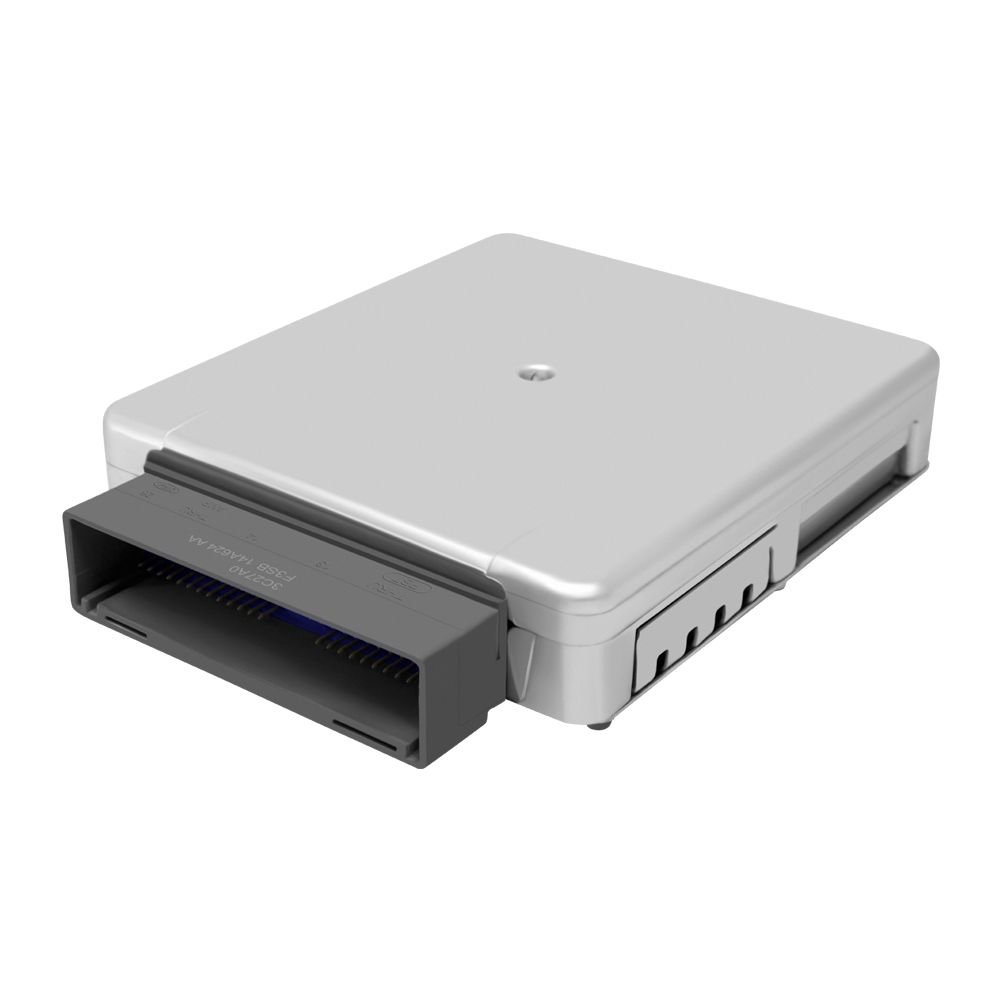
Flagship One stocks a refurbished, VIN-programmed PCM for the 2001 Ford Excursion with a lifetime warranty, free shipping and no core charge. The full Ford Excursion module lineup covers other engine configurations as well.
The 2001 Ford Excursion 6.8L depends on a fully functional powertrain control module for reliable starting, smooth running, and proper transmission behavior. When symptoms point to module failure, a pre-programmed replacement simplifies the repair and avoids the complexity of dealership programming. With the battery disconnected and the new unit installed, the Excursion can return to dependable service.