
Last updated on August 25th, 2026 at 12:24 pm
The Powertrain Control Module in a 2000 Plymouth Voyager manages engine and transmission operations. A failure can block communication with scan tools, cause shifting problems, or trigger no‑start conditions, often requiring replacement and reprogramming.
When a 2000 Plymouth Voyager exhibits erratic shifting or a dead scan‑tool connection, the Powertrain Control Module may be at fault. This guide explains what the module does, where it lives, how to replace it, and what post‑install steps are required. You will understand the labor effort involved, the programming needs, and how to avoid common pitfalls, helping you decide between a new or refurbished unit.
The Powertrain Control Module in the 2000 Plymouth Voyager controls both engine and transmission functions, translating sensor data into actionable commands. It ensures smooth gear changes, monitors emissions, and supports diagnostic communication. Because it integrates critical control pathways, a malfunction can lead to loss of driveability or diagnostic dead‑ends. Understanding its role helps you appreciate why accurate replacement and programming are essential. replacement engine control modules for Voyager keep the vehicle operating within design parameters.
Engine computer (ECM/PCM)
OEM programmed replacements — plug & play, no dealer visit.
Find yours by year, make & model →
Free shipping · Lifetime warranty
The PCM sits in the engine compartment of the 2000 Plymouth Voyager, making it reachable without removing major components. Removing the unit typically requires 0.6 hours of labor, and reinstalling follows the same time frame. After the module is secured, a relearn operation is performed, which usually takes 0.5 hours. No additional torque specifications are provided, so standard fastener practices apply.
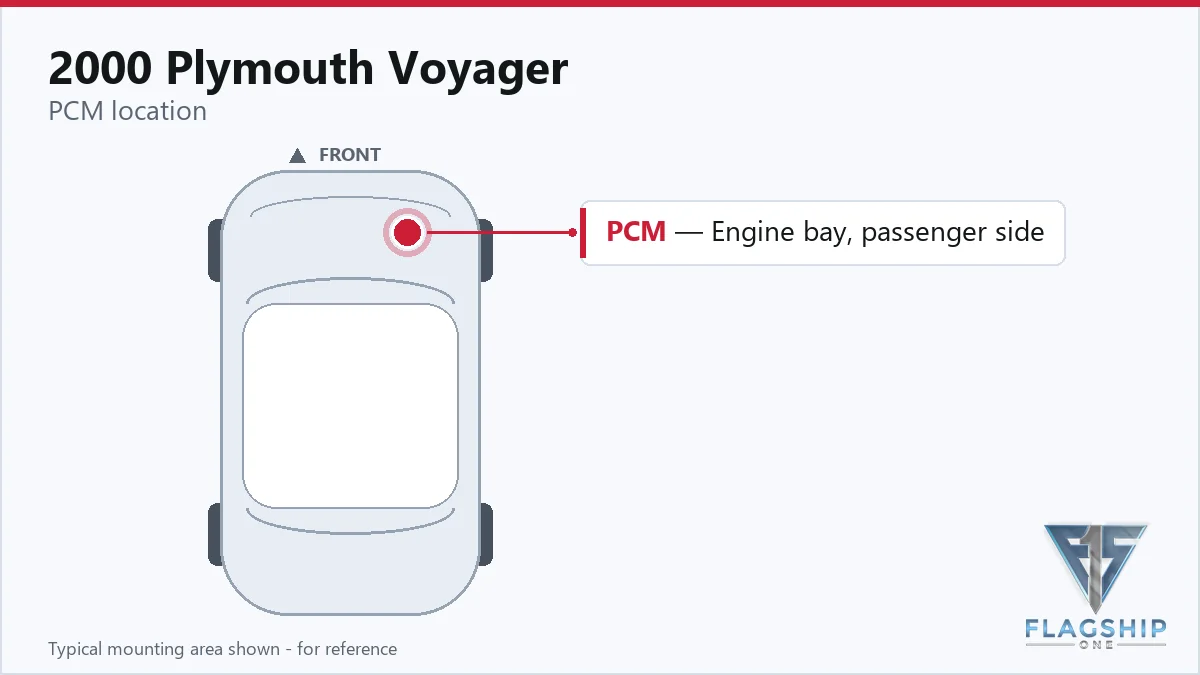
Work with the ignition off, and treat the module as static-sensitive: avoid touching the connector pins at any point.
| Operation | Configuration | Book Time |
|---|---|---|
| Engine Control Module Relearn | Grand Voyager | 0.5 hr |
| Engine Control Module Relearn | Voyager | 0.5 hr |
| Engine Control Module R&R | Grand Voyager | 0.6 hr |
| Engine Control Module R&R | Voyager | 0.6 hr |
| Powertrain Control Module R&R | Grand Voyager | 0.6 hr |
| Powertrain Control Module R&R | Voyager | 0.6 hr |
| Powertrain Control Module Relearn | Grand Voyager | 0.5 hr |
| Powertrain Control Module Relearn | Voyager | 0.5 hr |
After installing a new PCM, the factory process calls for reprogramming the unit with the vehicle’s VIN and original mileage using the DRB scan tool. Flagship One supplies a unit that arrives already programmed, so the reprogramming step is effectively completed. a VIN-programmed replacement unit eliminates the need for on‑site VIN entry.
Typical signs of a failing Powertrain Control Module in a 2000 Plymouth Voyager include a lack of response from the TCM when using generic scan tools, irregular shifting, stalling, or an engine that refuses to start. Diagnostic trouble codes may appear, and the vehicle may exhibit reduced performance or unexpected limp‑mode operation.
Service Bulletin 18-010-00 and 18-10-00 report no response from the TCM when generic scan tools are used. Bulletin 18-037-05 provides a recovery method for flash programming failures using the DRBIII® tool.
| Bulletin | Subject | What It Addresses |
|---|---|---|
| 18-010-00 | 18-010-00 NO Response From TCM When Using Some Generic Scan Tools | — |
| 18-10-00 | 18-10-00 NO Response From TCM When Using Some Generic Scan Tools | — |
| 18-037-05 | 18-037-05 Flash Programming Failure Recovery Using DRBIII® | — |
A common cause is the use of generic scan tools that cannot communicate with the module, as noted in several service bulletins. Reprogramming with the correct tool often resolves the issue.
The labor estimate for removal and installation is typically 0.6 hours, with an additional 0.5 hours for the required relearn procedure.
Factory procedure requires VIN and mileage programming, but a Flagship One unit arrives pre‑programmed, eliminating that step.
When the Powertrain Control Module in your 2000 Plymouth Voyager needs attention, you can choose a new factory‑spec unit or a refurbished replacement that meets the same standards. Both options restore the module’s functionality, but a refurbished unit may offer cost savings while still delivering the required performance.
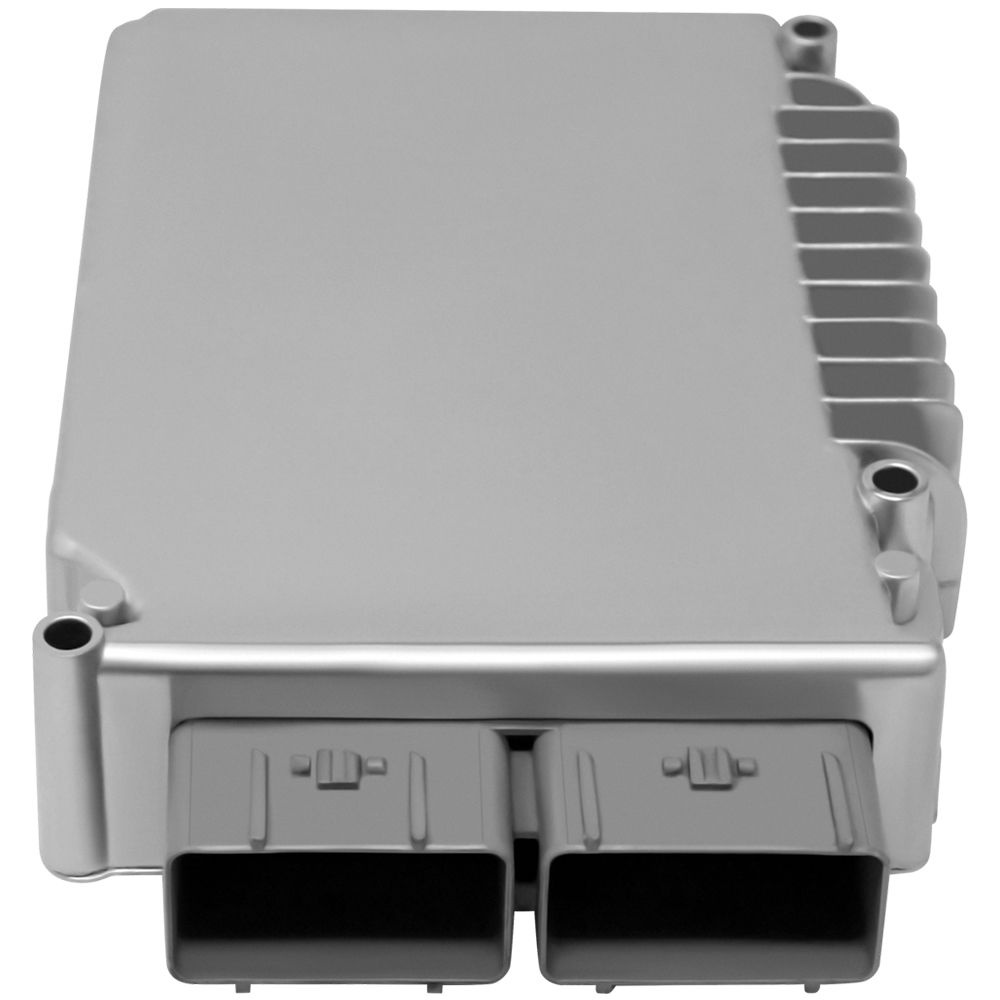
Flagship One stocks a refurbished, VIN-programmed PCM for the 2000 Plymouth Voyager with a lifetime warranty, free shipping and no core charge. The full Plymouth Voyager module lineup covers other engine configurations as well.
For the 2000 Plymouth Voyager, addressing PCM issues promptly restores reliable engine and transmission control. Consider a properly programmed replacement to keep your vehicle running smoothly, and contact a qualified technician for installation.