
Last updated on August 25th, 2026 at 12:49 pm
The Powertrain Control Module (PCM) in your 1999 Dodge Ram 8.0L manages fuel injection, ignition timing, and emissions systems. Failures may cause erratic engine behavior, no-start conditions, or transmission shifting problems.
If your 1999 Dodge Ram 8.0L has been experiencing unexplained stalling, rough idling, or a no-start condition, the Powertrain Control Module (PCM) may be the culprit. This small but critical computer oversees everything from fuel delivery to transmission shifting, making it essential for smooth operation. Replacing the PCM isn’t just about swapping a part—it involves precise labor steps, a relearn procedure, and programming to ensure the new module communicates correctly with the rest of the vehicle. Understanding these requirements helps you avoid unnecessary downtime and ensures your Ram runs reliably. Whether you’re a DIY enthusiast or relying on a shop, knowing what to expect can save time and frustration. This guide covers the role of the PCM, common failure symptoms, and the exact steps needed for replacement and programming in your 1999 Dodge Ram 8.0L.
The Powertrain Control Module (PCM) in your 1999 Dodge Ram 8.0L is the brain behind the engine and transmission. It continuously monitors sensors for data like air intake, throttle position, and engine temperature, then adjusts fuel injection, ignition timing, and emissions controls in real time. This ensures optimal performance, fuel efficiency, and compliance with emissions standards. The PCM also manages transmission shifting, adapting to driving conditions to prevent harsh or delayed gear changes. When the module fails, it may disrupt these functions, leading to poor drivability or even a complete inability to start. Replacing the PCM with replacement engine computers for the Dodge Ram 1500/2500/3500 requires careful handling, as the new unit must be programmed to match your vehicle’s original specifications. Without proper synchronization, the engine may run poorly or trigger warning lights on the dashboard.
1999 Dodge Ram 8.0L
OEM programmed replacements — plug & play, no dealer visit.
Find yours by year, make & model →
Free shipping · Lifetime warranty
In the 1999 Dodge Ram 8.0L, the PCM is located inside the engine bay, typically mounted on the passenger side near the firewall. Accessing it involves removing the protective cover, which may require unbolting a few fasteners. The replacement process is straightforward but requires attention to detail. According to factory labor times, removing and reinstalling the PCM in this model takes 0.4 hours. This includes disconnecting the electrical connectors, removing the mounting bolts, and securing the new module in place. No specialized tools are required beyond basic hand tools, but ensuring the connectors are clean and properly seated is critical to avoid future issues. The module’s position makes it vulnerable to heat and moisture, so checking the surrounding area for corrosion or damage during replacement is advisable.
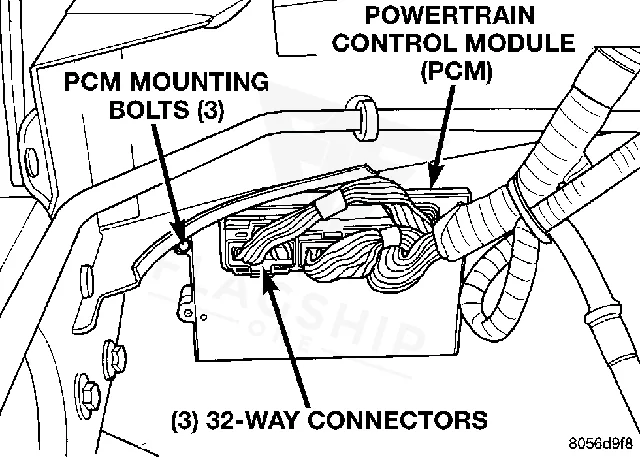
Work with the ignition off, and treat the module as static-sensitive: avoid touching the connector pins at any point.
| Operation | Configuration | Book Time |
|---|---|---|
| Powertrain Control Module Relearn | All configurations | 0.5 hr |
| Powertrain Control Module R&R | Ram 1500 | 0.4 hr |
| Powertrain Control Module R&R | GAS | 0.4 hr |
| Powertrain Control Module R&R | DIESEL | 0.7 hr |
| Powertrain Control Module R&R | Ram 3500 | 0.4 hr |
| Engine Control Module Relearn | Ram 1500 | 0.5 hr |
| Engine Control Module Relearn | Ram 2500 | 0.5 hr |
| Engine Control Module Relearn | Ram 3500 | 0.5 hr |
After installing a new PCM in your 1999 Dodge Ram 8.0L, the factory procedure requires reprogramming the module with the vehicle’s original VIN and mileage. This step ensures the module communicates correctly with the engine, transmission, and other systems. The process involves using a DRB scan tool to input the data, which typically adds 0.5 hours of labor. However, if you opt for a VIN-programmed replacement unit, this step is already completed, saving time and reducing the risk of programming errors. The DRB tool is also used to perform a relearn procedure, which synchronizes the PCM with the vehicle’s sensors and actuators. Skipping this step may result in poor engine performance, shifting issues, or even a no-start condition.
A failing PCM in your 1999 Dodge Ram 8.0L can manifest in several ways, often mimicking other mechanical or electrical issues. One of the most common signs is a no-start condition, where the engine cranks but fails to fire. This may occur intermittently or become permanent as the module degrades. Stalling or rough idling, especially during warm-up or under load, is another red flag, as the PCM struggles to maintain consistent fuel and ignition timing. You may also notice transmission shifting problems, such as delayed or harsh gear changes, since the PCM controls the transmission’s electronic signals. Warning lights on the dashboard, including the Check Engine Light, often accompany these symptoms. If the PCM loses communication with the scan tool, it may indicate an internal failure or a wiring issue. Specific trouble codes, such as an internal control module memory check sum error, can point directly to PCM problems. Other codes related to fuel trim, misfires, or transmission solenoids may also appear if the PCM is malfunctioning. Addressing these symptoms promptly can prevent further damage to the engine or transmission.
Chrysler issued service bulletin #18-037-05 to address flash programming failures when using the DRBIII scan tool. This bulletin provides recovery procedures for instances where the PCM fails to reprogram correctly, which can occur due to voltage fluctuations, tool errors, or interrupted data transfer. Following the steps outlined in the bulletin can help technicians restore proper functionality without replacing the module unnecessarily. If you encounter programming issues after installing a new PCM, this bulletin may offer a solution before pursuing further diagnostics.
| Bulletin | Subject | What It Addresses |
|---|---|---|
| 18-037-05 | 18-037-05 Flash Programming Failure Recovery Using DRBIII® | — |
Stalling after a PCM replacement often indicates a failed relearn procedure or incorrect programming. The module must synchronize with the vehicle’s sensors and actuators, which requires a DRB scan tool. If the relearn isn’t performed, the engine may run poorly or stall under load. Double-check the programming steps or consider a pre-programmed unit to avoid this issue.
Driving with a failing PCM is risky, as it may cause sudden stalling, misfires, or transmission shifting problems. These issues can lead to unsafe driving conditions or further damage to the engine or transmission. If you suspect PCM failure, address it promptly to avoid breakdowns or costly repairs.
A bad PCM often sets specific trouble codes, such as P0601 for internal memory errors, while wiring issues may trigger codes related to sensor circuits or communication failures. Use a scan tool to check for codes and inspect the wiring harness for damage, corrosion, or loose connections. If the codes persist after addressing wiring, the PCM may be at fault.
Yes, the factory procedure requires reprogramming the PCM with the vehicle’s original VIN and mileage using a DRB scan tool. This ensures the module communicates correctly with the engine and transmission. Skipping this step may result in poor performance or a no-start condition. Pre-programmed units eliminate this requirement.
PCM failures in this model are often caused by voltage spikes, moisture intrusion, or heat exposure. Poor electrical connections, such as corroded grounds or loose connectors, can also lead to intermittent or permanent failures. Regular maintenance of the charging system and wiring can help prolong the module’s lifespan.
If your 1999 Dodge Ram 8.0L is experiencing PCM-related issues, you have options for repair or replacement. While a dealership may offer a new module, the cost and programming requirements can be prohibitive. A refurbished or remanufactured unit, pre-programmed with your vehicle’s VIN and mileage, provides a reliable alternative without the hassle of additional programming steps. This approach ensures your Ram runs smoothly while saving time and labor costs.
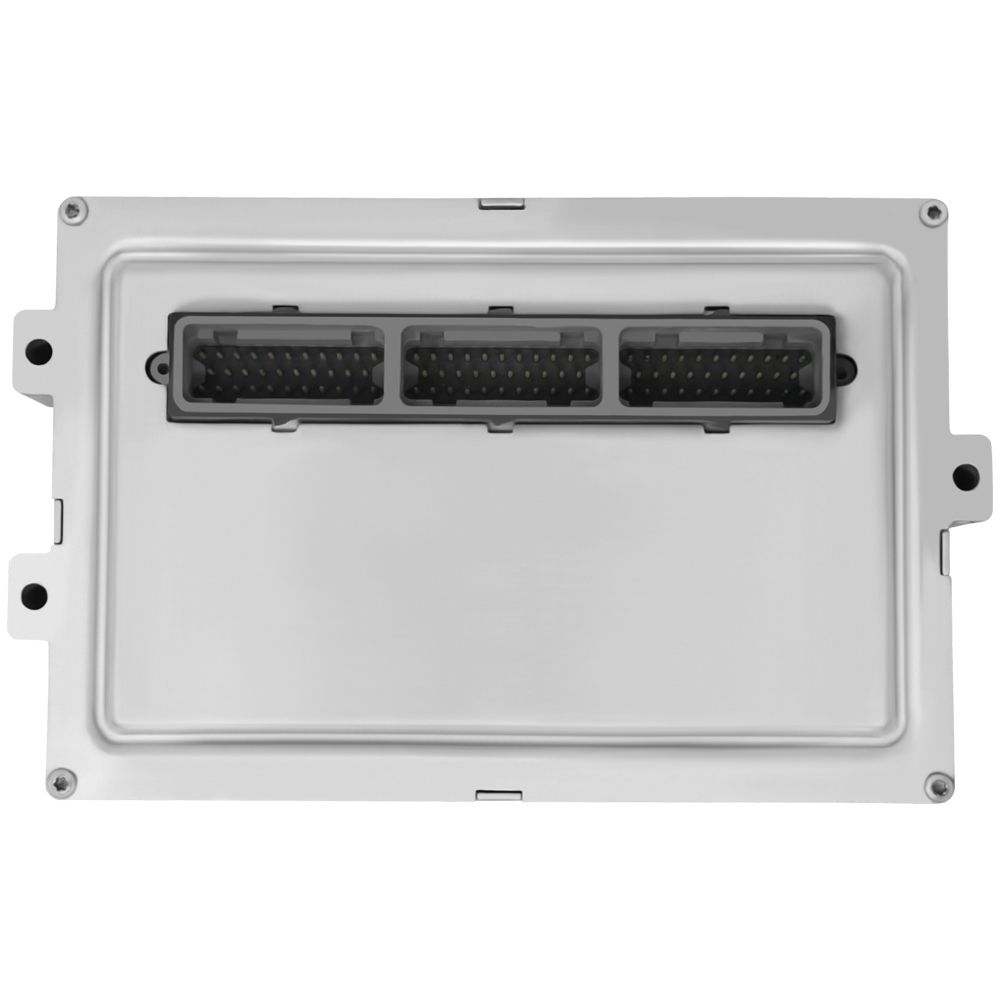
Flagship One stocks a refurbished, VIN-programmed PCM for the 1999 Dodge Ram Truck with a lifetime warranty, free shipping and no core charge. The full Dodge Ram Truck module lineup covers other engine configurations as well.
The PCM in your 1999 Dodge Ram 8.0L plays a critical role in engine and transmission performance. Recognizing the symptoms of failure, understanding the replacement process, and ensuring proper programming can help you avoid costly repairs and downtime. Whether you choose to tackle the job yourself or rely on a professional, addressing PCM issues promptly will keep your Ram running reliably for years to come.