
Last updated on August 25th, 2026 at 12:49 pm
The Powertrain Control Module (PCM) in your 1999 Dodge Durango manages engine performance and transmission behavior. Failures may cause erratic idling, poor acceleration, or complete engine shutdown due to internal faults or electrical issues.
If your 1999 Dodge Durango has been acting up—stalling at stops, refusing to start, or throwing mysterious check engine lights—it may be time to consider the Powertrain Control Module (PCM). This critical component acts as the brain of your vehicle’s engine and transmission, coordinating everything from fuel injection to shift timing. When it fails, the symptoms can range from subtle performance hiccups to complete drivability issues. Understanding what the PCM does, where it’s located, and how to address failures can save you time and frustration. Whether you’re diagnosing a no-start condition or preparing for a replacement, knowing the steps involved—including the factory reprogramming requirement—helps you make informed decisions. A properly functioning PCM ensures your Durango runs smoothly, and opting for a pre-programmed replacement can simplify the process significantly.
The Powertrain Control Module (PCM) in your 1999 Dodge Durango is responsible for managing the engine’s fuel delivery, ignition timing, and emission controls, while also overseeing the automatic transmission’s shift patterns. This module constantly monitors sensor inputs—like throttle position, oxygen levels, and engine temperature—to adjust performance in real time. Without a functional PCM, your Durango may struggle to start, idle erratically, or even fail to shift gears properly. Over time, exposure to heat, vibration, or electrical fluctuations can degrade the module’s internal circuitry, leading to intermittent or permanent failures. When replacement becomes necessary, you’ll need a unit that matches your vehicle’s specifications. Replacement powertrain control modules for the Dodge Durango are designed to restore factory-level performance, but they must be programmed with your SUV’s original VIN and mileage to function correctly. The PCM’s role is so central that even minor faults can trigger a cascade of drivability issues, making timely diagnosis and repair essential.
1999 Dodge Durango
OEM programmed ECM for your 1999 Dodge Durango — plug & play, no dealer visit.
Free shipping · Lifetime warranty
The Powertrain Control Module (PCM) in your 1999 Dodge Durango is mounted in the engine compartment, making it relatively accessible for inspection or replacement. To replace it, a technician will typically disconnect the battery to prevent electrical shorts, then remove the wiring harness connector from the module. The old PCM is unbolted from its mounting bracket, and the new unit is installed in its place. Reattaching the wiring harness and reconnecting the battery completes the physical installation. Labor estimates for this procedure are typically 0.5 hours for removal and reinstallation (R&R). After installation, the factory procedure requires reprogramming the PCM with the vehicle’s original VIN and mileage to ensure proper operation. The location in the engine bay means the module is exposed to heat and moisture, so ensuring a secure, corrosion-free connection is important for long-term reliability.
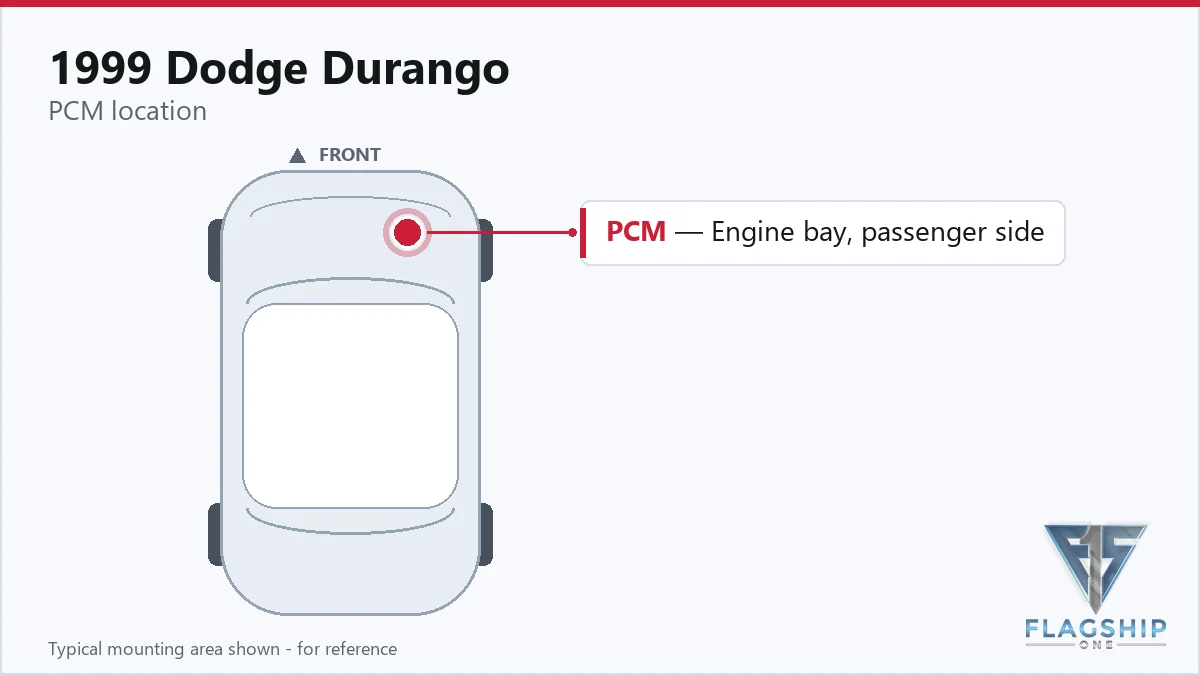
Work with the ignition off, and treat the module as static-sensitive: avoid touching the connector pins at any point.
| Operation | Configuration | Book Time |
|---|---|---|
| Engine Control Module Relearn | All configurations | 0.5 hr |
| Engine Control Module R&R | All configurations | 0.5 hr |
| Powertrain Control Module Relearn | All configurations | 0.5 hr |
| Powertrain Control Module R&R | All configurations | 0.5 hr |
After installing a new Powertrain Control Module (PCM) in your 1999 Dodge Durango, the factory procedure requires reprogramming the unit with the vehicle’s original VIN and mileage. This step is critical because the PCM relies on this data to calibrate engine and transmission functions accurately. The reprogramming process typically involves using the DRB scan tool, which interfaces with the module to upload the necessary information. Skipping this step may result in poor performance, incorrect shift patterns, or even a no-start condition. However, when you choose a VIN-programmed replacement PCM, these steps are already completed before the unit arrives. This eliminates the need for post-installation programming, saving you time and ensuring your Durango is ready to drive as soon as the module is installed. The pre-programmed unit is matched to your vehicle’s specifications, so you can avoid the hassle of visiting a dealership or specialist for reprogramming.
A failing Powertrain Control Module (PCM) in your 1999 Dodge Durango can manifest in several ways, often mimicking other mechanical or electrical issues. One of the most common signs is a no-start condition, where the engine cranks but refuses to fire, often due to the PCM failing to send the correct signals to the fuel injectors or ignition system. Stalling at idle or during acceleration is another frequent symptom, as the module struggles to maintain consistent engine operation. You may also notice poor fuel economy, rough idling, or hesitation under load, all of which can stem from the PCM’s inability to adjust fuel delivery or ignition timing properly. Transmission shifting issues, such as delayed or harsh gear changes, may also occur if the PCM is not communicating effectively with the transmission control system. Diagnostic trouble codes (DTCs) related to injector circuits, such as an injector circuit malfunction, are often stored in the PCM’s memory when these symptoms arise. In some cases, the vehicle may enter a “limp mode,” where performance is severely limited to prevent further damage. If your Durango exhibits any of these symptoms, it’s worth checking the PCM’s health, as ignoring the issue can lead to more severe drivability problems or even leave you stranded.
Chrysler has issued service bulletins addressing common PCM-related issues in the 1999 Dodge Durango. Bulletin #18-017-02 covers instances where the Malfunction Indicator Lamp (MIL) illuminates due to injector circuit faults, which may require reprogramming or replacement of the PCM to resolve. Another bulletin, #18-037-05, provides guidance on recovering from flash programming failures using the DRBIII scan tool. These bulletins highlight the importance of following factory procedures when dealing with PCM-related issues, as improper programming can lead to persistent drivability problems or even module failure. If your Durango is experiencing symptoms covered by these bulletins, consulting the relevant documentation can help ensure a proper repair.
| Bulletin | Subject | What It Addresses |
|---|---|---|
| 18-017-02 | 18-017-02 Flash: MIL Illumination for Injector Circuit Fault | — |
| 18-037-05 | 18-037-05 Flash Programming Failure Recovery Using DRBIII® | — |
Stalling at stoplights is a common symptom of a failing PCM, as the module may struggle to maintain idle speed or fuel delivery. Other potential causes include vacuum leaks or faulty sensors, but if the PCM is unable to compensate for these issues, stalling can occur. A diagnostic scan can help pinpoint whether the PCM is the root cause.
Driving with a faulty PCM is risky, as it may lead to poor engine performance, transmission shifting issues, or even a no-start condition. In some cases, the vehicle may enter limp mode to protect itself, but prolonged driving with a bad PCM can cause additional strain on other components, such as the transmission or catalytic converter.
If your Durango exhibits symptoms like stalling, misfires, or transmission shifting problems, a diagnostic scan can reveal whether the PCM is storing fault codes. If reprogramming doesn’t resolve the issue, the module itself may be faulty and require replacement. A pre-programmed replacement unit can simplify the process by eliminating the need for post-install programming.
Replacing the PCM typically requires basic hand tools, such as a socket set and wrenches, to remove the old module and install the new one. A scan tool, like the DRB, is necessary for reprogramming the new PCM with the vehicle’s VIN and mileage, unless you opt for a pre-programmed unit that doesn’t require this step.
Yes, the PCM plays a critical role in managing transmission shift points and line pressure. If the module is failing, it may send incorrect signals to the transmission, resulting in delayed, harsh, or erratic shifts. A diagnostic scan can help determine whether the PCM is the source of the problem.
If your 1999 Dodge Durango is experiencing PCM-related issues, you have options for repair or replacement. While some owners opt to have their existing module reprogrammed or repaired, this approach may not always resolve underlying hardware faults. A refurbished or new replacement PCM, pre-programmed with your vehicle’s VIN and mileage, offers a reliable solution that restores factory-level performance without the need for post-install programming. Given the labor involved in removal and reinstallation, choosing a unit that’s ready to install can save you time and ensure your Durango is back on the road quickly.
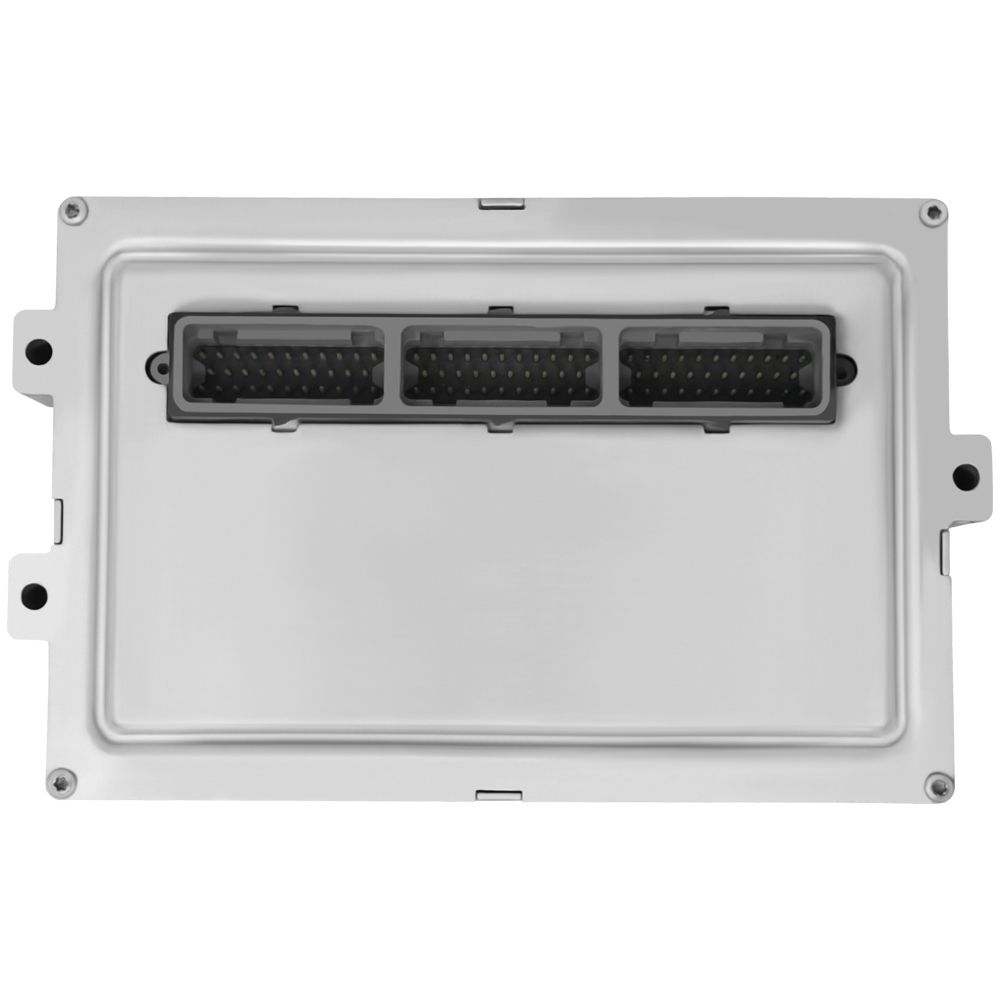
Flagship One stocks a refurbished, VIN-programmed PCM for the 1999 Dodge Durango with a lifetime warranty, free shipping and no core charge. The full Dodge Durango module lineup covers other engine configurations as well.
The Powertrain Control Module is a vital component in your 1999 Dodge Durango, overseeing engine performance and transmission behavior. When it fails, symptoms like stalling, misfires, or shifting issues can make driving frustrating or even impossible. Understanding the module’s role, location, and replacement process helps you address issues efficiently. Whether you’re diagnosing a no-start condition or preparing for a replacement, opting for a pre-programmed PCM can simplify the process and get your Durango running smoothly again. Regular maintenance and prompt attention to warning signs can help protect your vehicle’s PCM and extend its lifespan.