
Last updated on August 25th, 2026 at 12:17 pm
The Powertrain Control Module (PCM) in your 1999 Cadillac Eldorado is the central computer managing engine operation, transmission shifting, and fuel delivery. When this unit fails internally, it triggers specific fault codes and may cause drivability issues requiring replacement.
If your 1999 Cadillac Eldorado is experiencing drivability problems, hard starting, or illumination of the check engine light, the Powertrain Control Module may be the culprit. The PCM serves as the brain of your vehicle’s powertrain, managing critical functions that affect engine performance, fuel economy, and shifting behavior. Understanding how this module works, what failures look like, and what the replacement process involves helps you make informed decisions about repairs. This guide covers everything from identifying failure symptoms to navigating factory programming requirements, so you know exactly what to expect when addressing PCM issues on your Eldorado. Whether you are diagnosing a no-start condition or replacing a failed module, the information here walks you through each step with clarity and confidence.
The Powertrain Control Module in your 1999 Cadillac Eldorado is the primary electronic brain governing the 4.6L V8 engine and automatic transmission. This single unit integrates what older vehicles separated into distinct computers—the Engine Control Module and the Transmission Control Module—into one centralized processor. The PCM monitors inputs from dozens of sensors throughout the engine bay, including the mass airflow sensor, coolant temperature sensor, throttle position sensor, and oxygen sensors, then calculates optimal fuel delivery and ignition timing based on that data. It also manages transmission shift points, torque converter clutch engagement, and evaporative emissions control. When the PCM functions properly, your Eldorado starts reliably, runs smoothly, and delivers the refined power characteristic of Cadillac luxury vehicles. However, internal electrical faults within the module itself can develop over time due to voltage spikes, thermal stress, or component aging. These internal failures are distinct from sensor or wiring problems because they originate within the module’s processor or memory circuits. When such failures occur, the module may lose its programming, produce incorrect outputs, or fail to communicate with diagnostic tools altogether. Replacement requires not only physical installation but also proper programming to ensure your vehicle operates as designed. replacement engine computers for the Cadillac Eldorado represent the solution when the original module cannot be repaired.
1999 Cadillac Eldorado
OEM programmed ECM for your 1999 Cadillac Eldorado — plug & play, no dealer visit.
Free shipping · Lifetime warranty
Reaching the PCM on your 1999 Cadillac Eldorado requires working in the engine compartment near the air cleaner assembly, as the factory removal procedure documents. The module sits in a location that provides reasonable access for technicians familiar with Cadillac products, though you will need to disconnect electrical connectors and possibly remove surrounding components to gain clear working room. The book time for Powertrain Control Module R&R is 1.4 hours, while the relearn procedure that follows adds an additional 0.5 hours to the job. These times reflect straightforward replacement when no unexpected complications arise. During installation, you must place the ignition switch in the LOCK position before disconnecting or reconnecting the power supply to the PCM—this prevents potential internal damage to the module from electrical surges. The same LOCK position requirement applies when working with battery cables, PCM connectors, or related fuses. After securing the new module, the relearn procedure allows the vehicle’s systems to adapt to the new control unit, learning idle settings, fuel trim values, and transmission adaptive parameters. Proper torque specifications, if applicable to your specific procedure, should be followed for all electrical connections to ensure reliable long-term operation.
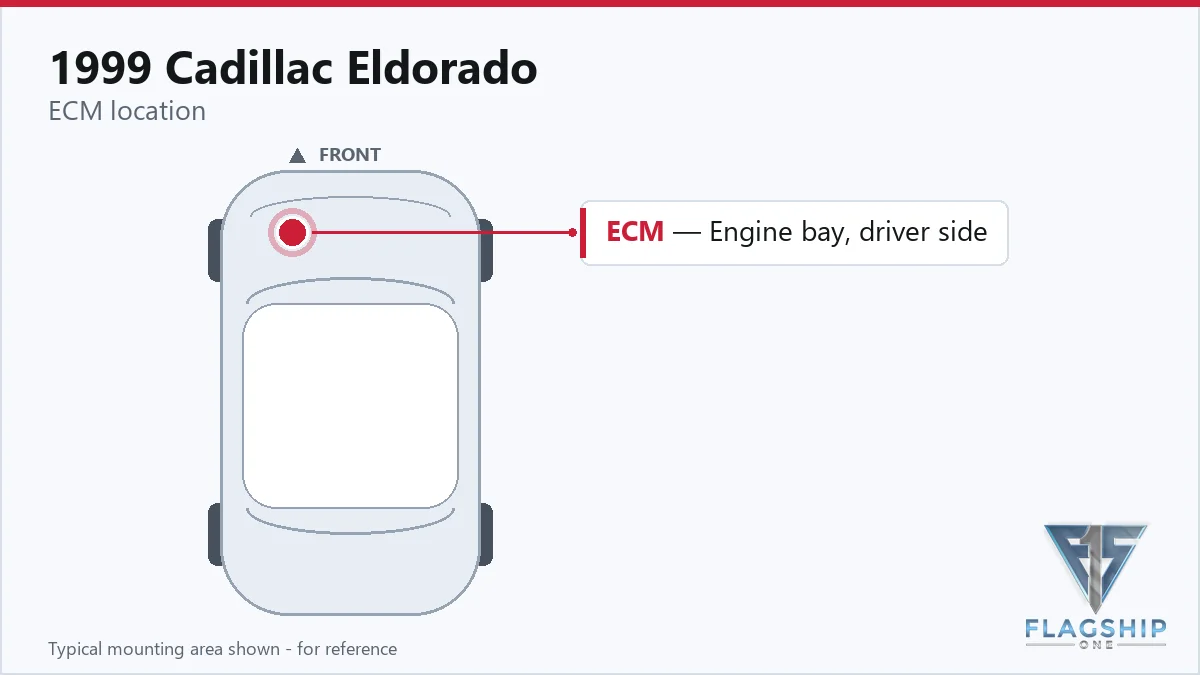
Work with the ignition off, and treat the module as static-sensitive: avoid touching the connector pins at any point.
| Operation | Configuration | Book Time |
|---|---|---|
| Powertrain Control Module R&R | All configurations | 1.4 hr |
| Powertrain Control Module Relearn | All configurations | 0.5 hr |
| Engine Control Module R&R | All configurations | 1.4 hr |
| Engine Control Module Relearn | All configurations | 0.5 hr |
Following physical replacement of the PCM on your 1999 Cadillac Eldorado, the replacement unit must be programmed using the latest Techline programming procedures as specified by the factory. This programming step is mandatory—the module will not function properly in your vehicle without being flashed with the correct software version and vehicle-specific calibration data. Before beginning any diagnosis or module replacement, always capture Freeze Frame and Failure Records information with your scan tool first, as clearing diagnostic trouble codes, disconnecting the battery, or removing the PCM can erase or overwrite this valuable diagnostic data. Additionally, record the remaining engine oil life before replacement; if the new module is not programmed with this value, the oil life monitor will default to 100%, potentially causing you to miss oil change intervals. The good news is that when you purchase a replacement unit from Flagship One, a VIN-programmed replacement unit arrives ready to install, with the programming steps already completed using the latest available software. This means you can skip the Techline programming procedure entirely and proceed directly to the relearn process, saving significant time and avoiding the need for expensive dealer programming equipment.
When the PCM on your 1999 Cadillac Eldorado fails internally, the vehicle may exhibit a range of drivability symptoms that often mimic other problems. A no-start condition is common—the engine may crank normally but fail to fire, or the vehicle may start then immediately stall. Stalling while driving, especially at idle or during low-speed maneuvers, frequently occurs when the module loses its ability to manage idle air control or fuel delivery properly. Misfire codes such as P0300 (random/multiple cylinder misfire) or specific cylinder misfires may populate because the PCM cannot accurately calculate fuel delivery or ignition timing. In some cases, the scan tool may not communicate with the vehicle at all, or communication may be intermittent—a strong indicator of PCM electrical issues rather than simple sensor failures. Transmission shifting problems also manifest when the integrated TCM portion of the PCM fails, resulting in harsh shifts, delayed engagement, or failure to shift into overdrive. The check engine light typically illuminates when the module detects an internal fault, and internal memory checksum failure is a specific code that points directly to PCM internal problems rather than external sensor or wiring issues. If your Eldorado displays this code or exhibits multiple seemingly unrelated drivability complaints simultaneously, the PCM itself is the most likely cause.
The 1999 Cadillac Eldorado can store module-internal diagnostic trouble codes that specifically indicate problems within the PCM circuitry. Unlike conventional codes that point to sensors or actuators, these internal codes signal that the control module has detected a fault in its own processor, memory, or voltage regulation systems. Code P0601 represents one such failure mode, indicating that the module’s internal memory checksum did not match expected values, suggesting corrupted programming or hardware degradation. When these internal codes appear, replacement of the PCM is typically required rather than repair, as the module’s internal components cannot be serviced individually.
| Code | Meaning | Full Guide |
|---|---|---|
| P0601 | Internal memory checksum error | Full P0601 guide → |
Factory service bulletin #99-06-04-053, issued October 26, 1999, addresses PCM reprogramming for the 1999 Cadillac Eldorado and related General Motors vehicles. This bulletin provides dealers and technicians with updated programming procedures and software revisions intended to address specific drivability concerns or improve module performance. The bulletin represents GM’s official recognition that PCM programming may need updating during the vehicle’s service life, either as a diagnostic step or as part of a repair procedure. If your Eldorado exhibits symptoms that this bulletin specifically addresses, the reprogramming procedure outlined in #99-06-04-053 may be applicable. Always verify bulletin applicability with your diagnostic equipment and technical resources before proceeding with any reprogramming operation.
| Bulletin | Subject | What It Addresses |
|---|---|---|
| 99-06-04-053 | Info – PCM Reprogramming – (Oct 26, 1999) | — |
A used PCM may work if it is from the same vehicle identification number (VIN) and is properly programmed, but it may have the same internal failure risk. Additionally, used units often come with pre-existing diagnostic codes that complicate diagnosis. A professionally refurbished unit with a warranty provides better long-term reliability.
The PCM contains vehicle-specific calibration data that tells the module your Eldorado’s exact engine displacement, transmission gearing, and other specifications. Without this programming, the module cannot properly control fuel delivery, ignition timing, or transmission shifting. The latest Techline programming ensures compatibility with current diagnostic standards.
The physical replacement alone is insufficient—the module must complete a relearn procedure so the vehicle’s systems can adapt to the new control unit. This relearn process allows the PCM to establish proper idle air control, fuel trims, and transmission adaptive values. Skipping this step may result in rough idle, poor fuel economy, or erratic shifting until adaptation completes.
Code P0601 indicates an internal memory checksum failure within the PCM. This typically results from corrupted programming, a failed memory chip within the module, or exposure to voltage spikes. The code confirms that the PCM itself has failed internally and requires replacement rather than sensor or wiring repairs.
Connect a compatible scan tool to your vehicle’s diagnostic port before disconnecting the battery, removing the PCM, or clearing any codes. Navigate to the freeze frame or failure records function and save the data. This information captures the exact operating conditions present when the fault occurred, invaluable for accurate diagnosis.
When your 1999 Cadillac Eldorado requires PCM replacement, you have two primary paths forward: repair the existing module if feasible, or install a replacement unit. Repair may be possible for some electrical issues, but most internal failures require a replacement. Refurbished replacements from Flagship One arrive VIN-programmed and ready to install, eliminating the need for dealer programming appointments or expensive Techline equipment. This approach gets your Eldorado back on the road faster while ensuring the replacement meets factory specifications. Consider your budget, timeline, and access to programming equipment when deciding which path makes sense for your situation.
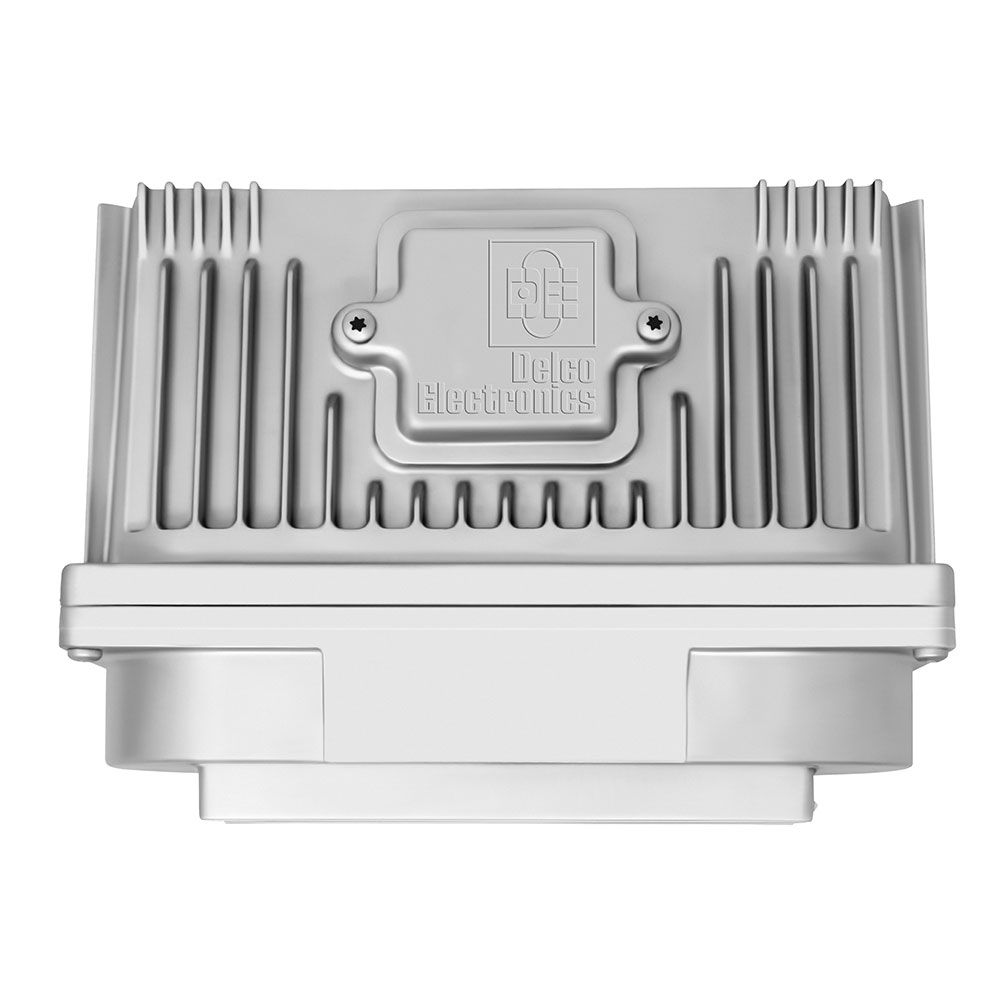
Flagship One stocks a refurbished, VIN-programmed PCM for the 1999 Cadillac Eldorado with a lifetime warranty, free shipping and no core charge. The full Cadillac Eldorado module lineup covers other engine configurations as well.
The Powertrain Control Module in your 1999 Cadillac Eldorado is a critical component that manages your vehicle’s engine and transmission operation. When internal failure occurs, recognizing symptoms early and following proper replacement procedures—including programming and relearn steps—restores reliable operation. Whether you choose professional programming services or a pre-programmed replacement unit, understanding the factory requirements ensures your Eldorado returns to the smooth, powerful performance you expect from Cadillac luxury vehicles.