
Last updated on August 25th, 2026 at 12:30 pm
The Powertrain Control Module (PCM) in the 1997 Pontiac Sunfire manages fuel injection, ignition timing, and transmission shifting. Failure may cause no-start conditions, erratic engine behavior, or stored trouble codes like P0601.
If your 1997 Pontiac Sunfire struggles to start, stalls unexpectedly, or shifts roughly, the Powertrain Control Module (PCM) may be failing. This critical component oversees fuel delivery, ignition timing, and transmission behavior. Replacing it involves careful handling to avoid damage, and the new unit must be programmed to match your vehicle’s specifications. Understanding the process helps you anticipate labor time, programming steps, and potential symptoms of failure before they worsen.
In the 1997 Pontiac Sunfire, the Powertrain Control Module (PCM) acts as the brain for engine and transmission operations. It regulates fuel injection, ignition timing, and shift points to ensure smooth performance. A malfunctioning PCM may disrupt these functions, leading to poor drivability or even a no-start condition. When replacement becomes necessary, selecting replacement PCMs for the Sunfire ensures compatibility with the vehicle’s 2.2L engine and transmission setup.
1997 Pontiac Sunfire
OEM programmed ECM for your 1997 Pontiac Sunfire — plug & play, no dealer visit.
Free shipping · Lifetime warranty
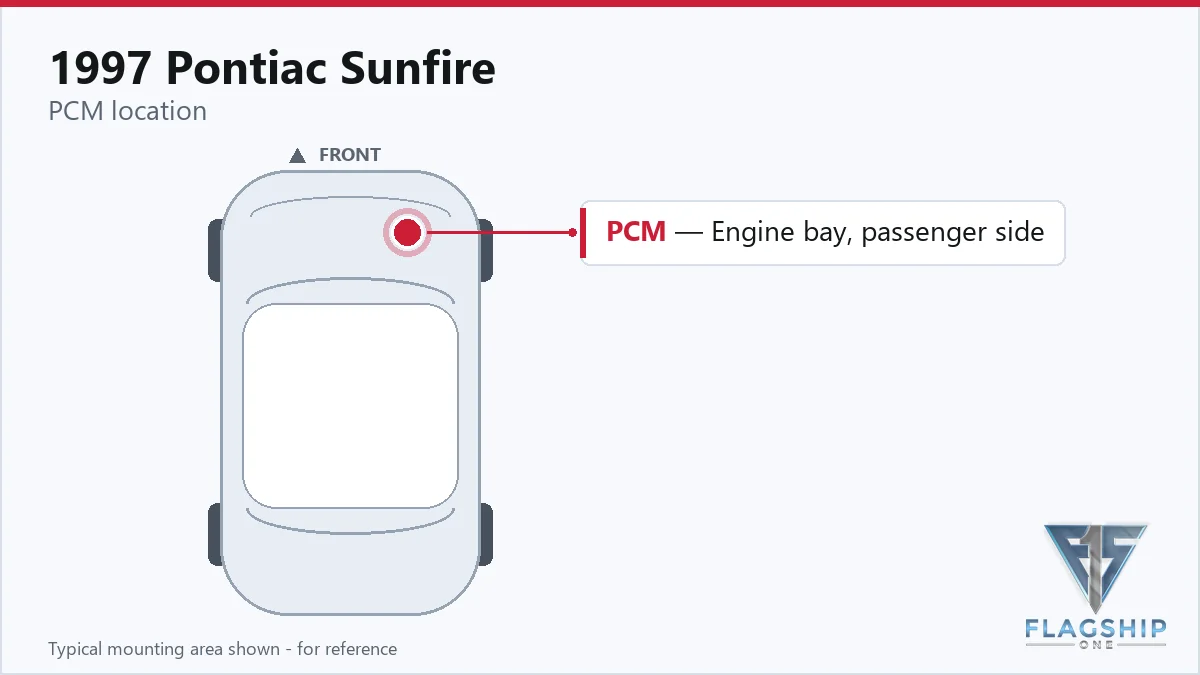
The PCM in the 1997 Pontiac Sunfire is located under the right front fender, requiring removal of the wheel and inner fender liner for access. Factory labor time for replacement is 1.3 hours, which includes disconnecting the battery, removing the module, and installing the new unit. No torque specifications are provided, but care must be taken to avoid damaging the connector pins or circuit board during handling.
| Operation | Configuration | Book Time |
|---|---|---|
| Powertrain Control Module R&R | All configurations | 1.3 hr |
| Engine Control Module R&R | 2.2L | 1.3 hr |
| Engine Control Module R&R | 2.4L | 1.3 hr |
After installing a new PCM in the 1997 Pontiac Sunfire, the EEPROM calibration must be flashed into the module, and the vehicle must relearn the password upon the first ignition cycle. These steps ensure proper communication between the PCM and the Instrument Panel Cluster. A VIN-programmed replacement unit from Flagship One arrives pre-configured, eliminating the need for manual programming and reducing the risk of post-installation issues.
A failing PCM in the 1997 Pontiac Sunfire may cause a range of symptoms, including intermittent no-start conditions, stalling at idle, or rough shifting. The check engine light may illuminate, and a scan tool may reveal module-internal faults like an internal control module memory error. In some cases, the vehicle may exhibit neutral or RPM flare while driving, particularly if the transmission fails to shift properly from first to second gear.
The 1997 Pontiac Sunfire’s PCM may log specific trouble codes when internal faults occur. These codes help diagnose issues before they lead to more severe drivability problems.
| Code | Meaning | Full Guide |
|---|---|---|
| P0601 | Internal memory checksum error | Full P0601 guide → |
Factory service bulletins address common PCM-related issues in the 1997 Pontiac Sunfire. Bulletin #99-06-04-053 covers PCM reprogramming procedures, while #77-65-16 focuses on no-start conditions that may require module updates. Bulletin #03-07-30-021A describes symptoms like neutral flare, RPM flare, or a no 1-2 upshift, often accompanied by trouble codes P1810 or P1815, recommending PCM reprogramming as the solution.
| Bulletin | Subject | What It Addresses |
|---|---|---|
| 99-06-04-053 | Info – PCM Reprogramming – (Oct 26, 1999) | — |
| 77-65-16 | NO START CONDITION (REPROGRAM PCM) – (May 13, 1997) | — |
| 03-07-30-021 | Neutral Flare and/or RPM Flare While In Drive, No 1-2 Upshift, Service Engine Soon (SES) Light | Some customers may comment on a neutral flare and/or RPM increase while in drive or no 1–2 upshift and/or the Service Engine Soon (SES) telltale may be… |
If the vehicle cranks but doesn’t start, the PCM may not have completed the password relearn procedure with the Instrument Panel Cluster. Ensure all theft deterrent codes are cleared before attempting to start the engine. A VIN-programmed replacement unit typically avoids this issue.
Yes, low voltage can disrupt PCM functions, leading to erratic behavior or stored trouble codes. A weak battery may also interfere with the module’s ability to retain learned values, so maintaining proper voltage is important.
Stalling after replacement may indicate an incomplete programming process or a communication error between the PCM and other modules. Verify that the EEPROM calibration was properly flashed and that the vehicle completed the password relearn cycle.
If your 1997 Pontiac Sunfire exhibits persistent PCM-related symptoms, replacement may be the most reliable solution. While repair options exist, a pre-programmed replacement unit ensures compatibility and reduces the risk of post-installation issues. Labor time remains consistent, and choosing a unit designed for your vehicle’s specifications simplifies the process.
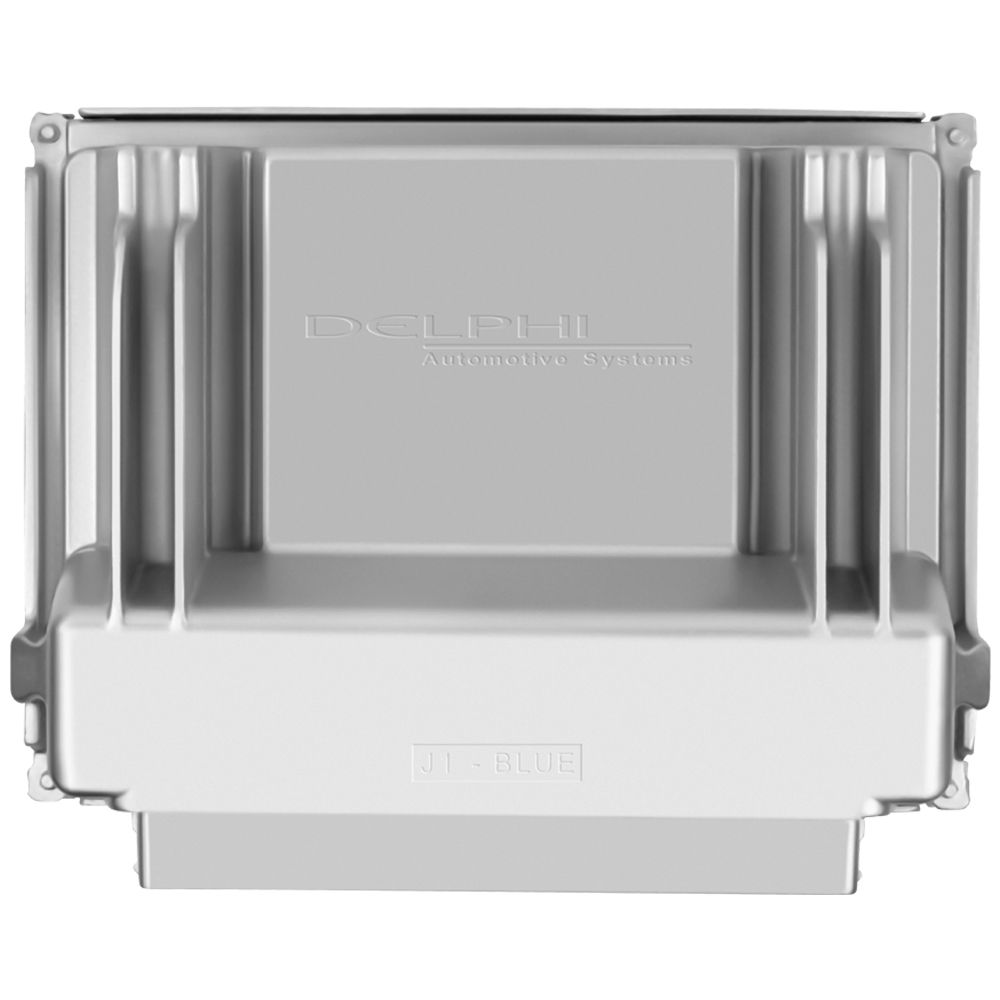
Flagship One stocks a refurbished, VIN-programmed PCM for the 1997 Pontiac Sunfire with a lifetime warranty, free shipping and no core charge. The full Pontiac Sunfire module lineup covers other engine configurations as well.
The 1997 Pontiac Sunfire relies on its PCM for smooth engine and transmission operation. If you notice symptoms like no-start conditions, stalling, or shifting problems, addressing the module promptly can restore performance. Whether opting for repair or replacement, understanding the process helps you make an informed decision for your vehicle.