
Last updated on August 25th, 2026 at 12:15 pm
The powertrain control module in your 1997 Ford Probe governs fuel injection, ignition timing, and emissions systems. Internal circuit degradation or voltage spikes often compromise its operation, resulting in erroneous sensor readings, communication failures, or complete module failure that prevents engine operation.
If your 1997 Ford Probe has begun to exhibit intermittent stalling or refuses to start altogether, the powertrain control module may require attention. This onboard computer coordinates engine functions by processing data from sensors throughout your vehicle, then adjusting fuel delivery and spark timing accordingly. When internal circuits degrade from age or voltage fluctuations, you may notice erratic idle behavior, illuminated warning lamps, or complete failure to communicate with diagnostic equipment. Understanding how this module operates within your specific vehicle helps you distinguish between simple sensor faults and a failing controller that requires replacement. The 1997 Ford Probe utilizes a PCM positioned inside the cabin rather than the engine bay, which protects it from extreme temperatures but introduces specific handling concerns regarding static electricity. Recognizing the symptoms early prevents unnecessary replacement of peripheral components like fuel pumps or ignition coils. This guide explains where the module resides, what replacement entails according to factory labor standards, and why proper programming proves essential for restoration of normal engine management. You will learn to identify failure patterns specific to this model year and understand the technical service bulletins that address programming procedures and misfire detection issues. Armed with this knowledge, you can discuss repair options confidently with technicians and ensure your vehicle receives correct diagnosis rather than guesswork replacement of unrelated parts.
The powertrain control module serves as the central nervous system for your 1997 Ford Probe, continuously monitoring throttle position, coolant temperature, and oxygen sensor feedback to maintain efficient combustion. Mounted within the interior compartment, this unit processes calculations hundreds of times per second, commanding fuel injectors and ignition coils to fire at precise intervals. Unlike earlier vehicles with separate engine and transmission controllers, your Probe integrates these functions into a single module that also manages automatic transmission shift points if so equipped. When component-level failures occur, you may experience symptoms ranging from subtle performance degradation to complete operational failure. The module contains volatile memory that stores adaptive fuel trims and learned idle speeds, data that requires preservation or restoration during service procedures. Heat cycles and electrical stress eventually affect internal solder joints and capacitors, particularly in vehicles approaching three decades of age. Moisture intrusion through compromised seals or previous improper handling may accelerate this deterioration. When seeking replacement engine computers for the Probe, you should verify compatibility with your specific 2.0L configuration and transmission type. The PCM relies on accurate reference voltage supplied to sensors; any ground circuit issues in your vehicle may mimic module failure when the processor actually functions correctly. Professional diagnosis involves verifying power, ground, and data lines before condemning the unit. Understanding this module’s role helps you appreciate why simple installation without proper configuration leads to immediate driveability complaints and warning lamp illumination. Technicians must also consider that aftermarket modifications to intake or exhaust systems may alter the calibration requirements, making factory-spec programming essential for reliable operation. The module’s architecture includes self-diagnostic capabilities that set trouble codes when internal memory checksums fail or communication buses drop signals. These sophisticated monitoring functions help pinpoint whether the issue originates within the processor or externally in the wiring harness.
Engine computer (ECM/PCM)
OEM programmed replacements — plug & play, no dealer visit.
Find yours by year, make & model →
Free shipping · Lifetime warranty
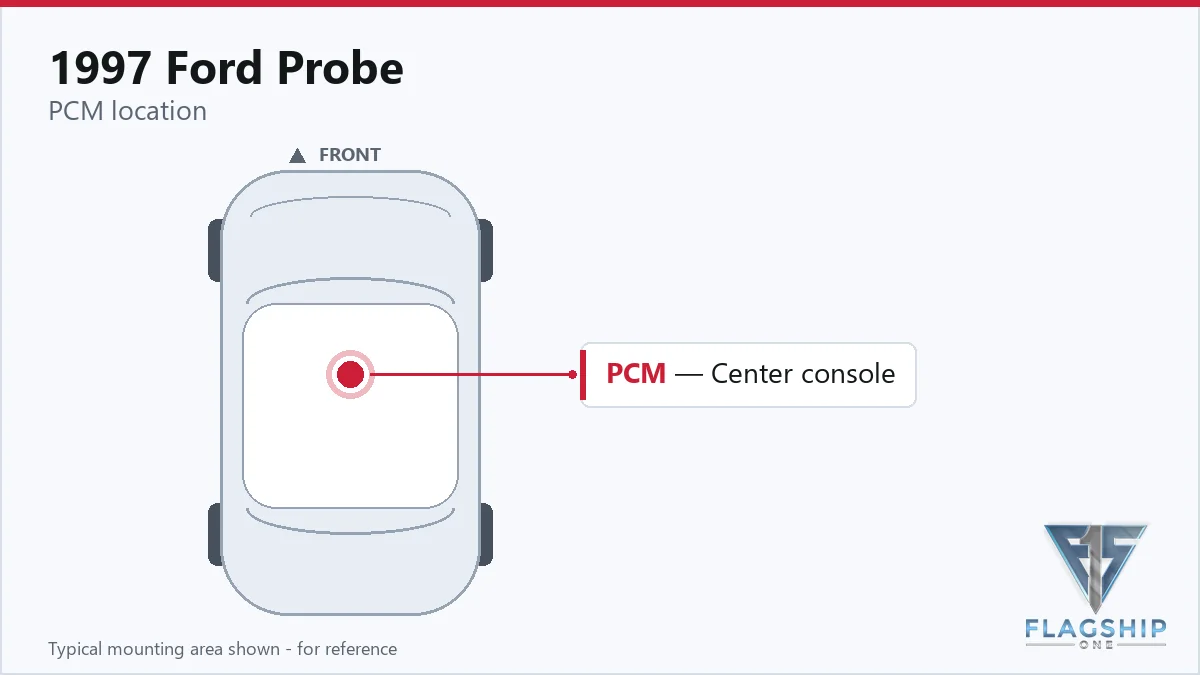
Your 1997 Ford Probe houses the powertrain control module inside the passenger compartment rather than under the hood. Specifically, you will find the unit mounted ahead of the center console, situated between the front finish panels referenced as 045D73 in factory documentation. This interior placement shields the electronics from engine bay heat and fluid contamination, though it requires careful disassembly of trim components to access. According to published labor guidelines, removing and replacing the PCM requires 0.4 hours, while the engine control module replacement lists at 0.9 hours. You should disconnect the battery before service to prevent short circuits during connector handling. The factory caution regarding static electricity sensitivity means you must ground yourself before touching the module or use an anti-static wrist strap to prevent latent damage to integrated circuits. Once you remove the retaining hardware and electrical connectors, installation reverses the removal sequence. No specific torque values accompany these fasteners, so you should tighten them snugly without overtightening plastic mounting bosses. Reconnecting the battery and verifying proper connector seating completes the physical installation, though additional steps address software configuration.
Work with the ignition off, and treat the module as static-sensitive: avoid touching the connector pins at any point.
| Operation | Configuration | Book Time |
|---|---|---|
| Engine Control Module R&R | All configurations | 0.9 hr |
| Powertrain Control Module R&R | All configurations | 0.4 hr |
| Powertrain Control Module Relearn | All configurations | 0.5 hr |
After installing new hardware, the factory procedure requires a powertrain control module relearn process that typically requires 0.5 hours according to standard labor allowances. This procedure allows the module to establish baseline values for the idle air control system and learn the closed throttle position. Additionally, technical service bulletins outline specific reprogramming sequences for the 1997 Ford Probe, including procedures for out-of-vehicle programming and service tips regarding software updates. These factory notices emphasize that improper programming may result in erratic transmission shifting or incorrect fuel mixture calculations. When you choose a VIN-programmed replacement unit, you eliminate the need for these dealership procedures because the module arrives pre-configured with your specific calibration and immobilizer data. This preparation ensures immediate communication with your vehicle’s instrument cluster and antitheft systems upon initial startup. You simply install the component and operate the vehicle normally while the adaptive memory fine-tunes itself during regular driving cycles. This convenience saves diagnostic time and prevents the frustration of towing your vehicle to a dealer for configuration after hardware installation. The pre-programming service addresses the specific requirements outlined in the factory bulletins regarding PCM initialization and calibration verification.
A failing powertrain control module in your 1997 Ford Probe may manifest through increasingly obvious drivability concerns that worsen as internal circuits degrade. You might notice extended cranking times before the engine fires, or the engine may stall unexpectedly at intersections when the idle speed drops. Intermittent shutdowns while driving typically indicate loose solder connections inside the module that separate when heated. Communication failures between your scan tool and the diagnostic port often suggest the PCM has stopped transmitting data on the serial bus. You may encounter random multiple misfires indicated alongside specific cylinder misfire codes ranging through P0306, though the technical service bulletin notes these may appear without accompanying driveability concerns on certain engines. Transmission shifting irregularities, including harsh engagement or delayed upshifts, may result from the module failing to process throttle position signals correctly. Check engine illumination that returns immediately after clearing codes suggests internal processor faults rather than peripheral sensor issues. In severe cases, the fuel pump may fail to prime when you turn the ignition key, or the engine may start then die immediately as the immobilizer system fails to receive confirmation from the controller. Coolant temperature gauge readings that seem erratic or stuck may reflect corrupted analog-to-digital conversion within the module rather than actual thermostat problems. These symptoms often appear intermittently during humid weather or extreme temperatures when thermal expansion affects circuit board integrity.
Factory technical service bulletins address several aspects of powertrain control module service for the 1997 Ford Probe. Bulletin #97-09-08 provides service tips regarding PCM reprogramming procedures, while bulletin #99-04-03 specifically covers out-of-vehicle reprogramming methods for EEC V equipped vehicles. Additionally, bulletin #97-24-09 discusses malfunction indicator lamp illumination accompanied by misfire codes P0300 through P0306 on 2.5L equipped vehicles, noting instances where no driveability concerns accompany the stored codes. These documents emphasize proper programming techniques and diagnostic sequences when addressing module-related concerns.
| Bulletin | Subject | What It Addresses |
|---|---|---|
| 97-09-08 | POWERTRAIN CONTROL MODULE – REPROGRAM POWERTRAIN CONTROL MODULE (PCM) – SERVICE PROCEDURES – SE | — |
| 99-04-03 | EEC V VEHICLES ONLY – OUT-OF-VEHICLE – REPROGRAMMING POWERTRAIN CONTROL MODULES (PCMS) | — |
| 97-24-09 | 2.5L VEHICLES – LAMP – MALFUNCTION INDICATOR LAMP (MIL) – MALFUNCTION INDICATOR LAMP (MIL) ILLU | — |
The module sits forward of the center console between the front finish panels. You must remove interior trim to access the mounting location, which differs from engine-bay placement found on many other vehicles.
Factory labor guides list 0.4 hours for powertrain control module removal and replacement. The separate relearn procedure requires an additional 0.5 hours if programming is needed.
Thermal expansion may separate cracked solder joints inside the module, interrupting critical circuits. This intermittent failure typically worsens until the module requires replacement to restore reliable operation.
Used modules contain VIN-specific immobilizer data and calibration settings from the donor vehicle. These mismatches often prevent starting or cause immediate security system lockout in your vehicle.
Factory cautions warn that static electricity may damage sensitive electronics. You should ground yourself before touching the module and avoid handling connectors during dry conditions that generate static charges.
When your 1997 Ford Probe exhibits symptoms of module failure, you face a choice between attempting repair of the existing circuit board or installing a replacement unit. While soldering services exist, the interior mounting location and static sensitivity make professional replacement with pre-programmed hardware the more reliable path. This approach ensures your vehicle receives correct calibration without requiring dealership programming appointments. The investment typically resolves intermittent issues permanently rather than temporarily masking underlying circuit degradation.
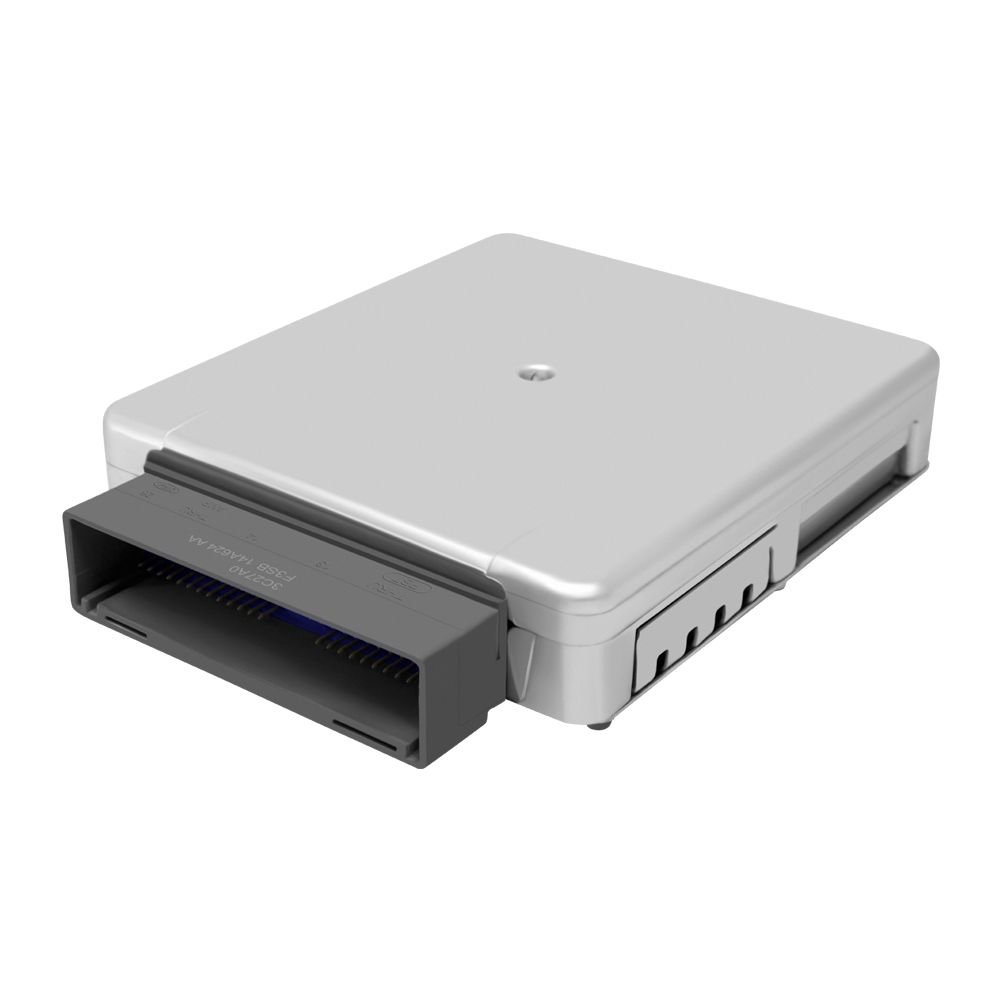
Flagship One stocks a refurbished, VIN-programmed PCM for the 1997 Ford Probe with a lifetime warranty, free shipping and no core charge. The full Ford Probe module lineup covers other engine configurations as well.
Understanding your 1997 Ford Probe powertrain control module helps you recognize failure symptoms before complete breakdown leaves you stranded. With proper static precautions and correct programming, replacement restores the precise engine management this sporty coupe requires. Consider professional diagnosis to confirm the module requires replacement rather than peripheral sensor service. Your 1997 Ford Probe deserves components that match factory specifications for optimal operation.