
Last updated on August 25th, 2026 at 01:39 pm
In the 1996 Ford E‑150 Econoline, the Powertrain Control Module (PCM) and Engine Control Module (ECM) manage fuel delivery, ignition timing and transmission shifting. A failure typically disables communication with the vehicle’s sensors, triggers the malfunction indicator lamp and can prevent the engine from starting or running smoothly.
When a 1996 Ford E‑150 Econoline begins to exhibit no‑start conditions, rough idle, or an illuminated malfunction indicator lamp, the underlying cause often points to the vehicle’s computer modules. The Powertrain Control Module (PCM) and Engine Control Module (ECM) act as the brain for engine and transmission functions, interpreting sensor data and commanding actuators. Understanding how these modules work, what the factory service bulletins recommend, and what labor is involved in removal or replacement helps you decide whether a repair or a refurbished unit is the better route. This guide walks you through the definition, location, required programming steps, typical symptoms, relevant service bulletins, preventive care, and common questions so you can make an informed choice for your van.
The PCM in a 1996 Ford E‑150 Econoline controls fuel injection, ignition timing and transmission shift points, while the ECM focuses on engine‑specific functions such as idle speed and emissions monitoring. Both modules receive input from dozens of sensors and send commands to actuators, ensuring the engine runs efficiently and meets emissions standards. A malfunction can disrupt these signals, causing loss of power, erratic shifting or a complete shutdown. Because the modules share a common mounting location and electrical harness, a fault in one often affects the other, making diagnosis more complex. Proper operation is essential for drivability, fuel economy and compliance with emission regulations. The replacement powertrain control modules for the 1996 Ford E‑150 Econoline must be correctly programmed to match the vehicle’s specifications, or the system may revert to default limp‑mode behavior.
1996 Ford E‑150 Econoline
OEM programmed replacements — plug & play, no dealer visit.
Find yours by year, make & model →
Free shipping · Lifetime warranty
Both the PCM and ECM are mounted together in the engine compartment on the passenger side, secured with bolts that typically require about 0.9 hours of labor to remove and replace according to the book times. Access involves disconnecting the battery, removing the protective cover, and unplugging the main harnesses before the module can be unbolted. Reinstallation follows the reverse order, with careful attention to torque specifications if noted in the service manual. After the unit is seated, the electrical connectors are reconnected and the battery is reattached, completing the physical portion of the job within the allotted labor time.
Work with the ignition off, and treat the module as static-sensitive: avoid touching the connector pins at any point.
| Operation | Configuration | Book Time |
|---|---|---|
| Powertrain Control Module R&R | E-150 Econoline | 0.9 hr |
| Powertrain Control Module R&R | E-150 Econoline Club Wagon | 0.9 hr |
| Powertrain Control Module Relearn | E-150 Econoline | 0.5 hr |
| Powertrain Control Module Relearn | E-150 Econoline Club Wagon | 0.5 hr |
| Engine Control Module Relearn | E-150 Econoline | 0.5 hr |
| Engine Control Module Relearn | E-150 Econoline Club Wagon | 0.5 hr |
| Engine Control Module R&R | E-150 Econoline | 0.9 hr |
| Engine Control Module R&R | E-150 Econoline Club Wagon | 0.9 hr |
Once the module is physically installed, the factory procedure calls for a series of relearn steps to synchronize the new unit with the vehicle’s existing sensors and transmission control logic. The PCM and ECM each require a 0.5‑hour relearn operation, which includes crank‑cycle and idle relearn cycles performed with a scan tool. Flagship One supplies a a VIN‑programmed replacement unit that arrives already calibrated to the vehicle’s specifications, so these relearn steps are completed at the factory and do not need to be repeated in the shop, saving time and reducing the chance of programming errors.
Typical signs of a failing PCM or ECM in a 1996 Ford E‑150 Econoline include a complete no‑start condition, intermittent stalling, rough idle, unexpected transmission shifts, and the illumination of the malfunction indicator lamp. Diagnostic trouble codes such as Powertrain Control Module Communication Error often appear, indicating that the control module is not communicating correctly with the vehicle’s network. Drivers may also notice loss of power during acceleration or erratic engine revs, all of which point to a loss of proper module function.
Bulletin 97-09-08 outlines the service procedures for reprogramming the PCM, while 97-02-06 addresses the need for PCM reprogramming on vehicles equipped with 2.0L or 4.9L engines that exhibit MIL illumination. Bulletin 96-15-13 lists affected calibrations and directs reprogramming or replacement when code P0420 and related emissions codes are set, noting that there are no driveability concerns once the PCM is correctly calibrated.
| Bulletin | Subject | What It Addresses |
|---|---|---|
| 97-09-08 | POWERTRAIN CONTROL MODULE – REPROGRAM POWERTRAIN CONTROL MODULE (PCM) – SERVICE PROCEDURES – SE | — |
| 97-02-06 | GASEOUS FUEL PREP (GFP) VEHICLES – LAMP – MALFUNCTION INDICATOR LAMP (MIL) ILLUMINATED – POWERT | — |
| 96-15-13 | AFFECTED CALIBRATIONS: 6-54K-R06, 6-54E-R10, 6-54J-R11, 6-54M-R11, 6-53F-R10, 6-53E-R10, 6-53G- | — |
Physical removal can be done with basic hand tools, but the factory requires a relearn procedure that typically uses a scan tool. A VIN‑programmed replacement eliminates this need.
There is no specific mileage threshold; replacement is usually driven by symptoms such as MIL illumination, stalling, or communication errors.
The modules are separate but share the same location. If only one shows fault codes, you can replace that unit alone, provided the other is functioning correctly.
Factory labor guides list the relearn as a separate 0.5‑hour task for each module. Using a pre‑programmed unit removes this step.
A properly calibrated refurbished unit meets the same emissions standards as a new part, as long as it is programmed to the correct calibrations.
When the PCM or ECM in your 1996 Ford E‑150 Econoline fails, you can choose a repair that involves reprogramming a used unit or install a refurbished, VIN‑programmed replacement from Flagship One. Both options restore functionality, but the pre‑programmed unit removes the need for on‑site coding and reduces shop time, giving you a quicker return to the road.
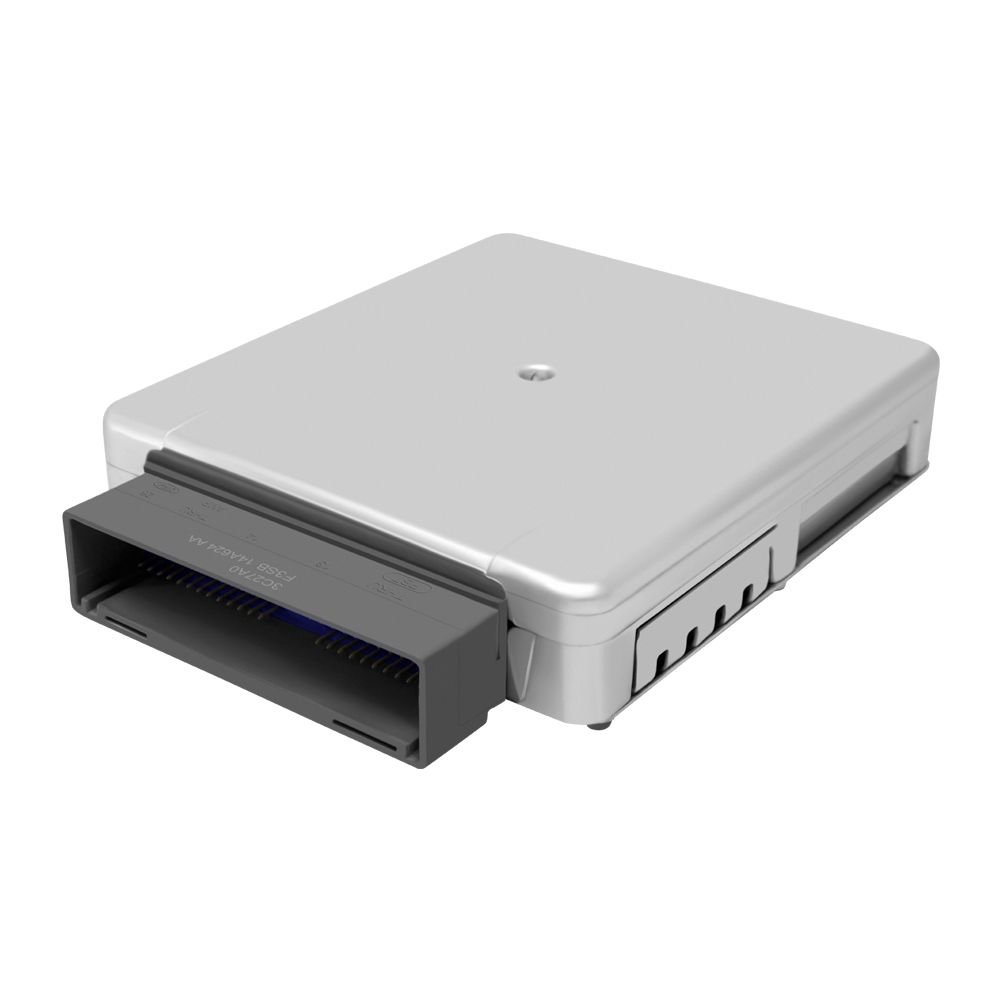
Flagship One stocks a refurbished, VIN-programmed PCM for the 1996 Ford Van (E-Series) with a lifetime warranty, free shipping and no core charge. The full Ford Van (E-Series) module lineup covers other engine configurations as well.
Whether you opt for a repair or a refurbished replacement, addressing PCM or ECM issues on your 1996 Ford E‑150 Econoline promptly helps maintain performance and reliability. Consider a VIN‑programmed unit to simplify the process and get back behind the wheel sooner.