
Last updated on August 25th, 2026 at 12:17 pm
In the 1995 Chrysler LHS the Powertrain Control Module (PCM) and Engine Control Module (ECM) manage engine timing, fuel delivery, and emissions functions. When either unit is replaced or reprogrammed, the vehicle must perform a relearn sequence to synchronize sensor data and operational parameters; failure to do so can result in no‑start conditions or erratic alarm behavior.
When a 1995 Chrysler LHS experiences a no‑start condition or an unexpected theft‑alarm activation, the root cause often lies in the powertrain or engine control modules. These electronic brains require precise synchronization with the vehicle’s sensors after any removal or replacement. Understanding the relearn steps, the physical location of the modules, and the factory service bulletins that reference these issues can help you resolve the problem efficiently. This guide walks you through what the modules do, where they sit, what the factory procedure expects, and how a Flagship One replacement can simplify the process, giving you confidence that the vehicle will return to normal operation.
The Powertrain Control Module in the 1995 Chrysler LHS interprets data from the throttle position, crankshaft sensor, and emissions system to control fuel injection and transmission shift timing. It also communicates with the Engine Control Module, which oversees ignition timing and idle speed. Together they ensure the engine runs smoothly and meets emissions standards. A failure in either unit may cause the engine to refuse to start, stall unexpectedly, or trigger the anti‑theft alarm. Proper synchronization after a swap is essential because the modules store learned values that match the vehicle’s specific hardware. This is why the factory recommends a dedicated relearn process for both PCM and ECM, and why replacement powertrain control modules for the 1995 Chrysler LHS are calibrated to the vehicle’s parameters before installation.
1995 Chrysler LHS
OEM programmed ECM for your 1995 Chrysler LHS — plug & play, no dealer visit.
Free shipping · Lifetime warranty
The control module is positioned next to the air cleaner assembly, a location the factory removal procedure specifically references. Access involves opening the engine compartment, locating the air cleaner housing, and then reaching the module mounted adjacent to it. The labor guide lists the removal and replacement of the PCM or ECM at half an hour each, while resetting the ECM requires roughly three‑tenths of an hour. No torque specifications are provided, so the focus is on careful disconnection of the wiring harnesses and secure mounting of the new unit.
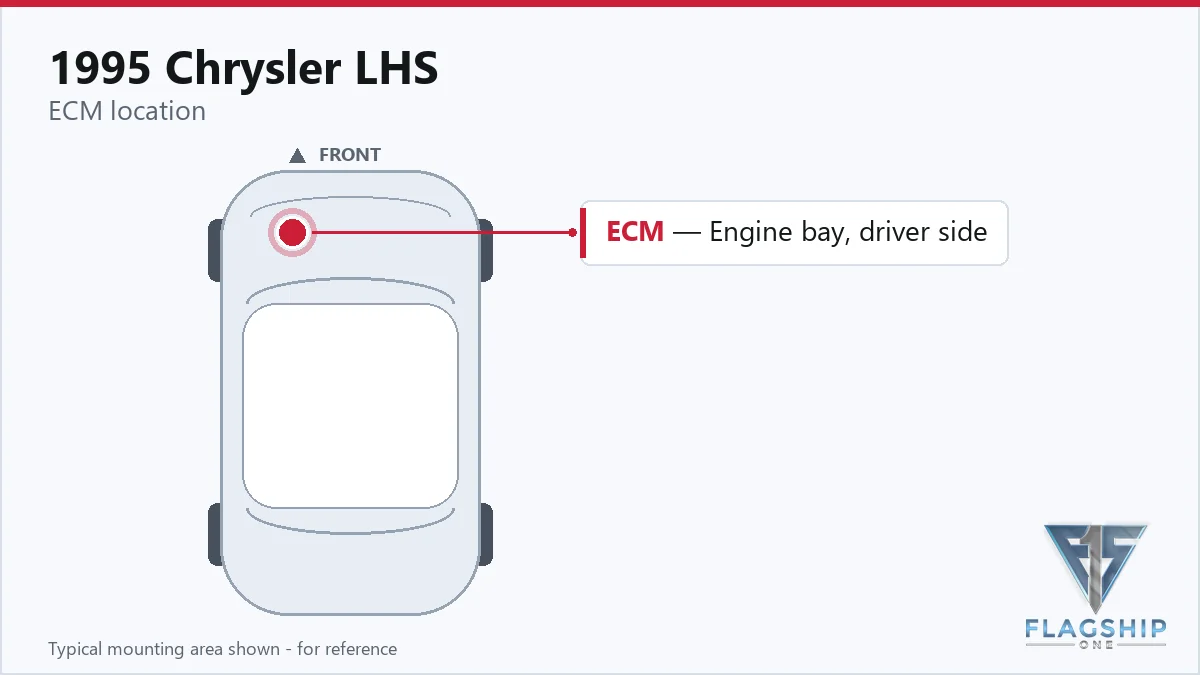
Work with the ignition off, and treat the module as static-sensitive: avoid touching the connector pins at any point.
| Operation | Configuration | Book Time |
|---|---|---|
| Powertrain Control Module Relearn | All configurations | 0.5 hr |
| Powertrain Control Module R&R | All configurations | 0.5 hr |
| Engine Control Module Relearn | All configurations | 0.5 hr |
| Engine Control Module Reset | All configurations | 0.3 hr |
| Engine Control Module R&R | All configurations | 0.5 hr |
After installing a new unit in the 1995 Chrysler LHS, the factory service manual calls for a relearn sequence that includes a Powertrain Control Module Relearn, a Powertrain Control Module R&R, an Engine Control Module Relearn, an Engine Control Module Reset, and an Engine Control Module R&R. Each of these steps is timed at either 0.5 hours or 0.3 hours according to the book. A Flagship One replacement arrives as a VIN‑programmed replacement unit, meaning the necessary calibration data is already embedded, and the post‑install relearn steps are effectively completed at the factory, saving you the extra programming time.
Typical signs that the PCM or ECM needs attention in a 1995 Chrysler LHS include a complete lack of engine cranking, intermittent stalling while driving, erratic idle speed, and occasional false theft‑alarm activations. You may also notice that the vehicle fails to communicate with a scan tool, suggesting a loss of module power or data line integrity. These symptoms often appear after a module swap or after exposure to voltage spikes, and they usually resolve once the proper relearn procedure is performed.
Bulletin #08-02-95 warns that swapping the PCM or BCM can prevent the vehicle from starting or cause improper theft‑alarm actuation. Bulletin #18-32-98, later superseded by #18-037-05, describes a flash programming failure recovery method using the DRBIII® tool. Both bulletins highlight the importance of following the prescribed relearn steps after any module replacement.
| Bulletin | Subject | What It Addresses |
|---|---|---|
| 08-02-95 | 08-02-95 NO Start or Improper Theft Alarm Actuation Due to PCM/BCM Swapping | — |
| 18-32-98 | 18-32-98 Superseded By :18-037-05(Flash Programming Failure Recovery Using DRBIII®) | — |
Yes, you can physically replace the PCM, but the factory requires a relearn sequence after installation. A VIN‑programmed replacement from Flagship One includes the necessary data, reducing the need for a scan tool.
Improper synchronization of the new PCM with the vehicle’s anti‑theft system can trigger false alarms. Performing the recommended relearn steps resolves the issue.
The factory procedure includes an Engine Control Module Reset, which is a short, timed step. A VIN‑programmed replacement already contains the calibrated data, so the reset is effectively handled.
The labor guide lists about half an hour for removal and replacement of each module, with an additional three‑tenths of an hour for an ECM reset.
The module sits beside the air cleaner, but careful removal of the housing and proper handling of the wiring should prevent any damage.
When the PCM or ECM in your 1995 Chrysler LHS needs attention, you can choose a brand‑new factory‑programmed unit or a refurbished replacement that meets the same specifications. Both options require the same physical removal steps, but a Flagship One unit arrives pre‑loaded with the correct VIN data, so the post‑install relearn is already satisfied. Evaluate your budget and timeline to decide which path best fits your repair plan.
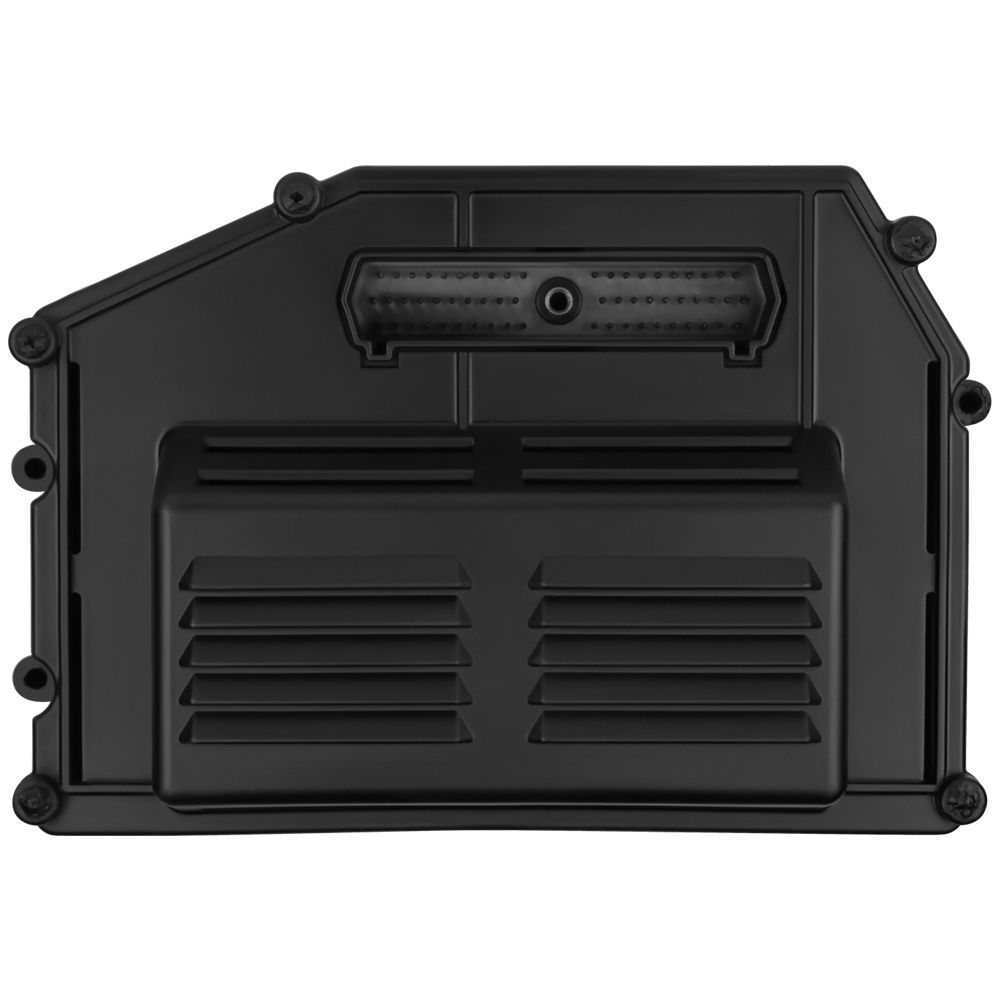
Flagship One stocks a refurbished, VIN-programmed PCM for the 1995 Chrysler LHS with a lifetime warranty, free shipping and no core charge. The full Chrysler LHS module lineup covers other engine configurations as well.
The 1995 Chrysler LHS relies on its PCM and ECM to manage engine performance and security functions. By following the factory relearn procedures—or opting for a Flagship One VIN‑programmed unit—you can restore reliable operation and avoid recurring no‑start or alarm issues. Consider the options and choose the solution that aligns with your vehicle’s needs.