
Last updated on August 25th, 2026 at 12:07 pm
The engine control module in the 1994 Saab 900 manages fuel delivery and ignition timing for optimal performance. When this unit malfunctions, it may cause difficult starting, unexpected stalling, or poor fuel economy, requiring replacement to restore proper vehicle operation.
Encountering performance issues with a classic import can be incredibly frustrating, especially when the culprit is an elusive engine management fault. In the 1994 Saab 900, the engine control module acts as the central brain, dictating how the ignition and fuel systems operate together. When this component begins to degrade, your vehicle may exhibit a range of drivability problems that transform a smooth commute into an unpredictable experience. Understanding the role of this module helps demystify those sudden symptoms, whether you face an intermittent rough idle or a complete refusal to start. Exploring how this computer functions within your specific vehicle reveals why its failure disrupts overall performance. You will gain clarity on where the unit resides, what signs typically indicate a malfunction, and what the replacement process entails. By learning about the specific quirks of your Swedish import’s electronic controls, you can make informed decisions about diagnosing the fault and sourcing the correct replacement part to get back on the road confidently and safely.
1994 Saab 900
OEM programmed ECM for your 1994 Saab 900 — plug & play, no dealer visit.
Free shipping · Lifetime warranty
The engine control module in your 1994 Saab 900 serves as the critical processing center that coordinates various sensors and actuators to maintain optimal combustion. By constantly reading data from intake airflow and temperature sensors, the computer adjusts injector pulse width and ignition timing to suit varying driving conditions. This precise calibration ensures your vehicle delivers the expected balance of power and efficiency during daily operation. When this unit operates flawlessly, you enjoy smooth acceleration and steady idling. However, when internal circuitry degrades or suffers from electrical stress, the system loses its ability to regulate these parameters accurately. Such a malfunction can lead to excessively rich or lean fuel mixtures, potentially causing engine hesitation or even catastrophic catalytic converter damage over time. Choosing 1994 Saab 900 engine computers ensures you regain this crucial regulatory function without compromising factory specifications. Because this vintage model predates standardized onboard diagnostics, the module relies on dedicated proprietary protocols to manage the engine. This means a faulty unit cannot simply adapt to changing conditions, making a direct replacement essential for restoring the intended drivability and protecting the longevity of your classic import’s powertrain. The integration of these computing capabilities represents a major leap in automotive engineering for its era, allowing precise fuel mapping that older carbureted setups could never achieve.
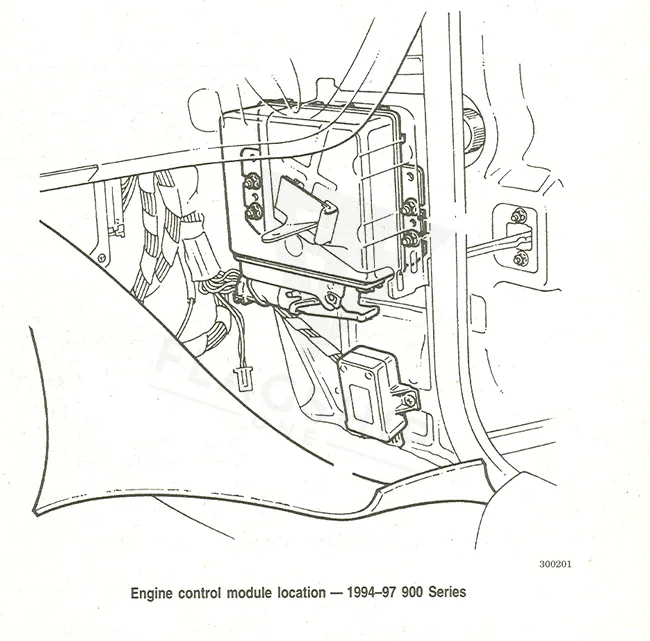
According to the factory removal process, you must access the engine computer situated past the glove compartment and adjacent to the kick panel. This means carefully removing or repositioning the interior trim pieces surrounding the passenger footwell area to expose the unit. Once the glove box assembly is moved aside, you can reach the mounting hardware securing the computer. The electrical connections typically feature locking tabs that require careful disengagement to prevent damaging the plastic connectors, which can become brittle with age. Installation follows the reverse order, ensuring all mounting points are secure and the wiring harnesses seat fully into their respective ports. While the specific labor times are not documented here, allocating sufficient time to carefully maneuver the interior panels will help avoid breaking aging plastic clips. Always disconnect the battery before starting this work to prevent electrical shorts that could damage the new unit or other sensitive electronic components within your vehicle.
Work with the ignition off, and treat the module as static-sensitive: avoid touching the connector pins at any point.
Replacing the engine computer on older imports often introduces the challenge of proprietary programming procedures. The factory procedure for the 1994 Saab 900 typically requires the new module to be initialized with the vehicle identification number and specific immobilizer data before the engine will start. This initialization process usually necessitates specialized dealership diagnostic equipment that communicates directly with the onboard electronics. Without performing these programming steps, the security system may prevent the engine from cranking, leaving the vehicle immobilized. However, acquiring a VIN-programmed replacement unit eliminates the need for this complex dealership visit entirely. Flagship One pre-programs each module with your vehicle’s specific data before shipping, meaning the computer arrives ready for immediate installation. Once you connect the replacement and turn the key, the engine management system recognizes the correct parameters and operates exactly as intended. This streamlined approach saves considerable time and eliminates the frustration of navigating complicated electronic security protocols, allowing you to restore your vehicle to operational status efficiently.
When the engine computer in your 1994 Saab 900 begins to fail, several distinct drivability symptoms often emerge. One of the most common indicators is an intermittent no-start condition, where the engine cranks persistently but fails to ignite the fuel mixture. You might also experience unexpected stalling while idling at a traffic light or cruising at highway speeds, creating hazardous driving situations. Since this vehicle predates standardized diagnostics, you will not see typical alphanumeric trouble codes on a modern scanner, but you may encounter complete dead scan-tool communication when attempting to pull proprietary fault data from the diagnostic port. Misfires represent another frequent symptom, causing the engine to run roughly or hesitate during acceleration as the computer fails to coordinate the ignition timing properly. In some cases, the module might cause erratic shifting patterns in automatic transmission variants because it governs the electronic shift parameters alongside the transmission controller. You could also notice a significant decrease in fuel economy, as a malfunctioning unit may command an excessively rich fuel mixture to protect the engine from perceived lean conditions. Ignoring these warning signs can lead to secondary damage, such as fouled spark plugs or a ruined catalytic converter, making early diagnosis and module replacement essential for preserving your vehicle’s reliability and your daily driving safety.
According to the factory removal process, you must access the engine computer situated past the glove compartment and adjacent to the kick panel. You must carefully maneuver around these interior components to unbolt and extract the unit from its mounting location.
The factory procedure normally requires initializing the new module with the vehicle identification number to bypass security protocols. However, a pre-programmed unit from Flagship One arrives ready to install, completely skipping this dealership step.
Module failure often leads to an intermittent no-start condition, unexpected stalling, or rough running due to misfires. The engine may also run excessively rich, causing poor fuel economy and potential catalytic converter damage over time.
This vehicle predates the OBD-II standard, so you cannot retrieve universal alphanumeric codes using a standard modern scanner. You may only experience dead scan-tool communication or need specialized proprietary equipment to access manufacturer-specific diagnostics.
Because the module governs electronic shift parameters, a malfunction can cause erratic shifting patterns or hesitation during gear changes. Replacing the defective unit restores proper communication and smooths out the shifting behavior.
When facing a failing computer in your 1994 Saab 900, deciding between attempting a repair or opting for a refurbished replacement depends on the severity of the internal damage. While some minor solder joint issues might be repairable, a fully refurbished replacement guarantees all underlying faults are addressed. Selecting a unit programmed to your specific vehicle simplifies the installation process and immediately resolves drivability concerns without the uncertainty of fixing aged electronics.
Flagship One stocks a refurbished, VIN-programmed ECM for the 1994 Saab 900 with a lifetime warranty, free shipping and no core charge. The full Saab 900 module lineup covers other engine configurations as well.
Addressing engine management issues in the 1994 Saab 900 promptly ensures your vehicle remains reliable and avoids secondary catalytic damage. Understanding the module location, common failure symptoms, and programming requirements equips you to handle this repair confidently. When you are ready to restore your classic import, consider exploring a pre-programmed replacement unit to simplify the installation and get your car back on the road quickly.