
Last updated on August 25th, 2026 at 12:24 pm
The powertrain control module in your 1994 Voyager is the central computer managing the 2.5L engine and automatic transmission. It processes sensor inputs and controls fuel delivery, ignition timing, and shift points. Heat, moisture, and electrical stress often cause these units to fail.
Facing a no-start condition or intermittent stalling on your 1994 Plymouth Voyager can point to the powertrain control module. This unit serves as the brain of your 2.5L engine and automatic transmission, orchestrating fuel delivery, ignition timing, and shift logic. Because the module is mounted underhood, it endures heat cycles and vibration that shorten service life. This guide explains what the PCM does, where it lives, how replacement works, and what programming steps follow installation. You’ll learn the factory procedure and why Flagship One units arrive VIN-programmed to sidestep those steps.
The powertrain control module in your 1994 Plymouth Voyager is the central computer that manages both engine and transmission functions. It reads signals from sensors throughout the 2.5L powertrain and adjusts fuel injection, ignition timing, and shift points in real time. Without a functioning PCM, the engine cannot start or run properly, and the automatic transmission may default to limp mode. These units often fail due to prolonged heat exposure, moisture intrusion at connectors, or voltage spikes from jump-starting. When the module fails, you typically see starting problems, rough idle, or transmission engagement issues. Replacement requires sourcing a replacement engine computers for the Voyager that matches your vehicle’s specific configuration.
1994 Plymouth Voyager
OEM programmed ECM for your 1994 Plymouth Voyager — plug & play, no dealer visit.
Free shipping · Lifetime warranty
The powertrain control module on the 1994 Voyager is located underhood on the driver’s side inner fender panel. Access requires removing the module from its mounting bracket, disconnecting the electrical harness, and transferring any mounting hardware to the replacement unit. The labor guide allocates 0.5 hours for the removal and installation procedure. After securing the new module, reconnect the harness and verify mounting integrity. The replacement process involves basic hand tools and careful connector handling to avoid pin damage.
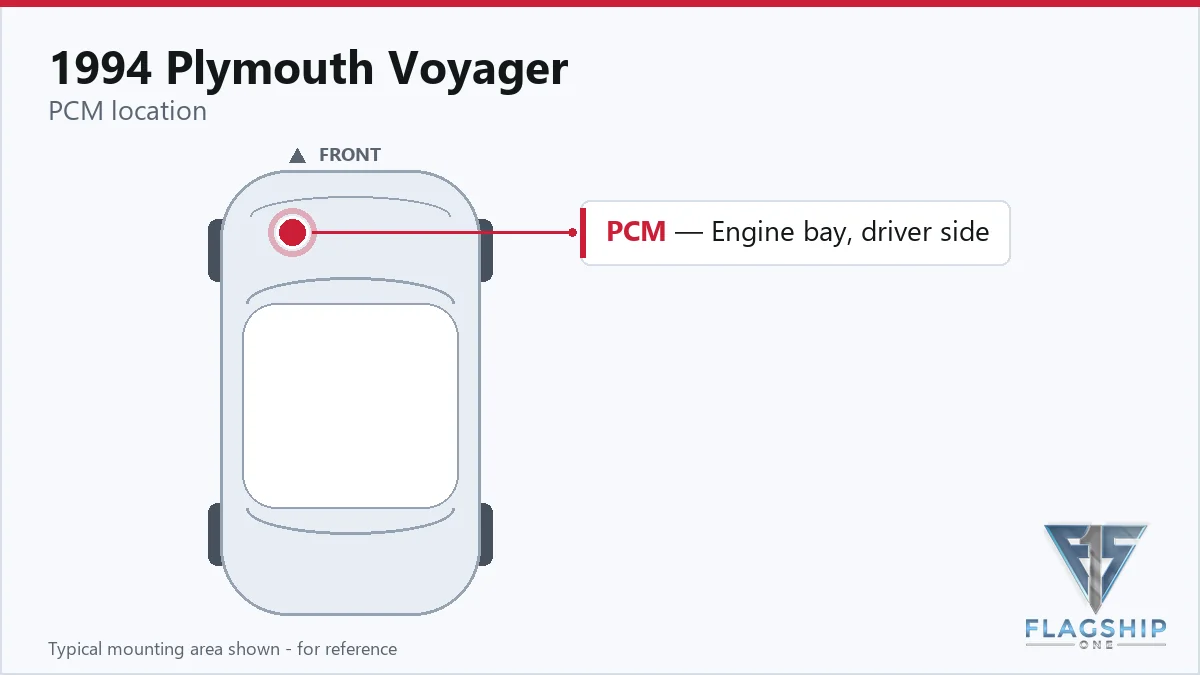
Work with the ignition off, and treat the module as static-sensitive: avoid touching the connector pins at any point.
| Operation | Configuration | Book Time |
|---|---|---|
| Engine Control Module Relearn | Grand Voyager | 0.5 hr |
| Engine Control Module Relearn | Voyager | 0.5 hr |
| Engine Control Module R&R | Grand Voyager | 0.5 hr |
| Engine Control Module R&R | Voyager | 0.5 hr |
| Powertrain Control Module R&R | Grand Voyager | 0.5 hr |
| Powertrain Control Module R&R | Voyager | 0.5 hr |
| Powertrain Control Module Relearn | Grand Voyager | 0.5 hr |
| Powertrain Control Module Relearn | Voyager | 0.5 hr |
After installing a new PCM on your 1994 Plymouth Voyager, the factory procedure requires a relearn cycle to calibrate the module to your specific engine and transmission. This 0.5-hour procedure establishes proper fuel trim and shift adaptions for the 2.5L powertrain. The relearn typically involves running the engine through specific operating conditions while the diagnostic tool monitors sensor data. Flagship One units arrive VIN-programmed, meaning those factory programming steps are already completed before the module ships. Your replacement arrives ready to install and start without additional dealer flashing.
Every VIN-programmed replacement unit from Flagship One arrives with these steps already completed.
When the powertrain control module fails on a 1994 Plymouth Voyager, the vehicle may crank but refuse to start, or it might start and then stall unexpectedly. Many owners report a no-start condition with the engine cranking normally, indicating the module has stopped commanding fuel or spark. Transmission shifting may become harsh or the unit may default to second gear only. Diagnostic scan tools often cannot communicate with a failed PCM, which itself is a strong indicator of module death. Check engine or transmission fault codes may be set, but some internal failures produce no codes at all. Misfire codes can appear if the module stops properly timing the ignition events.
Factory service bulletin #18-037-05 addresses flash programming failure recovery using the DRBIII diagnostic tool. This bulletin provides guidance for technicians when a PCM programming session is interrupted or fails to complete. The procedure outlines steps to recover the module and successfully complete the flash programming process. For DIYers ordering a pre-programmed replacement from Flagship One, this bulletin’s procedures are already handled before the unit arrives.
| Bulletin | Subject | What It Addresses |
|---|---|---|
| 18-037-05 | 18-037-05 Flash Programming Failure Recovery Using DRBIII® | — |
Parts for this model vary in price depending on whether you choose a new or refurbished unit. Labor costs depend on local shop rates, with the R&R procedure listed at 0.5 hours plus 0.5 hours for relearn if programming is needed.
The factory requires a relearn procedure after replacement to calibrate fuel delivery and shift points. Flagship One units ship pre-programmed with your specific VIN, so the dealer relearn step is not required.
Yes, a weak or failing module can lose control of fuel delivery or ignition timing while underway, causing the engine to stall. This often happens more frequently as the module heats up during operation.
Repairing the powertrain control module on your 1994 Plymouth Voyager requires deciding between a new unit or a refurbished replacement. Both options carry the same functional specifications for the 2.5L engine and automatic transmission. Consider your budget, vehicle value, and how soon you need the vehicle back on the road. Flagship One offers VIN-programmed units that eliminate the dealer programming step, saving you time and potential programming fees.
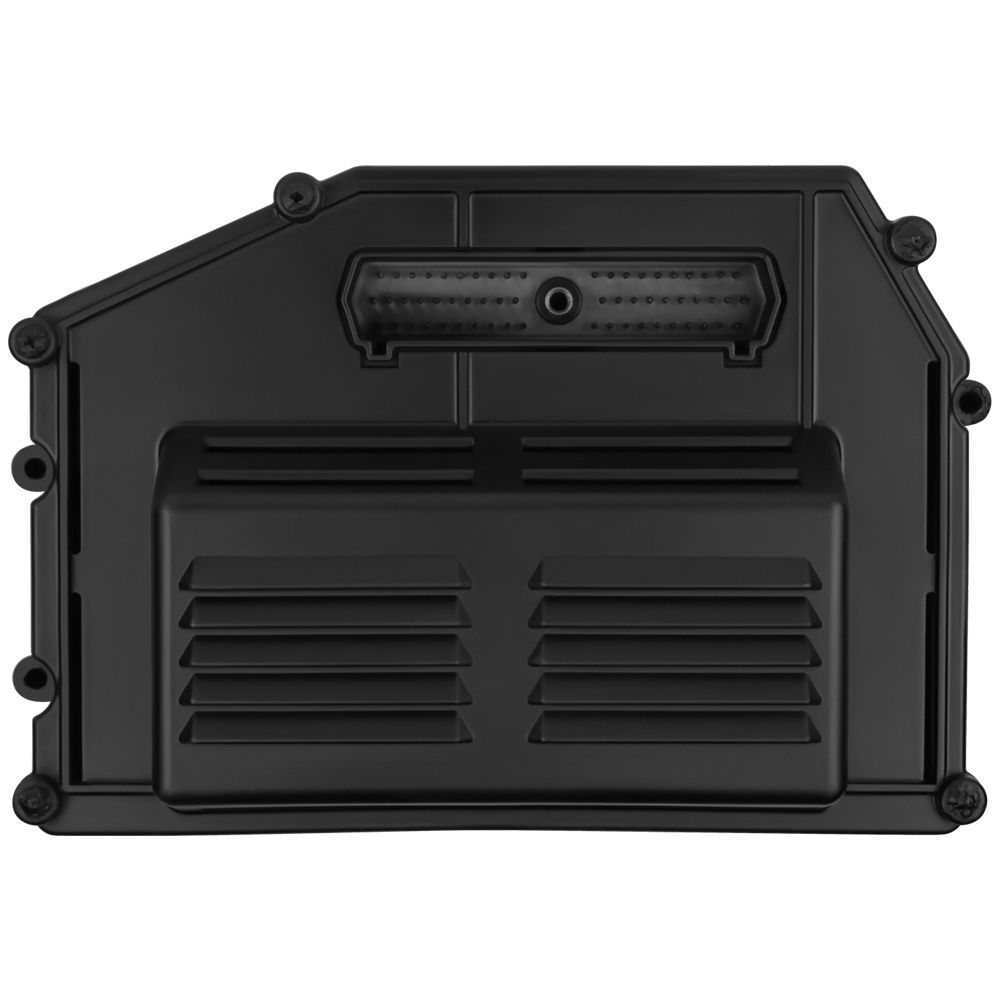
Flagship One stocks a refurbished, VIN-programmed PCM for the 1994 Plymouth Voyager with a lifetime warranty, free shipping and no core charge. The full Plymouth Voyager module lineup covers other engine configurations as well.
The 1994 Plymouth Voyager relies on its powertrain control module to manage the 2.5L engine and transmission as a unified system. When symptoms appear, prompt diagnosis prevents further drivability issues. Whether you repair or replace, a properly programmed unit restores reliable operation. Consider your specific needs and choose the path that fits your situation.