
Last updated on August 25th, 2026 at 12:14 pm
The powertrain control module in your 1994 Jeep Grand Cherokee manages fuel delivery, ignition timing, and emissions functions for the 4.0L inline-six. Formerly called the SBEC, this unit sits in the right-rear engine compartment. When it fails, you may encounter hard starting, intermittent stalling, or complete no-start conditions that mimic other ignition or fuel system faults.
When your 1994 Jeep Grand Cherokee begins exhibiting starting difficulties, unexpected stalling, or erratic engine behavior, the powertrain control module is one of several components that warrants inspection. This vehicle predates the OBD-II standard, which means diagnosis relies on manufacturer-specific procedures rather than the universal diagnostic trouble codes most modern shops rely on. Understanding what the PCM does, where it lives in your vehicle, and what happens during replacement helps you make informed decisions whether you are tackling the job yourself or working with a technician. The 4.0L inline-six engine in this Cherokee depends on the PCM to coordinate fuel injection, ignition timing, and idle control. Because the module was originally known as the SBEC, or single-board engine controller, you may encounter that terminology in older service literature. The information below walks through module function, physical location, labor expectations, and the programming steps that follow installation so you can approach the repair with realistic expectations about what the process involves and what outcomes you can anticipate.
The powertrain control module in your 1994 Jeep Grand Cherokee serves as the central electronic brain for the 4.0L engine management system. It continuously processes input signals from sensors monitoring coolant temperature, throttle position, manifold absolute pressure, crankshaft position, and oxygen content in the exhaust stream. Using those inputs, the PCM calculates and commands fuel injector pulse width, ignition advance, idle air control motor position, and alternator field regulation. Because this vehicle uses the older SBEC architecture, or single-board engine controller, the module integrates engine management functions into a single board rather than splitting them across separate controllers as some later vehicles do. The PCM also adapts to ambient barometric pressure during engine start-up while cranking, and adjusts to engine load while the engine is running. This barometric and load compensation allows the 4.0L to maintain reasonable drivability across elevation changes and varying operating conditions. When the module degrades internally, it may lose the ability to process those sensor signals correctly, leading to rich or lean fuel mixtures, retarded timing, or unstable idle. Circuit board failures often develop from thermal stress, voltage spikes, or moisture intrusion over years of service. Because the unit contains no user-serviceable internal components, a failed module typically requires Grand Cherokee replacement computers rather than board-level component repair. The 60-way electrical connector that links the PCM to the vehicle wiring harness is another common source of intermittent problems, as corroded or loose terminals can mimic module failure with similar symptoms and should be inspected thoroughly before condemning the unit.
1994 Jeep Grand Cherokee 4.0L
OEM programmed ECM for your 1994 Jeep Grand Cherokee 4.0L — plug & play, no dealer visit.
Free shipping · Lifetime warranty
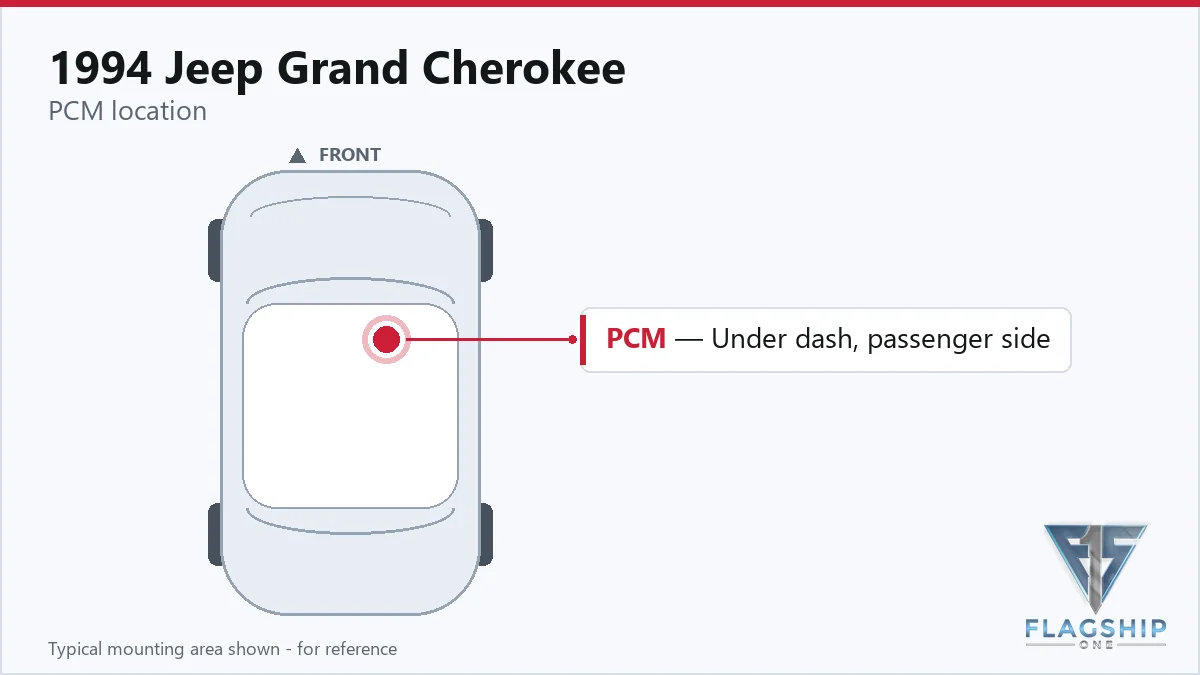
In the 1994 Jeep Grand Cherokee, the PCM is positioned in the right-rear area of the engine compartment. To access the module, you will need to disconnect the 60-way electrical connector, which interfaces with the vehicle wiring harness. During diagnostic checks, three male terminals on that connector should display battery voltage when measured with a multimeter, confirming that power and ground feeds to the module are intact. The factory book time for powertrain control module removal and replacement is 0.7 hours. If the replacement involves an engine control module relearn procedure, plan for an additional 0.5 hours of labor time. The engine control module removal and replacement also carries a 0.7-hour book time. These published times reflect straightforward access and assume no seized fasteners or corroded connectors that could extend the job. Always verify terminal voltage at the connector before condemning the module, as wiring and connector issues can produce symptoms identical to an internal PCM failure.
| Operation | Configuration | Book Time |
|---|---|---|
| Powertrain Control Module R&R | All configurations | 0.7 hr |
| Engine Control Module Relearn | All configurations | 0.5 hr |
| Engine Control Module R&R | All configurations | 0.7 hr |
After a new or remanufactured PCM is installed in your 1994 Jeep Grand Cherokee, the factory procedure calls for an engine control module relearn to calibrate the replacement unit to your specific engine and its sensor outputs. This relearn process typically requires the DRBIII scan tool, which is Chrysler’s dedicated diagnostic equipment for vehicles of this era. The relearn procedure allows the PCM to establish baseline idle parameters, fuel trim values, and adaptation data for the 4.0L engine. Service bulletin 18-037-05 addresses flash programming failure recovery using the DRBIII, which is relevant if the programming step encounters errors during the write process. Without completing the relearn, your vehicle may exhibit rough idle, poor fuel economy, or drivability quirks as the module operates on default rather than learned values. When you purchase a VIN-programmed replacement unit from Flagship One, the module arrives already flashed and configured for your vehicle identification number, which means the relearn and flash programming steps are completed before shipment and do not need to be repeated after installation.
A failing PCM in the 1994 Jeep Grand Cherokee can produce a wide range of symptoms that often overlap with other engine system faults, making diagnosis challenging without methodical testing. One of the most common indicators is a no-start condition where the engine cranks but does not fire, or fires briefly and immediately stalls. You may also experience intermittent stalling while driving, particularly when coming to a stop or during deceleration, as the module struggles to maintain proper idle control. Hard starting when the engine is cold or after sitting for several hours is another frequent complaint, often accompanied by extended cranking times before the engine catches. Because the PCM governs ignition timing and fuel delivery, a degraded module may cause engine misfire, hesitation during acceleration, or a noticeable loss of power under load. Fuel economy may decline if the module defaults to rich mixture settings as a protective measure. Some vehicles exhibit erratic idle behavior, with the rpm surging or dropping unpredictably at stoplights or during parking maneuvers. Dead scan-tool communication is a strong indicator of module failure, though it can also result from blown fuses or damaged wiring between the connector and the fuse block. On this pre-OBD-II vehicle, you will not find universal P-codes stored in the module; instead, diagnostic information is accessed through the DRBIII or by cycling the ignition key to retrieve two-digit flash codes from the check engine lamp. Transmission shifting irregularities may also surface if the PCM manages torque converter lockup, though the 4.0L typically uses a separate transmission controller for most shift functions.
Chrysler issued service bulletin 18-037-05 to address flash programming failure recovery using the DRBIII scan tool. This bulletin is directly relevant when a PCM replacement or reprogramming attempt on your 1994 Jeep Grand Cherokee does not complete successfully. Flash programming failures can occur due to communication interruptions, low battery voltage during the write process, or tool-side errors. The bulletin outlines the recovery procedure to bring the module back to a functional state after a failed flash, potentially avoiding the need for a second replacement unit. If your technician encounters a programming error during PCM installation, referencing this bulletin ensures they follow the manufacturer’s approved recovery path rather than attempting an undocumented workaround. Following the bulletin procedure typically restores the module to a condition where the relearn and adaptation steps can proceed normally.
| Bulletin | Subject | What It Addresses |
|---|---|---|
| 18-037-05 | 18-037-05 Flash Programming Failure Recovery Using DRBIII® | — |
The powertrain control module is mounted in the right-rear area of the engine compartment. You access it by disconnecting the 60-way electrical connector that links the module to the vehicle wiring harness. The connector terminals should be inspected for corrosion before condemning the module itself.
The published book time for powertrain control module removal and replacement is 0.7 hours. An engine control module relearn procedure, which is typically needed after installation, requires an additional 0.5 hours. Actual time may vary depending on connector condition and access.
No. The 1994 model year predates the OBD-II mandate, so this vehicle does not use standardized P-codes. Diagnostic information is retrieved using the DRBIII scan tool or through flash code retrieval from the check engine lamp on the instrument panel.
This bulletin outlines the flash programming failure recovery procedure using the DRBIII scan tool. It applies when a PCM programming attempt does not complete successfully, providing a manufacturer-approved method to restore the module to a functional state without necessarily requiring a second replacement.
Installing a used module may require reprogramming and the engine control module relearn procedure to match your vehicle. A used unit also carries the risk of the same age-related failure occurring. A VIN-programmed replacement from Flagship One arrives configured for your specific vehicle, eliminating the need for post-installation programming.
When your 1994 Jeep Grand Cherokee needs a PCM, you have options. A repair facility may attempt to diagnose and reprogram your existing module, but internal board failures are rarely repairable at the component level. A remanufactured or refurbished replacement programmed to your vehicle identification number offers a practical path forward. Flagship One supplies VIN-programmed units for the 4.0L Grand Cherokee, which means the flash programming and relearn steps are completed before the module ships to you.
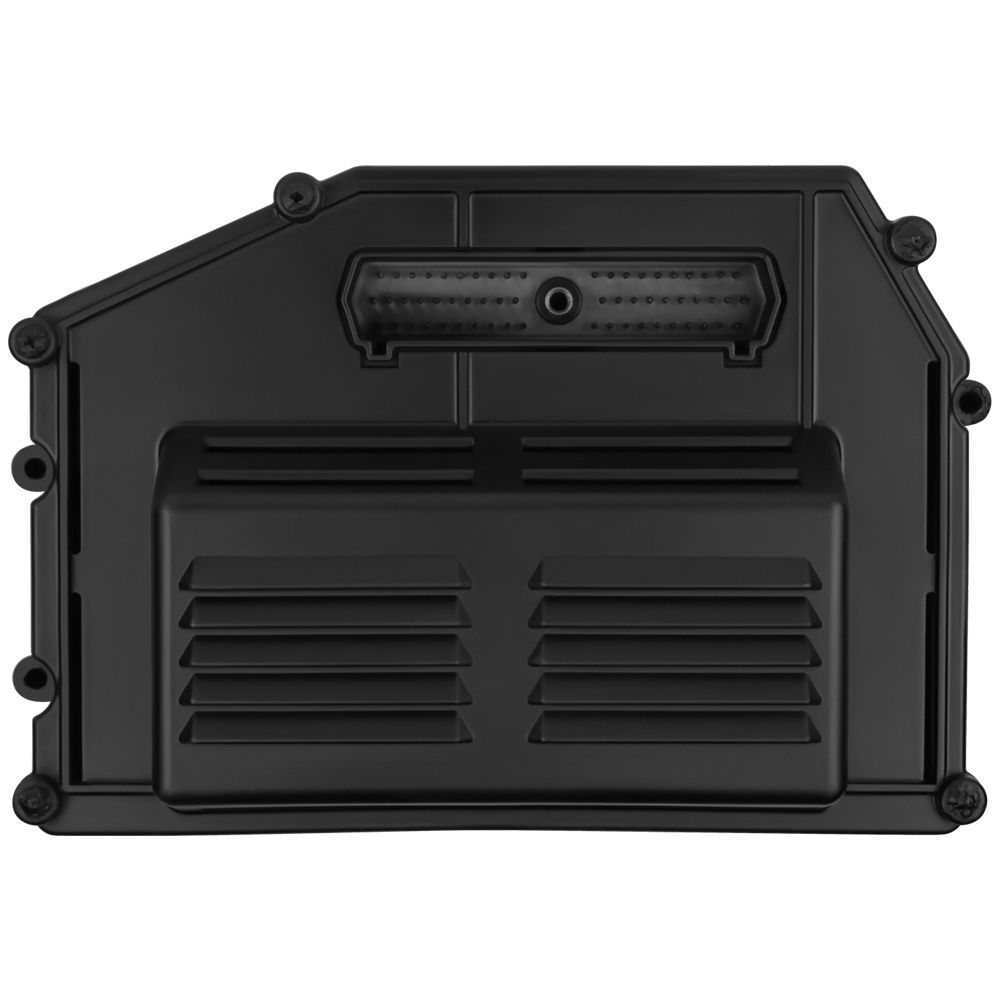
Flagship One stocks a refurbished, VIN-programmed PCM for the 1994 Jeep Grand Cherokee with a lifetime warranty, free shipping and no core charge. The full Jeep Grand Cherokee module lineup covers other engine configurations as well.
Your 1994 Jeep Grand Cherokee relies on a healthy PCM to keep the 4.0L engine running smoothly and efficiently. Understanding the module’s location, replacement labor times, and post-install programming requirements helps you plan the repair with confidence. Whether you work with a technician or handle the swap yourself, a properly programmed replacement from Flagship One can restore reliable engine performance without the added step of dealer flash programming.