
Last updated on August 25th, 2026 at 12:51 pm
The Engine Control Module (ECM) or Powertrain Control Module (PCM) in your 1994 Dodge Shadow is the central computer that manages engine timing, fuel delivery, and transmission shifting. When this unit fails, the vehicle may not run at all or may run poorly due to loss of critical sensor data processing.
If your 1994 Dodge Shadow with the 2.2L engine won’t start, stalls unexpectedly, or runs poorly, the Engine Control Module (also called the Powertrain Control Module or PCM) may be the culprit. This vehicle predates OBD-II systems, meaning diagnostic capabilities are more limited than modern cars, but the ECM still handles all critical engine management functions. Replacing a failed ECM or PCM on this generation of Dodge vehicle involves more than simply swapping the part—you’ll need to address programming to get the engine running properly again. This guide explains what the module does, where it’s located, what replacement involves, and how Flagship One units arrive pre-programmed to save you time. Whether you’re diagnosing a no-start condition or planning ahead, understanding the role of this engine computer helps you make informed decisions about repair versus replacement options.
The Engine Control Module in your 1994 Dodge Shadow serves as the brain of the engine management system. This computer processes inputs from multiple sensors—including the coolant temperature sensor, throttle position sensor, and oxygen sensor—to calculate optimal fuel delivery and ignition timing for the 2.2L four-cylinder engine. Unlike later OBD-II vehicles, this pre-OBD-II system stores fault codes in a proprietary format accessible only through dealer-level diagnostic equipment like the DRBIII scan tool. The module also controls the automatic transmission shifting points, making it essential for driveability beyond just engine operation. When the ECM fails, the engine may not start at all, or it may run poorly with symptoms like rough idle, stalling, or hesitation under acceleration. Because this unit integrates both engine and transmission control, a failure affects the entire drivetrain’s behavior. If you’re searching for replacement engine computers for the Shadow, this module is what those units replace.
1994 Dodge Shadow
OEM programmed ECM for your 1994 Dodge Shadow — plug & play, no dealer visit.
Free shipping · Lifetime warranty
The powertrain control module and its connector are located together in the engine compartment of your 1994 Dodge Shadow. Accessing the unit requires working in the engine bay with proper safety precautions. The book time for ECM R&R (remove and replace) is 0.5 hours, and the subsequent relearn procedure also takes 0.5 hours according to labor guides. Replacement involves disconnecting the battery, removing the mounting bolts, unplugging the connector, and reversing the procedure with the new unit. After installation, the new module must communicate with the vehicle’s sensors before the engine will run properly. Torque specifications for mounting bolts should be referenced from a repair manual for your specific application. Always ensure the connector seals are intact and free of corrosion before plugging in the replacement—if the original connector is damaged, it may need repair or replacement as well to ensure reliable communication.
| Operation | Configuration | Book Time |
|---|---|---|
| Engine Control Module Relearn | All configurations | 0.5 hr |
| Engine Control Module R&R | All configurations | 0.5 hr |
| Powertrain Control Module Relearn | All configurations | 0.5 hr |
| Powertrain Control Module R&R | All configurations | 0.5 hr |
After installing a replacement ECM or PCM in your 1994 Dodge Shadow, the factory procedure requires a relearn process to allow the new module to adapt to your vehicle’s specific sensors and calibration. This relearn step takes 0.5 hours of labor time according to book estimates. The procedure typically involves using dealer diagnostic equipment to initialize the new module and verify communication with all engine and transmission components. However, when you purchase from Flagship One, a VIN-programmed replacement unit arrives already configured to your vehicle’s specific VIN, meaning the relearn procedure is largely pre-completed. You’ll still need to verify basic communication and may need to clear any stored fault codes, but the extensive dealer programming steps are reduced. This pre-programming is the primary advantage of buying a quality replacement unit rather than a generic or unbonded module that would require full dealer programming at additional cost.
A failed ECM or PCM in a 1994 Dodge Shadow typically announces itself through several recognizable symptoms. The most dramatic is a no-start condition—the engine cranks but won’t fire because the module isn’t delivering fuel or spark. Another common symptom is stalling, where the engine runs briefly then dies, often due to the module losing communication with a critical sensor. Misfire codes may appear even though spark plugs and wires are fine, because the module isn’t properly controlling fuel delivery or ignition timing. In some cases, the scan tool simply cannot communicate with the ECM at all—a dead module shows no response on diagnostic equipment. Transmission shifting may also be affected since the PCM controls shift points in automatics, leading to harsh shifts or failure to shift into certain gears. If your Shadow exhibits any combination of these driveability issues, the ECM should be near the top of your diagnostic list. Watch for internal memory fault symptoms if the module has stored internal diagnostic codes indicating processor or memory failures.
Factory service bulletin #18-037-05 addresses Flash Programming Failure Recovery using the DRBIII diagnostic tool. This bulletin covers situations where the ECM programming process fails or becomes interrupted, leaving the module in an unusable state. The procedure outlined in this bulletin allows technicians to recover from programming failures and restore proper module function. While this bulletin doesn’t address the original cause of ECM failures, it demonstrates that programming issues were a known concern with this generation of Dodge vehicles. If you’re replacing a module that failed during or after a programming attempt, ensuring you have a properly programmed unit from the start—as Flagship One provides—eliminates this potential failure mode entirely.
| Bulletin | Subject | What It Addresses |
|---|---|---|
| 18-037-05 | 18-037-05 Flash Programming Failure Recovery Using DRBIII® | — |
No. The ECM must be matched to your vehicle’s specific VIN and engine combination. A unit from a different Shadow or engine variant may have incompatible calibration. Flagship One programs each unit to your exact VIN before shipping.
You can perform the physical replacement yourself if you’re comfortable working in the engine bay. However, the module requires programming to function. Flagship One units arrive VIN-programmed, so you can install and go—but some basic verification with a scan tool is still recommended.
Yes. Intermittent stalling is a classic ECM failure symptom, especially if the engine runs fine for a while then suddenly dies. However, other causes like fuel pump failure, ignition problems, or sensor issues can produce similar symptoms. Diagnostic testing helps confirm the ECM as the root cause.
For the 1994 Dodge Shadow 2.2L, the terms ECM (Engine Control Module) and PCM (Powertrain Control Module) refer to the same physical unit. This integrated module controls both engine functions and automatic transmission shifting.
A professional diagnosis involves checking for ECM communication with a scan tool, verifying power and ground circuits at the connector, and checking for fault codes. If the ECM shows no response and all power/ground connections are good, the module has likely failed.
When your 1994 Dodge Shadow’s ECM or PCM fails, you have two main paths: repair the existing module or replace it with a new or refurbished unit. Repairing involves sending your module out for chip-level service, while replacement gets you a ready-to-install unit faster. Flagship One specializes in providing VIN-programmed replacement engine computers for the 1994 Shadow, eliminating the need for dealer programming appointments. The key advantage is receiving a unit that’s already configured to your vehicle—you install it, connect the battery, and go. Compare the total cost of dealer programming (both in time and money) against the convenience of a pre-programmed replacement when making your decision.
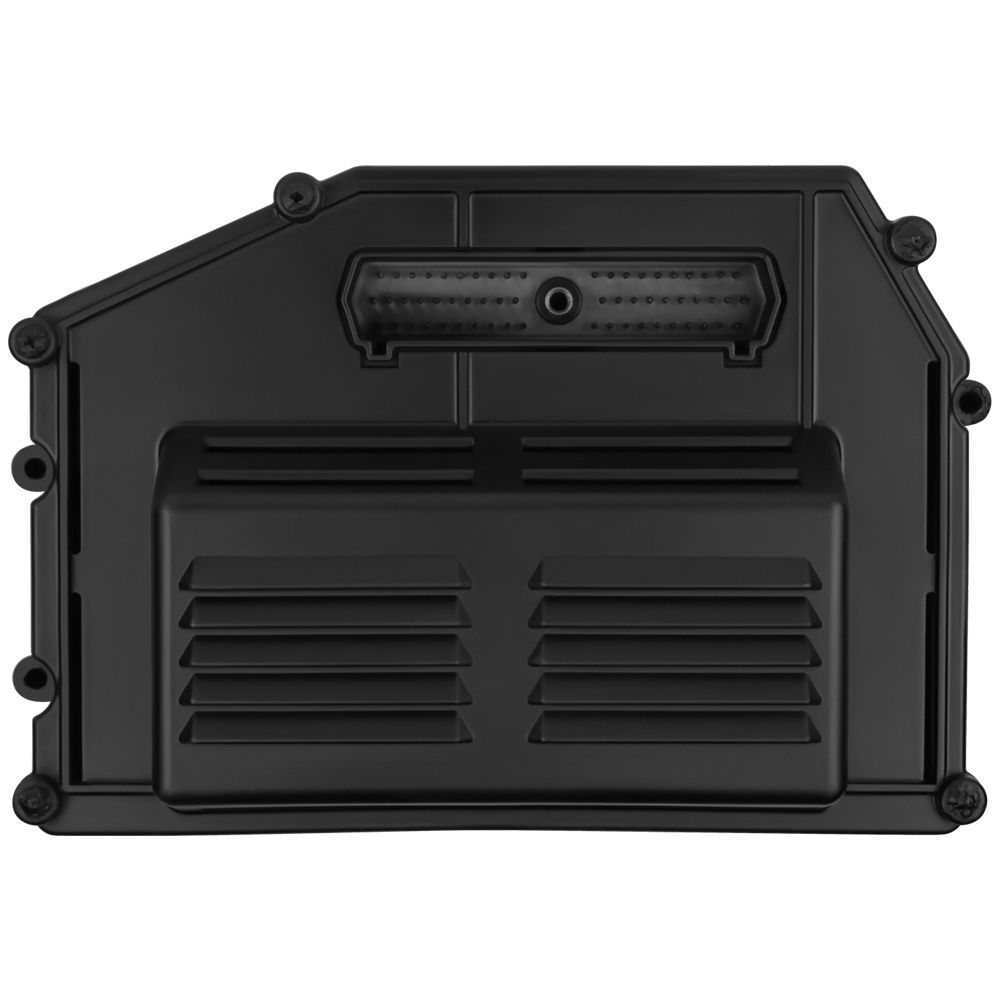
Flagship One stocks a refurbished, VIN-programmed PCM for the 1994 Dodge Shadow with a lifetime warranty, free shipping and no core charge. The full Dodge Shadow module lineup covers other engine configurations as well.