
Last updated on August 25th, 2026 at 01:51 pm
The engine control module (ECM) in a 1992 Nissan Maxima is the primary computer that manages fuel injection, ignition timing, and idle speed for the 3.0L V6 engine. When it fails, the vehicle may experience hard starting, poor fuel economy, or complete engine shutdown.
When a 1992 Nissan Maxima begins to exhibit stubborn no-start conditions, sudden stalling, or transmission behavior that feels out of character, the root cause often traces back to the engine control module. This era of Nissan engineering relies on a dedicated ECM to orchestrate fuel delivery, ignition timing, and even aspects of the automatic transmission’s shift logic. Unlike modern vehicles that illuminate a check engine light with standardized OBD-II codes, the 1992 Maxima communicates through a simpler diagnostic system, making it easy to misdiagnose a failing computer as a sensor or wiring fault. Understanding what the ECM does, where it lives, and how a properly programmed replacement can resolve these issues saves time and prevents unnecessary parts swapping. This article walks through the module’s role, common failure symptoms, the straightforward replacement process, and the critical programming step that Flagship One handles before the unit ever reaches your doorstep. By the end, you will have a clear picture of how to restore your Maxima’s drivability with confidence.
1992 Nissan Maxima
OEM programmed ECM for your 1992 Nissan Maxima — plug & play, no dealer visit.
Free shipping · Lifetime warranty
The engine control module in a 1992 Nissan Maxima is the central processor that governs the 3.0L V6 engine’s operation. It receives signals from sensors such as the mass airflow meter, throttle position sensor, coolant temperature sensor, and crankshaft position sensor, then calculates the optimal air-fuel mixture and ignition timing. The ECM also manages idle air control, EGR function, and communicates with the automatic transmission control unit to coordinate shift points. Because the Maxima of this vintage uses Nissan’s ECCS (Electronic Concentrated Control System), the module integrates fuel and spark control into a single unit, making it indispensable for smooth performance. When the ECM begins to fail, the engine may run rich or lean, hesitate under load, or refuse to start altogether. A faulty module can also send incorrect signals to the transmission, causing harsh or delayed shifts. For owners seeking reliable replacement engine computers for the Maxima, understanding this role clarifies why a properly functioning unit is non-negotiable for daily drivability. The ECM’s internal circuit board is susceptible to heat, vibration, and age-related capacitor leakage, all of which can degrade its ability to process sensor data accurately. Without a healthy ECM, even a mechanically sound engine will not perform as intended.
The ECM in the 1992 Nissan Maxima is mounted behind the glove box, secured to the heater case or a bracket. To access it, you first remove the glove box by releasing its stops and disconnecting the light, then take out the lower dash panel beneath it. The module is held in place by a few screws or bolts, and the wiring harness connector is released by pressing a locking tab. Replacement involves disconnecting the battery, unplugging the old unit, and installing the new one in the same orientation. No special tools are required beyond basic hand tools, and the job is typically completed in under an hour. Care should be taken to route the harness away from sharp edges and to ensure the connector is fully seated before reassembling the dash panels. Because the ECM is located inside the cabin, it is protected from moisture and road debris, but it can still be affected by heat buildup if the HVAC system is not functioning properly.
After physically installing a replacement ECM in a 1992 Nissan Maxima, the module must be programmed with the vehicle’s specific VIN and, in some cases, the immobilizer data to match the original key and security system. The factory procedure requires a Nissan CONSULT or compatible scan tool to write the VIN and perform an immobilizer initialization, which synchronizes the ECM with the body control module and the key transponder. Without this step, the engine may crank but not start, or it may start and then immediately stall. Flagship One eliminates this hurdle by shipping a VIN-programmed replacement unit that is already configured for your Maxima’s exact VIN. This means you can install the ECM and start the vehicle without needing a dealer visit or specialized programming equipment. The pre-programming service covers the immobilizer sync as well, so the anti-theft system recognizes the new computer as original equipment. For a 1992 model, this is especially valuable because older diagnostic tools can be difficult to source and use.
A failing ECM in a 1992 Nissan Maxima often produces symptoms that mimic other component failures, making diagnosis challenging. The engine may crank but not start, or it may start and then stall after a few seconds. Intermittent stalling while driving, particularly when coming to a stop or during low-speed maneuvers, is a classic sign. You might notice a rough idle that cannot be corrected by cleaning the idle air control valve or replacing spark plugs. The automatic transmission may shift erratically, hold gears too long, or shift harshly because the ECM provides shift timing signals. Fuel economy often drops noticeably as the ECM delivers an incorrect air-fuel mixture. In some cases, the check engine light may illuminate, but on this pre-OBD-II vehicle, retrieving codes requires a specific procedure or a compatible scan tool. Other symptoms include a no-communication condition with diagnostic equipment, indicating the ECM is not powering up. Because the 1992 Maxima uses a distributor-based ignition, a failing ECM can also cause weak or no spark, leading to misdiagnosis as a bad ignition module or coil. Persistent rich or lean conditions that do not respond to sensor replacement further point to an internal ECM fault.
A faulty ECM often causes multiple, seemingly unrelated issues at once, such as a no-start condition combined with transmission shifting problems. If swapping a known-good sensor does not resolve the symptom, or if the ECM fails to communicate with a scan tool, the module itself is likely the culprit. Professional diagnosis with a Nissan CONSULT tool can confirm internal ECM failure.
Yes, a replacement ECM must be programmed with the vehicle’s VIN and immobilizer data to start and run properly. Without programming, the engine may crank but not fire, or it may start and immediately stall. Flagship One ships the ECM already programmed for your specific VIN, so no additional programming is required after installation.
A used ECM may physically fit, but it will still need to be reprogrammed with your vehicle’s VIN and immobilizer information. Additionally, used modules carry the risk of pre-existing damage or imminent failure. A remanufactured unit that has been tested and pre-programmed offers a more reliable, long-term solution.
The ECM is located behind the glove box on the passenger side of the dashboard. You can access it by removing the glove box assembly and the lower dash panel. It is secured with a few screws and has a single large wiring harness connector.
Age-related capacitor leakage is the most common cause, as the electrolytic capacitors on the circuit board dry out and leak over time. Heat exposure from the nearby heater core, voltage spikes from a failing alternator, and vibration can also contribute to ECM failure. Moisture intrusion is less common due to the interior mounting location.
When a 1992 Nissan Maxima ECM fails, the decision often comes down to repairing the original unit or installing a replacement. While some shops offer repair services, they may not address all potential internal faults, and turnaround times can be lengthy. A remanufactured ECM that has been thoroughly tested and comes pre-programmed for your specific VIN provides a plug-and-play solution that gets your Maxima back on the road quickly. Flagship One’s units are built to meet or exceed original specifications, with all critical components replaced and updated software installed, so you can install with confidence.
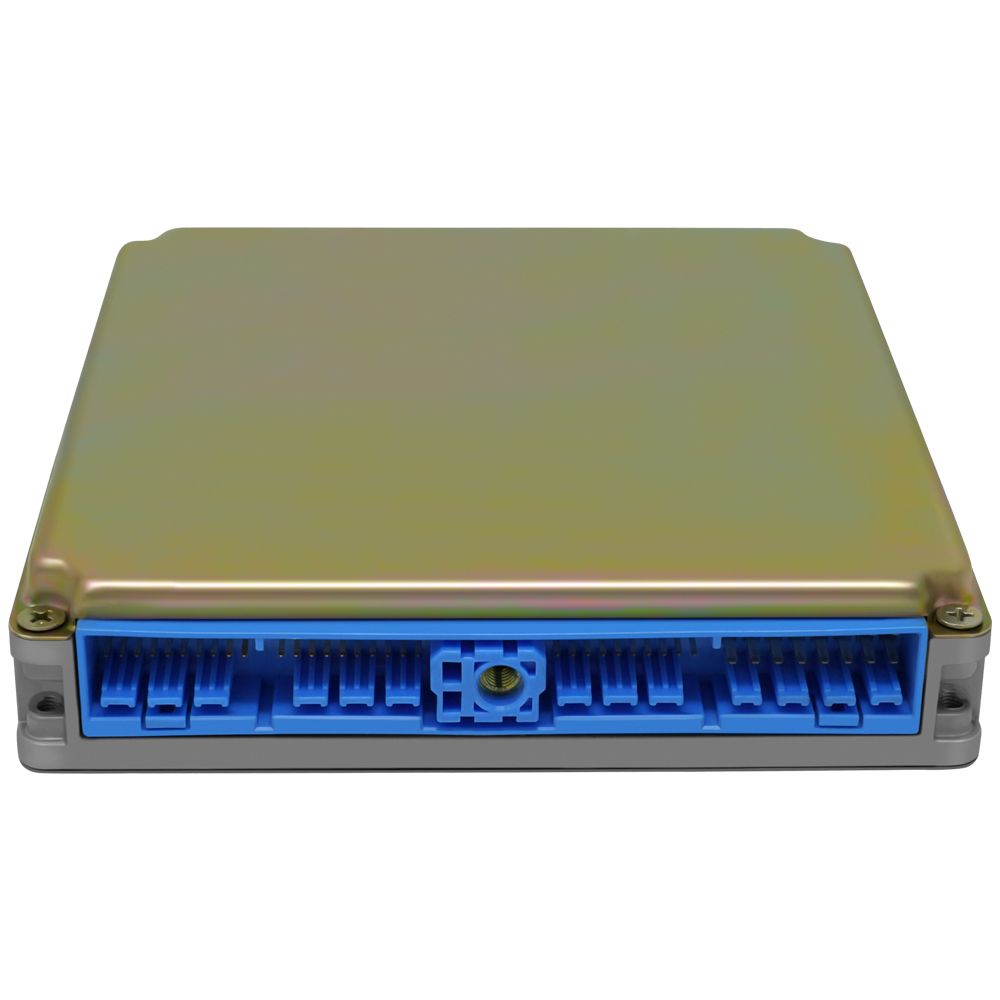
Flagship One stocks a refurbished, VIN-programmed ECM for the 1992 Nissan Maxima with a lifetime warranty, free shipping and no core charge. The full Nissan Maxima module lineup covers other engine configurations as well.
A failing ECM doesn’t have to mean the end of the road for your 1992 Nissan Maxima. With a clear understanding of the symptoms, a straightforward replacement process, and a pre-programmed unit that eliminates complex dealer procedures, you can restore your vehicle’s performance and reliability. Addressing the issue promptly prevents further strain on other components and gets you back to enjoying the smooth, powerful drive the Maxima is known for.