
Last updated on August 25th, 2026 at 02:31 pm
The engine control module (ECM) in your 1992 Chevrolet Cavalier manages fuel delivery, ignition timing, and emissions systems. When it fails, you may experience stalling, poor acceleration, or a no-start condition. This pre-OBD-II module requires precise calibration to match your vehicle’s specifications.
If your 1992 Chevrolet Cavalier has been acting up—stalling unexpectedly, refusing to start, or running rough—you might be dealing with a failing engine control module (ECM). This small but critical computer manages everything from fuel injection to ignition timing, ensuring your engine runs smoothly. Unlike modern vehicles, the Cavalier’s pre-OBD-II system doesn’t rely on standardized trouble codes, which can make diagnosing ECM issues trickier. However, understanding how this module works, where it’s located, and what replacement involves can save you time and frustration. Whether you’re a DIY enthusiast or planning to visit a shop, knowing the basics helps you make informed decisions about repairs or replacements. This guide covers everything you need to know about the ECM in your Cavalier, from common failure symptoms to installation steps and why choosing the right replacement matters.
The engine control module (ECM) in your 1992 Chevrolet Cavalier is the brain behind your engine’s performance. It constantly monitors sensors throughout the engine bay, adjusting fuel delivery, ignition timing, and idle speed to keep everything running efficiently. Without a properly functioning ECM, your Cavalier may struggle to start, run erratically, or even stall unexpectedly. This module is particularly important in pre-OBD-II vehicles like yours, where the system lacks the self-diagnostic capabilities of newer cars. When the ECM fails, it often disrupts multiple engine functions at once, leading to a range of symptoms that can be difficult to pinpoint. Replacing it with replacement engine computers for the Cavalier ensures your vehicle regains its original performance and reliability. The ECM’s role extends beyond just engine management—it also influences emissions control, which is why a faulty unit can sometimes cause your Cavalier to fail an emissions test. Given its central role, the ECM’s health directly impacts your driving experience, making it one of the most critical components under the hood.
1992 Chevrolet Cavalier
OEM programmed ECM for your 1992 Chevrolet Cavalier — plug & play, no dealer visit.
Free shipping · Lifetime warranty
In most 1992 Chevrolet Cavaliers, the ECM is located inside the vehicle, typically behind the dashboard or under one of the front seats. This placement protects it from extreme temperatures and moisture, but it also means accessing it requires removing interior panels or trim. Replacing the ECM involves disconnecting the battery to prevent electrical issues, then carefully unplugging the wiring harness from the old module. The new unit is installed in the same location, and the harness is reconnected. Labor times for this job vary slightly depending on your Cavalier’s configuration. If your vehicle has air conditioning, the book time for powertrain control module (PCM) replacement is 1.1 hours. Without air conditioning, the job may take 1.2 hours. For a straightforward ECM replacement, the book time is 1.0 hours. These times assume no additional complications, such as corroded connectors or damaged wiring, which could extend the process.
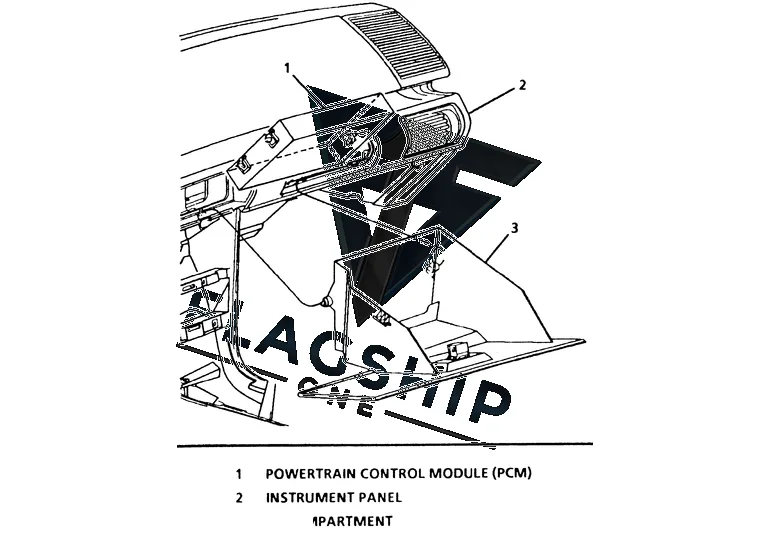
Work with the ignition off, and treat the module as static-sensitive: avoid touching the connector pins at any point.
| Operation | Configuration | Book Time |
|---|---|---|
| Engine Control Module R&R | All configurations | 1.0 hr |
| Powertrain Control Module R&R | With Air Conditioning | 1.1 hr |
| Powertrain Control Module R&R | Without Air Conditioning | 1.2 hr |
After installing a new ECM in your 1992 Chevrolet Cavalier, the factory procedure typically requires programming the module to match your vehicle’s specific VIN and calibration data. This step ensures the ECM communicates correctly with the engine’s sensors and other systems. However, if you choose a VIN-programmed replacement unit, this programming is already completed before the module arrives. Flagship One units are pre-loaded with the correct software for your Cavalier, eliminating the need for post-installation programming. This not only saves time but also reduces the risk of errors during the setup process. Without a pre-programmed unit, you would need specialized equipment and access to manufacturer-specific software to complete the programming, which may not be available at all repair shops. By opting for a pre-programmed ECM, you can install the module and get your Cavalier back on the road without additional delays.
A failing ECM in your 1992 Chevrolet Cavalier can cause a variety of symptoms, some of which may mimic other engine issues. One of the most common signs is a no-start condition, where the engine cranks but refuses to fire. This often happens because the ECM is no longer sending the correct signals to the fuel injectors or ignition system. Stalling is another frequent issue, particularly at idle or during low-speed driving, as the ECM struggles to maintain stable engine operation. You might also notice poor acceleration or hesitation when pressing the gas pedal, which can occur if the ECM is miscalculating fuel delivery or ignition timing. In some cases, the engine may run rough or misfire, especially under load, as the ECM fails to adjust air-fuel ratios correctly. Another telltale sign is erratic or incorrect idle speed, where the engine revs too high or too low without input from the driver. If the ECM is completely dead, you may also experience a lack of communication with diagnostic tools, making it difficult to retrieve any engine data. While these symptoms can point to other issues, such as a faulty sensor or fuel pump, they often indicate an ECM problem when they occur in combination. If your Cavalier exhibits these behaviors, it’s worth investigating the ECM as a potential cause, especially if other common culprits have been ruled out.
ECM failures often cause multiple symptoms at once, such as stalling, poor acceleration, and a no-start condition. If you’ve ruled out common issues like a bad fuel pump, ignition coil, or sensors, the ECM may be the culprit. A scan tool compatible with your Cavalier’s system can help identify internal faults, though pre-OBD-II codes are less standardized than modern ones.
Testing the ECM typically involves checking for proper voltage at the connectors and verifying communication with a scan tool. However, without specialized equipment, it can be difficult to confirm an internal failure. If the ECM is suspected, many owners opt for a replacement rather than extensive diagnostics, especially if symptoms align with common failure patterns.
A used ECM may work temporarily, but it could be programmed for a different vehicle’s specifications, leading to poor performance or drivability issues. Additionally, used modules may have hidden faults or wear that could cause problems down the road. A new or remanufactured unit programmed to your Cavalier’s VIN is a more reliable solution.
Older ECMs, like the one in your 1992 Cavalier, were built with less advanced electronics and may be more susceptible to heat, voltage spikes, and moisture. Over time, the internal components can degrade, leading to failures. Additionally, pre-OBD-II systems lack the self-protective features of modern vehicles, making them more vulnerable to electrical issues.
Driving with a failing ECM is risky, as it may cause the engine to run poorly or stall unexpectedly. In some cases, a faulty ECM can send incorrect signals to the fuel injectors or ignition system, potentially leading to engine damage if left unaddressed. If you suspect an ECM issue, it’s best to have it inspected or replaced as soon as possible.
If your 1992 Chevrolet Cavalier is experiencing symptoms of a failing ECM, you have a few options for moving forward. A repair shop can diagnose the issue and replace the module, though labor and programming costs can add up quickly. Alternatively, a remanufactured or new ECM programmed to your Cavalier’s VIN offers a plug-and-play solution, eliminating the need for post-installation programming. This approach is often more cost-effective and ensures your vehicle runs as intended without additional hassle.
Flagship One stocks a refurbished, VIN-programmed PCM for the 1992 Chevrolet Cavalier with a lifetime warranty, free shipping and no core charge. The full Chevrolet Cavalier module lineup covers other engine configurations as well.
The engine control module in your 1992 Chevrolet Cavalier plays a vital role in keeping your engine running smoothly. Whether you’re dealing with stalling, poor acceleration, or a no-start condition, understanding the ECM’s function and replacement process can help you make informed decisions. If you suspect the ECM is the issue, opting for a pre-programmed replacement unit can save time and ensure a seamless installation. With the right approach, your Cavalier can continue to deliver reliable performance for years to come.