
Last updated on August 25th, 2026 at 02:37 pm
The Powertrain Control Module in your 1991 Acura Legend serves as the central computer managing fuel injection, ignition timing, emissions systems, and transmission shifting. Failure typically stems from heat exposure, age-related electrical degradation, or voltage spikes from jump-starting or charging system faults.
If your 1991 Acura Legend won’t start, runs poorly, or displays multiple electrical symptoms, the Powertrain Control Module may be the culprit. This vehicle uses a centralized engine computer that manages critical functions across the powertrain, and when it fails, the results can range from inconvenient to strand-you-where-you-are serious.
In this guide, you’ll learn what the PCM does in your specific vehicle, where it’s located, common failure symptoms, and what the replacement process involves. We’ll cover the factory service procedures, the relearn requirement, and how choosing a properly programmed replacement can save you significant time and expense compared to the dealer route. Whether you’re diagnosing a no-start condition or planning ahead for a known-failed module, this information helps you understand the repair from start to finish.
Because this is a pre-OBD-II vehicle, diagnostic capabilities differ from modern OBD-II systems, and we’ll address what that means for troubleshooting and repair.
The Powertrain Control Module in your 1991 Acura Legend is the primary computer governing engine and transmission operation. This unit, often referred to as the PCM or ECM depending on specification, controls fuel injector pulse width, ignition timing advance, idle air control, emissions recirculation, and transmission shift points. It receives input from numerous sensors throughout the engine bay and uses that data to make real-time adjustments to keep the 3.2L V6 running optimally under all conditions.
Why does this matter? Without a functioning PCM, your vehicle cannot regulate air-fuel mixture properly, meaning the engine runs too rich or too lean. Ignition timing becomes either retarded or overly advanced, causing misfires, power loss, or catalytic converter damage. The transmission may fail to shift correctly or remain locked in a single gear. In short, the PCM is not optional — your Legend simply will not run properly without reliable communication between this computer and the dozens of sensors feeding it data.
When this module fails, symptoms can mimic many other problems, which is why proper diagnosis is essential before replacing any replacement engine computers for the Acura Legend. The module itself is a solid-state device with no user-serviceable components inside; when internal circuitry degrades from heat cycling over three-plus decades, replacement rather than repair is the practical solution.
1991 Acura Legend
OEM programmed ECM for your 1991 Acura Legend — plug & play, no dealer visit.
Free shipping · Lifetime warranty
| Operation | Configuration | Book Time |
|---|---|---|
| Powertrain Control Module R&R | All configurations | 0.6 hr |
| Powertrain Control Module Relearn | All configurations | 0.5 hr |
| Engine Control Module R&R | All configurations | 0.6 hr |
After installing a new PCM in your 1991 Acura Legend, the factory procedure requires performing a relearn or initialization sequence so the replacement module can adapt to your vehicle’s specific sensors and calibration. This step is not optional — without it, the new computer may run poorly, display false trouble codes, or fail to communicate properly with the transmission control unit.
The relearn procedure involves key-on initialization, allowing the module to read sensor baselines, and typically requires a brief drive cycle to complete adaptive fueling and shift calibrations. On this pre-OBD-II vehicle, the procedure is simpler than modern systems but still necessary for proper operation.
Here is where choosing the right replacement matters: Flagship One units arrive a VIN-programmed replacement unit that is pre-configured with your specific vehicle’s calibration data. This means the relearn procedure still must be performed to ensure all sensors read correctly, but you avoid the dealer programming fees and wait times that otherwise apply when installing a blank replacement module. The unit is ready to install out of the box, matching your vehicle’s identification and specifications exactly.
When the PCM or ECM fails on your 1991 Acura Legend, the symptoms often point directly to the engine management system but can also mislead diagnosticians into chasing unrelated problems. The most common presentation is a no-start condition — you turn the key and the engine cranks but receives no fuel or spark because the PCM is not commanding injector or ignition operation. Another frequent symptom is hard-starting or stalling immediately after starting, where the engine runs briefly then dies as the computer fails to maintain proper idle or fuel delivery.
Misfire conditions are also typical, manifesting as rough idle, hesitation under acceleration, and lack of power. You may experience multiple cylinder misfires that shift between spark plugs with no apparent pattern, which strongly suggests a computer or sensor issue rather than individual plug or wire failures. In some cases, the transmission may refuse to shift out of gear or exhibit harsh gear changes, as the PCM manages shift solenoids and line pressure.
Electrical gremlins often accompany PCM failure — dash gauges may become erratic or inoperative, the check engine light (if equipped) may illuminate, and scan tool communication may fail entirely. These symptoms together paint a picture of a compromised engine computer that requires replacement rather than further sensor troubleshooting.
Additional bulletins cover DTC P0171 and P0172 troubleshooting — systems running too lean or too rich — and emphasize systematic voltage measurement to isolate whether the problem stems from the PCM, sensors, or wiring. A bulletin regarding ECU connector terminal removal provides guidance on proper connector service techniques, critical when replacing the module to avoid damaging the harness. The bulletins also reference new software for the PGM Tester tool (SN211), indicating factory updates for diagnostic procedures during this period.
| Bulletin | Subject | What It Addresses |
|---|---|---|
| — | Use Voltage Drops to Check ECU Grounds | — |
| — | DTC P0171 and DTC P0172 Troubleshooting Tips • Measure Voltage Drops to Pinpoint Problem | — |
| — | ECU Connector Terminals Removal • More No Spark, Use Your Dwell Meter | — |
No. The PCM is vin-matched to your specific vehicle because it contains calibration data for your engine and transmission. A unit from a different vehicle will cause running problems, error codes, or a no-start condition. Always specify your VIN when ordering a replacement.
Yes. Intermittent PCM failure can cause exactly these symptoms — the engine runs poorly, misfires on multiple cylinders, and stalls because the computer is not maintaining proper fuel and spark delivery. However, other causes like bad ignition coils, fuel pump issues, or vacuum leaks can produce similar symptoms, so proper diagnosis is essential before replacing the computer.
Not if you order from Flagship One. Their replacement units arrive VIN-programmed with your vehicle’s specific calibration already installed. You still need to perform the factory relearn procedure, but you avoid the dealer programming fees and scheduling hassles that apply to blank replacement units.
It depends on the failure mode. Some PCM failures are complete, and the vehicle won’t start or run at all — you become immediately aware of the problem. Others are partial failures that cause drivability symptoms but allow driving. However, driving with a compromised PCM risks catalytic converter damage from misfires and can leave you stranded if the failure completes, so prompt diagnosis and replacement is the safer approach.
According to factory labor guides, the PCM R&R requires 0.6 hours, and the relearn procedure adds 0.5 hours. If your vehicle also has a separate ECM requiring replacement, that’s an additional 0.6 hours. In practice, allow for somewhat longer at home with basic tools, but the procedure is straightforward for those comfortable with automotive electrical work.
When your 1991 Acura Legend’s PCM fails, you have two primary paths forward: repair the existing unit if the damage is minor and accessible, or replace it with a properly programmed unit. Repair is rarely cost-effective on this vintage — the internal circuitry is not serviceable without specialized equipment. Replacement with a unit that arrives VIN-programmed to your vehicle eliminates the dealer programming step and gets you back on the road faster. Whether you choose a new or refurbished replacement, ensure it specifies compatibility with your 3.2L Legend and includes your vehicle’s calibration data.
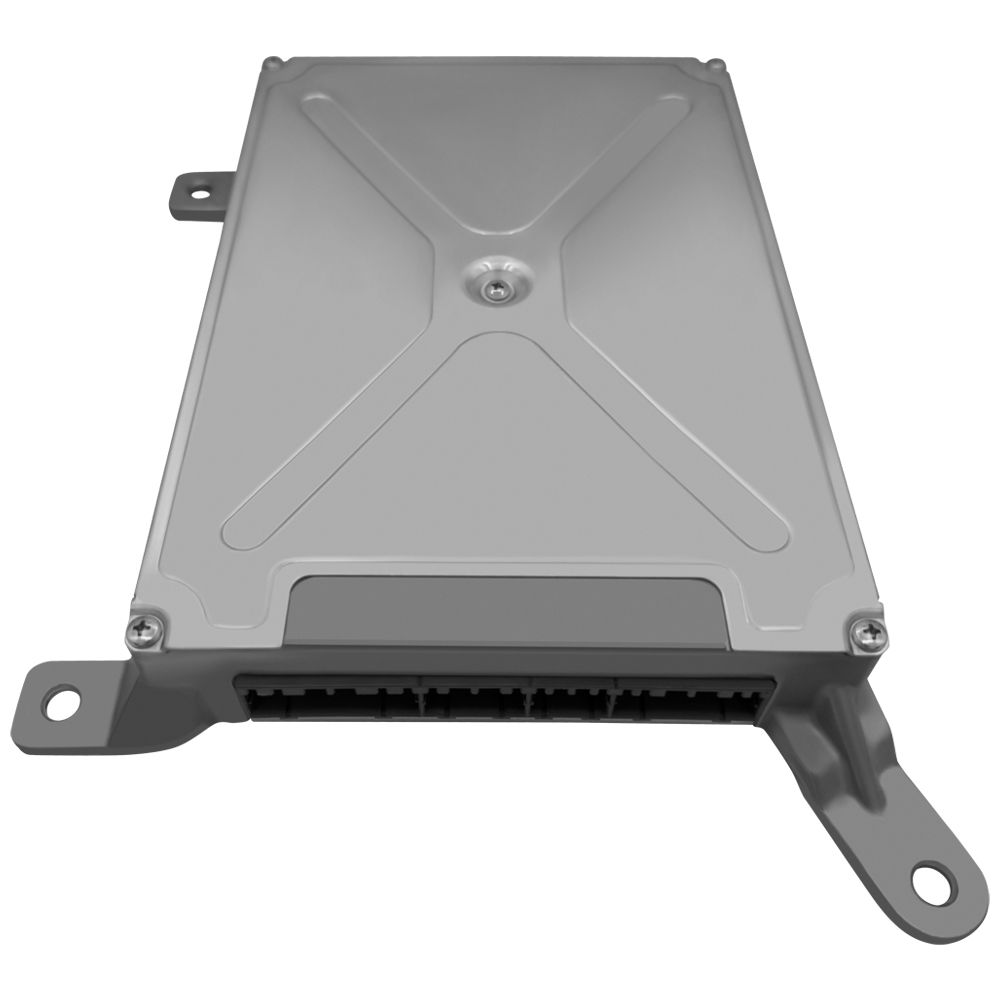
Flagship One stocks a refurbished, VIN-programmed PCM for the 1991 Acura Legend with a lifetime warranty, free shipping and no core charge. The full Acura Legend module lineup covers other engine configurations as well.
The Powertrain Control Module in your 1991 Acura Legend is the heart of its engine management system, and failure means your vehicle simply won’t perform as designed. Understanding the replacement process, the relearn requirement, and the importance of VIN programming helps you make informed decisions about the repair. Whether you diagnose the problem yourself or rely on a professional, ensuring the replacement unit is properly programmed to your specific vehicle is the key to a successful repair and a reliable-running Legend.