
Last updated on August 25th, 2026 at 01:56 pm
The Powertrain Control Module (PCM) in the 1990 Mitsubishi Mirage manages fuel delivery, ignition timing, and basic engine functions. Failure may cause erratic performance, stalling, or a no-start condition, often due to internal corrosion or voltage irregularities.
If your 1990 Mitsubishi Mirage has been acting up—stalling at stops, hesitating under acceleration, or refusing to start—it may not be the fuel pump or ignition system at fault. The Powertrain Control Module (PCM), the brain behind your engine’s operations, could be the culprit. In pre-OBD-II vehicles like yours, the PCM manages fuel injection, ignition timing, and basic engine functions without the self-diagnostic capabilities of later models. When it fails, symptoms can mimic other issues, making diagnosis tricky. Replacing the PCM isn’t just about swapping a part; it involves understanding its role, locating it in your Mirage, and ensuring proper calibration afterward. This guide walks you through what the PCM does, how to replace it, and what to expect if yours is failing. You’ll also learn why opting for a pre-programmed unit can save time and avoid headaches during the process.
The Powertrain Control Module (PCM) in your 1990 Mitsubishi Mirage serves as the central command for the engine’s most critical functions. It processes inputs from sensors monitoring throttle position, engine temperature, and air intake to adjust fuel delivery and ignition timing in real time. Without this module, your engine wouldn’t know how much fuel to inject or when to spark the plugs, leading to poor performance or a complete inability to run. The PCM also plays a role in managing idle speed and emissions control, though its capabilities are more limited than in modern vehicles. When the PCM fails, it often disrupts these processes, causing symptoms like rough idling, stalling, or a no-start condition. Because the Mirage relies on this single module for multiple systems, its health is vital to the vehicle’s drivability. If you’re considering a replacement, replacement engine computers for the Mirage are designed to restore functionality without requiring extensive reprogramming, making the process more straightforward than it might initially seem.
1990 Mitsubishi Mirage
OEM programmed replacements — plug & play, no dealer visit.
Find yours by year, make & model →
Free shipping · Lifetime warranty
In the 1990 Mitsubishi Mirage, the Powertrain Control Module (PCM) is mounted in a location specific to this model, though exact placement isn’t detailed in factory documentation. Typically, you’ll find it behind the dashboard or near the firewall, accessible without removing major components. Replacement involves disconnecting the battery, unplugging the wiring harness, and removing any mounting bolts or brackets securing the module. The labor time for removal and reinstallation (R&R) is listed at 0.5 hours, reflecting the straightforward access. Once the old unit is out, the new PCM is bolted into place, and the wiring harness is reconnected. No additional disassembly or special tools are required, but ensuring the connectors are clean and secure is critical to avoid future issues. Torque specifications for mounting hardware aren’t provided, so hand-tightening with a wrench is typically sufficient to prevent over-torquing.
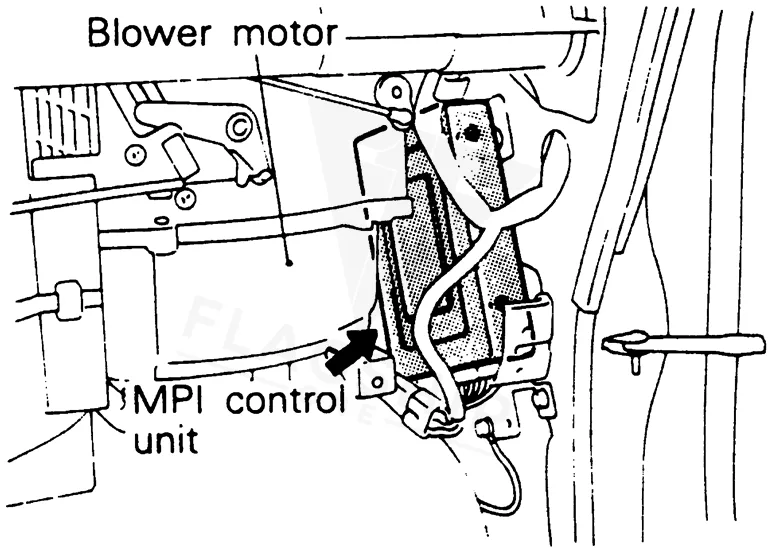
Work with the ignition off, and treat the module as static-sensitive: avoid touching the connector pins at any point.
| Operation | Configuration | Book Time |
|---|---|---|
| Powertrain Control Module R&R | All configurations | 0.5 hr |
| Powertrain Control Module Relearn | All configurations | 0.5 hr |
| Engine Control Module Relearn | All configurations | 0.5 hr |
| Engine Control Module R&R | All configurations | 0.5 hr |
After installing a new Powertrain Control Module (PCM) in your 1990 Mitsubishi Mirage, the factory procedure requires a relearn process to synchronize the module with the engine’s sensors and systems. This step, which takes an additional 0.5 hours, ensures the PCM recognizes the vehicle’s specific parameters, such as idle speed and fuel trim. However, if you opt for a VIN-programmed replacement unit, these relearn steps are already completed before the module arrives. This means you can install the unit and drive the vehicle immediately, without needing a scan tool or additional calibration. The pre-programmed approach eliminates the guesswork and potential frustration of manual relearning, particularly for pre-OBD-II vehicles where diagnostic tools are less sophisticated. It’s a practical solution for restoring your Mirage’s performance quickly and reliably.
When the Powertrain Control Module (PCM) in your 1990 Mitsubishi Mirage begins to fail, the symptoms can be frustratingly vague, often mimicking other mechanical or electrical issues. One of the most common signs is a no-start condition, where the engine cranks but refuses to fire, as the PCM may fail to send the correct signals to the fuel injectors or ignition system. Stalling or rough idling, especially at low speeds or when coming to a stop, is another frequent complaint, as the module struggles to maintain consistent engine operation. You might also notice poor acceleration or hesitation under load, as the PCM’s ability to adjust fuel and ignition timing becomes compromised. In some cases, the engine may run excessively rich or lean, leading to fouled spark plugs or a strong fuel odor from the exhaust. Dead communication with a scan tool is another red flag, though pre-OBD-II vehicles like the Mirage don’t support the same diagnostic capabilities as later models. If the PCM’s internal memory corrupts, you may experience erratic behavior, such as sudden surges in RPM or unexplained misfires. While these symptoms don’t always point directly to the PCM, they often indicate a need for further inspection, particularly if other common culprits like fuel pumps or ignition coils have been ruled out.
Common signs include a no-start condition, stalling, rough idling, or poor acceleration. Since the PCM controls fuel and ignition systems, failure often disrupts these functions. If other components like the fuel pump or ignition coils check out, the PCM may be the culprit.
Replacement is straightforward and typically takes 0.5 hours for removal and reinstallation. However, if you’re not comfortable working with electrical components, a professional may be preferable. The factory also requires a relearn procedure, which adds time unless you use a pre-programmed unit.
In this vehicle, the terms are often used interchangeably, as the module handles both engine and basic transmission functions. The PCM (Powertrain Control Module) is the correct designation for the combined unit, though some sources may refer to it as an ECM (Engine Control Module).
A used PCM may work, but it’s not guaranteed. The module must be compatible with your Mirage’s engine and transmission configuration. Additionally, used units may have internal wear or programming issues, leading to unreliable performance.
The relearn process allows the new PCM to adapt to your vehicle’s specific sensor readings and operating conditions. Without it, the module may not optimize fuel delivery or ignition timing correctly, leading to poor performance or drivability issues.
If your 1990 Mitsubishi Mirage is experiencing symptoms of PCM failure, you have two main options: attempt a repair or opt for a replacement. Given the age of the vehicle, repairs are often temporary and may not address underlying issues. A new or refurbished replacement unit, particularly one that’s VIN-programmed, offers a more reliable solution. This approach eliminates the need for post-installation relearn procedures, saving time and ensuring your Mirage runs smoothly without additional calibration steps.
Flagship One stocks a refurbished, VIN-programmed PCM for the 1990 Mitsubishi Mirage with a lifetime warranty, free shipping and no core charge. The full Mitsubishi Mirage module lineup covers other engine configurations as well.
The Powertrain Control Module in your 1990 Mitsubishi Mirage plays a critical role in keeping your engine running smoothly. When it fails, symptoms like stalling, poor acceleration, or a no-start condition can leave you stranded. Replacing the PCM is a straightforward process, but choosing a pre-programmed unit can simplify the job even further. Whether you tackle the replacement yourself or leave it to a professional, addressing PCM issues promptly will help restore your Mirage’s performance and reliability. If you’re ready to move forward, a VIN-programmed replacement is the most efficient path to getting your vehicle back on the road.