
Last updated on August 25th, 2026 at 02:46 pm
The Powertrain Control Module in your 1990 Acura Integra serves as the central computer governing fuel delivery, ignition timing, and emissions controls. When this unit fails, your vehicle may exhibit hard-starting, poor idle quality, or complete communication loss with diagnostic tools. The Engine Control Module handles additional sensor inputs that optimize engine performance under varying conditions.
When your 1990 Acura Integra develops starting problems, stalling, or erratic idle behavior, the root cause may lie with one of its electronic control modules. These vehicles rely on interdependent computer systems to manage engine functions, and component aging or electrical stress can trigger a cascade of drivability concerns. Understanding how these modules operate, where they mount, and what the replacement process entails equips you to make informed decisions about repair versus replacement. This guide covers the essential procedures and considerations for addressing Powertrain Control Module and Engine Control Module concerns in your specific vehicle. You will learn to recognize failure symptoms, interpret service bulletin recommendations, and understand what factory procedures must be followed after installation. Whether you are diagnosing a no-start condition or planning a preemptive replacement, the information here provides a practical foundation for working through the repair process with confidence.
The Powertrain Control Module in the 1990 Acura Integra functions as the primary command center for your vehicle’s drivetrain management. This computer processes input from numerous sensors positioned throughout the engine bay and uses that data to calculate optimal fuel injector pulse width, spark advance, and idle air control positioning. In essence, it translates driver demands and engine conditions into precise mechanical responses that keep your vehicle running smoothly across all operating states.
Your vehicle also relies on an Engine Control Module that works alongside the PCM to manage additional engine functions. Together, these units monitor parameters such as intake air temperature, coolant temperature, throttle position, and exhaust gas composition. The Engine Control Module focuses specifically on optimizing combustion efficiency and ensuring your vehicle meets emissions standards during normal operation.
These modules communicate through a dedicated network, sharing data to coordinate fuel delivery, ignition events, and emissions equipment activation. When either module fails or receives corrupted data from a faulty sensor, the resulting symptoms can range from subtle performance degradation to complete drivability failure. The interconnected nature of these systems means that problems in one area often trigger codes or symptoms associated with seemingly unrelated systems. replacement engine computers for the Integra typically restore proper communication between all control units, eliminating the erratic behavior caused by a failing module.
Modern replacement units from reputable suppliers arrive pre-loaded with calibration data specific to your vehicle’s year, engine displacement, and trim level. This ensures that installing a new or remanufactured module will restore factory-level performance without requiring extensive manual configuration.
1990 Acura Integra
OEM programmed ECM for your 1990 Acura Integra — plug & play, no dealer visit.
Free shipping · Lifetime warranty
Locating the Powertrain Control Module on your 1990 Acura Integra requires accessing the passenger-side footwell area, where the unit typically mounts beneath the dashboard. The Engine Control Module often resides in a nearby position, possibly in the engine bay or adjacent cabin location depending on your specific trim configuration. Removing these modules involves disconnecting the battery ground cable first to eliminate power supply risks during service.
The replacement procedure for the Powertrain Control Module involves disconnecting the electrical harness, removing mounting fasteners, and extracting the unit from its mounting location. Factory service information designates 0.5 hours for removal and installation of the Powertrain Control Module, with an additional 0.5 hours allocated for the relearn procedure that must follow. The Engine Control Module replacement carries a separate time allocation of 0.6 hours for removal and installation alone.
During installation, ensure all mounting surfaces are clean and free of debris that could interfere with proper unit seating. Reconnecting the electrical harness requires verifying that all connector pins seat fully and that the locking mechanism engages securely. After reconnection, the battery ground cable may be restored, but the vehicle should remain unstarted until any required initialization procedures are completed.
| Operation | Configuration | Book Time |
|---|---|---|
| Powertrain Control Module R&R | All configurations | 0.5 hr |
| Powertrain Control Module Relearn | All configurations | 0.5 hr |
| Engine Control Module R&R | All configurations | 0.6 hr |
After installing a replacement module in your 1990 Acura Integra, the factory service procedure requires performing a relearn process to calibrate the new unit to your vehicle’s specific characteristics. This procedure synchronizes the replacement module with existing sensors and actuators, ensuring proper communication and response across all operating conditions. Skipping this step may result in poor idle quality, hesitation during acceleration, or illuminated warning lamps.
The relearn procedure involves a specific sequence of key-on and engine-running states that allow the module to learn adaptive fuel trims and idle air control positions. Your vehicle’s specific procedure may require driving through predefined rpm and load ranges to complete the calibration process fully. This factory-mandated step ensures that your replacement module performs identically to the original equipment specification.
When sourcing a VIN-programmed replacement unit from Flagship One, the calibration data matching your vehicle identification number comes pre-loaded at the factory. This eliminates the need for manual programming or dealer-level calibration equipment, though the post-installation relearn procedure still applies to complete the adaptation process.
Powertrain Control Module or Engine Control Module failures in your 1990 Acura Integra typically announce themselves through a cluster of drivability concerns that develop suddenly or progress gradually over time. No-start conditions represent one of the most common failure modes, where your engine cranks normally but receives no fuel delivery or spark advance from the failed module. In these cases, the module has ceased sending commands to the fuel injectors or ignition system, effectively disabling your vehicle’s ability to operate.
Intermittent stalling or rough idle behavior often precedes complete module failure, presenting as your engine dying at stoplights or running roughly when warm. These symptoms frequently worsen as the module’s internal circuitry degrades, with the frequency and severity of episodes increasing until the problem becomes constant. You may notice that pressing the accelerator pedal produces little response or that your vehicle stalls immediately upon reaching idle rpm.
Misfire conditions commonly develop when the module fails to properly time ignition events across all cylinders. You might experience noticeable vibration, reduced power, or a distinct loss of smoothness during acceleration. These misfires often trigger check engine lamp illumination and may set internal module fault codes indicating processor or memory failures. When attempting to communicate with the module using a scan tool, you may find that certain data streams become unavailable or that the tool cannot establish a connection at all.
Shifting irregularities in vehicles equipped with automatic transmissions sometimes accompany PCM failure, as the transmission control system depends on communication with the engine management computer. You might notice harsh gear engagements, delayed shifts, or the transmission failing to shift into higher gears as the module loses the ability to coordinate shift schedules properly. internal memory fault code may be stored when the module detects corruption in its permanent memory storage, indicating a hardware failure that requires module replacement rather than repair.
Factory service information for vehicles in this generation emphasizes the importance of voltage-drop testing when diagnosing module-related concerns. Rather than simply checking for the presence of voltage, the recommended approach measures the actual voltage drop across ground circuits under load conditions. Excessive resistance in ground connections can produce symptoms that mimic module failure, leading to unnecessary replacement of otherwise functional components. Proper voltage-drop testing verifies that electrical grounds provide adequate return paths for all control module circuits.
Additionally, service bulletins highlight the critical nature of connector terminal integrity at the module harness connection. Corroded, bent, or loose terminals can produce intermittent communication failures, no-start conditions, and sensor data corruption that mimics complete module failure. Before replacing the module itself, technicians are advised to inspect and clean connector terminals using appropriate tools and contact cleaners. When connector removal proves difficult, using a proper terminal pick tool prevents damage to the connector housing while extracting individual terminals for inspection or replacement.
| Bulletin | Subject | What It Addresses |
|---|---|---|
| — | Use Voltage Drops to Check ECU Grounds | — |
| — | ECU Connector Terminals Removal • More No Spark, Use Your Dwell Meter | — |
Diagnostic voltage-drop testing on ground circuits helps isolate whether symptoms originate from the module itself or external wiring. If grounds test within specification but symptoms persist, module failure becomes more likely. Checking for proper power supply voltages at the module connector also helps identify wiring faults that might be confused with module failure.
Yes, certain module failures affect idle air control functions while leaving higher-speed operation unaffected. As the module’s internal circuits degrade, it may lose the ability to properly modulate idle speed while maintaining adequate control at elevated engine speeds. This pattern often indicates an ECM problem rather than a mechanical issue.
Used modules typically require calibration programming to match your specific vehicle, and many salvaged units carry unknown histories of heat damage, moisture exposure, or prior failure. Remanufactured or new-old-stock units from established suppliers offer known condition and proper calibration data, reducing the risk of repeat failure.
Skipping the relearn procedure may result in poor idle quality, elevated emissions, reduced fuel economy, and hesitation during acceleration. The module needs to learn your vehicle’s specific sensor characteristics and actuator response times to operate properly. Without this calibration step, the module defaults to generic values that rarely match your specific vehicle.
Yes, improper jump-starting procedures can introduce voltage spikes that exceed the module’s maximum input ratings. Connecting jumper cables in reverse polarity is particularly dangerous, as it applies negative voltage to circuits designed for positive power, potentially destroying multiple electronic components simultaneously.
Deciding between repair and replacement for your 1990 Acura Integra’s control module depends on the extent of damage and your long-term reliability goals. While some electrical issues can be resolved by cleaning connectors or addressing ground problems, failed modules require professional replacement using quality components. Remanufactured units from established suppliers undergo rigorous testing to verify internal circuitry integrity and arrive pre-programmed with your vehicle’s specific calibration data. This approach combines the reliability of new components with the convenience of plug-and-play installation, minimizing downtime and ensuring your vehicle returns to factory-level operation.
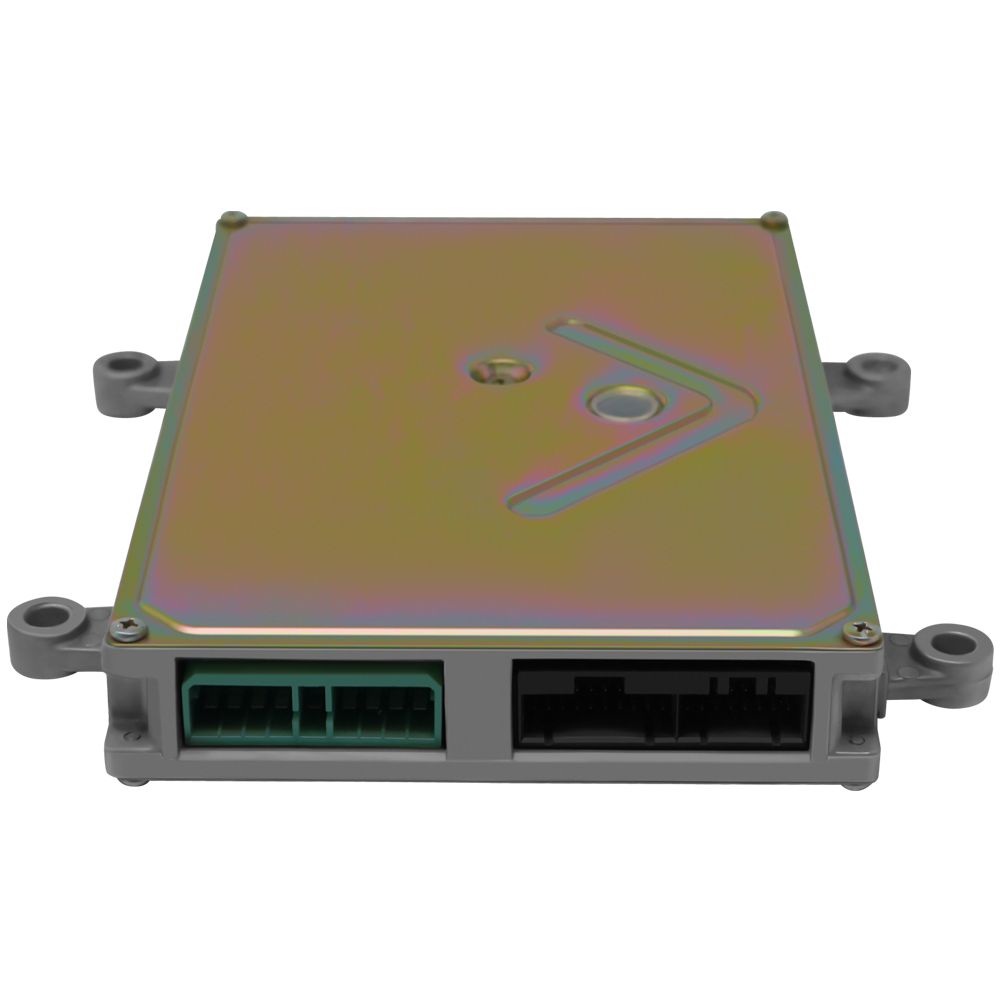
Flagship One stocks a refurbished, VIN-programmed PCM for the 1990 Acura Integra with a lifetime warranty, free shipping and no core charge. The full Acura Integra module lineup covers other engine configurations as well.
The Powertrain Control Module and Engine Control Module in your 1990 Acura Integra represent critical components that manage virtually every aspect of engine operation. Recognizing the symptoms of module failure, understanding the replacement procedure, and following through with proper post-installation procedures ensures a successful repair. Whether you are troubleshooting a current drivability concern or preparing for preventive replacement, addressing control module issues promptly protects your vehicle from cascading electrical problems and restores the reliable operation you expect from your Acura.